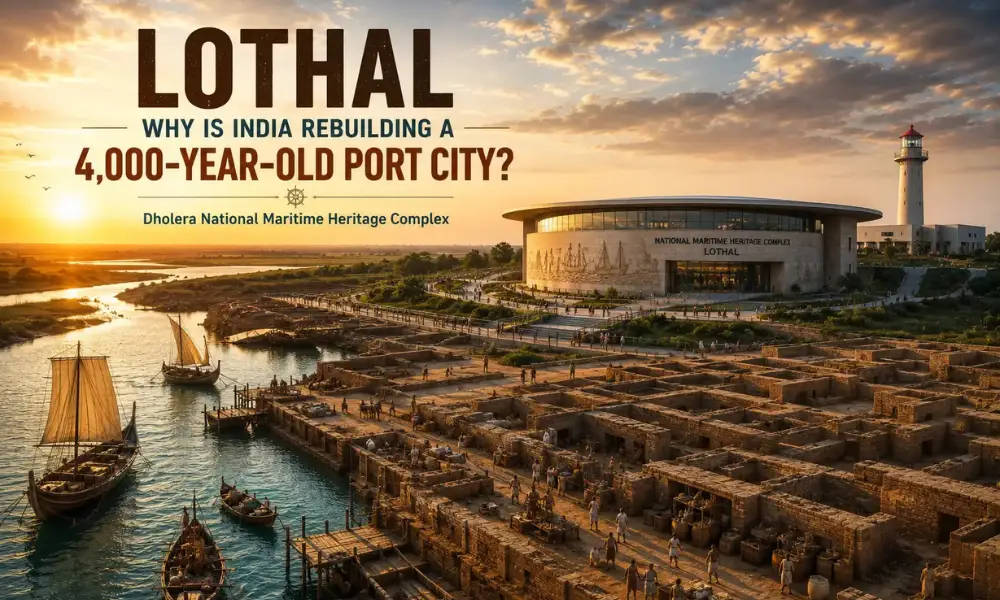
A long time ago, around 2400 BCE, there was a city called Lothal in Gujarat, India. It sat near an old path of the Sabarmati River. Lothal was part of the Indus Valley Civilization, one of the oldest and most advanced civilizations in the world. And it had something very special: one of the earliest known dockyards on Earth.
What Made Lothal So Special?
When people dug up Lothal, they found some amazing things:
- Streets laid out in a grid, like a well-planned city
- Good drainage systems, way ahead of their time
- A dockyard built with real knowledge of tides and water flow
This tells us that the people of Lothal were skilled builders and smart traders. They understood how to move goods by water, long before modern ships existed.
What Is Being Built Now?
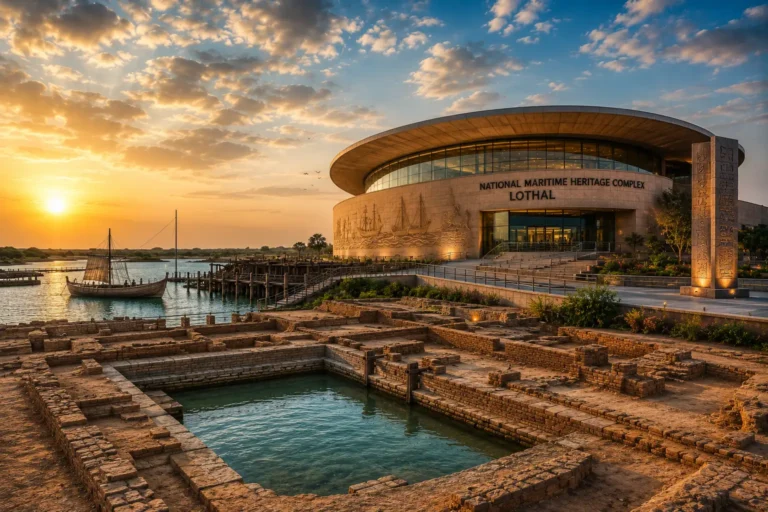
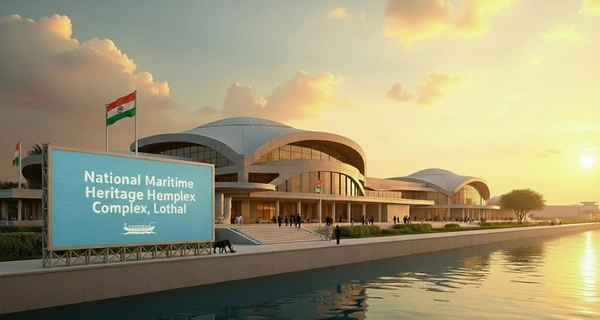
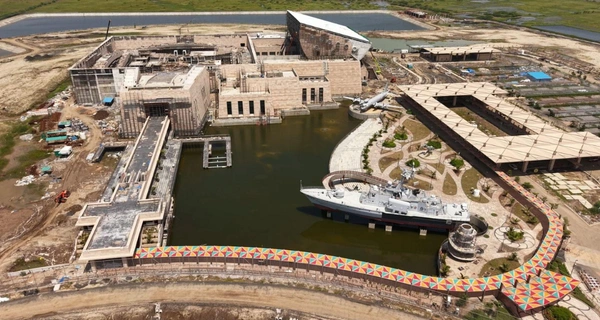
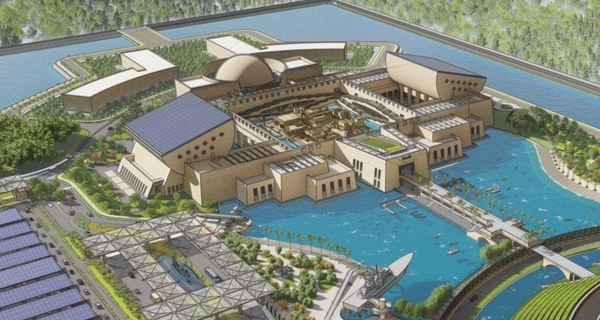
Because Lothal is so important, India is building a big project to celebrate it. It’s called the Dholera National Maritime Heritage Complex (NMHC). Simply put, it’s a huge heritage park that tells the story of India’s history with the sea — from ancient times to today.
The project has four main goals:
- Save and share history – Show India’s story of ships, sailing, and sea trade
- Teach people – Give students and researchers a place to learn about maritime history
- Bring in tourists – Make Lothal a top travel spot
- Connect with other countries – Work with other nations that also have a sea history
How Is It Being Built?
The project is being built step by step, in three phases.
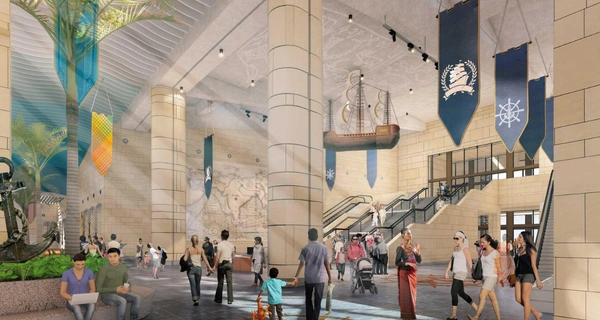
Phase 1A – The Museum This is the first step. It covers 35 acres and has different themed sections, like:
- Sea myths and old sailing traditions
- Stories of Harappan sailors and traders
- How climate change affected life after the Harappan era
- India’s old links with Greek and Roman traders
- A naval gallery with ships and models
Phase 1B – More Fun Stuff to See and Do This phase adds more exciting things, like:
- A Lighthouse Museum
- A 5D Dome Theatre (like a movie, but you feel like you’re really there)
- The Bagicha Complex, a garden area with activities
Phase 2 – The Big Finale This is the largest phase. It will include:
- A rebuilt version of old Lothal – Walk through docks, warehouses, and streets just like ancient times
- State pavilions – Showing how different Indian coastal states connect to the sea
- Theme parks – Fun rides and shows, including ones about climate change
- Eco-resorts and research centers – Places to stay and study, all in one
Why Does This Matter?
This project is a big deal for a few reasons:
- It gives Lothal the recognition it deserves as one of the world’s earliest ports
- It creates a place for students and scientists to study maritime history
- It will boost tourism and bring money into the local area
- It puts India on the map as a leader in maritime history and research
In Simple Words
Lothal was once a smart, well-planned port city, thousands of years ago. Now, India is turning that ancient story into something people can see, touch, and walk through. The Dholera National Maritime Heritage Complex isn’t just a museum — it’s a way to bring India’s old sea history back to life for everyone to enjoy.
Frequently Asked Questions
Q: What is Lothal?
An ancient city in Gujarat, India, from around 2400 BCE, known for one of the world’s oldest dockyards.
Q: Why is Lothal important?
It shows advanced city planning — grid streets, drainage, and a dockyard built with real knowledge of tides.
Q: What is the NMHC?
The Dholera National Maritime Heritage Complex — a heritage project built to celebrate Lothal’s history.
Q: What is the NMHC's goal?
To preserve history, support learning, boost tourism, and connect India with other maritime nations.
Q: How many phases does the project have?
Three — Phase 1A (museum), Phase 1B (theatre and gardens), and Phase 2 (rebuilt Lothal city and resorts).