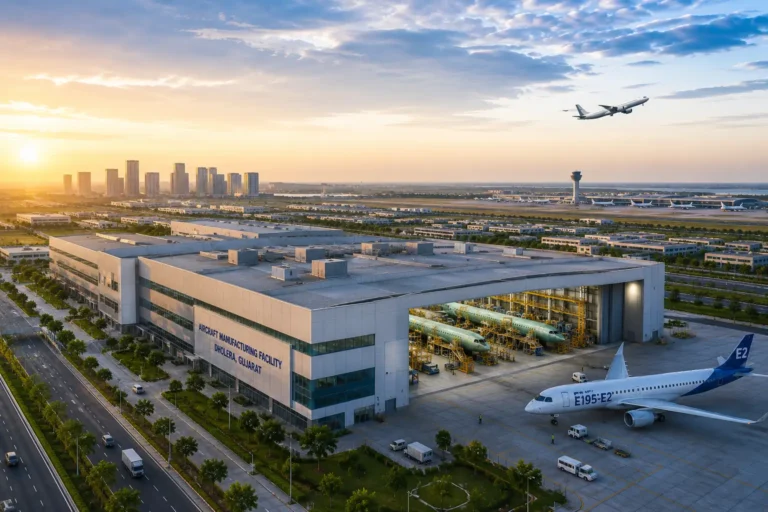

Dholera SIR (Special Investment Region) is a greenfield industrial city in Gujarat, built along the Delhi–Mumbai Industrial Corridor, that has become the centre of India’s semiconductor manufacturing push. It hosts Tata Electronics’ ₹91,000 crore chip fabrication plant and anchors a wider Gujarat chip ecosystem that now includes commercial exports from Sanand.
For years, India’s chip ambitions lived mostly in policy documents. That changed this July, when the CG Semi facility in Sanand dispatched its first commercial consignments of assembled chips to Kuala Lumpur for customers of joint venture partner Renesas Electronics. India is no longer just planning semiconductors — it is shipping them. And Dholera SIR is where the next, much bigger chapter is being written.
What Is Dholera SIR and Why Does It Matter?
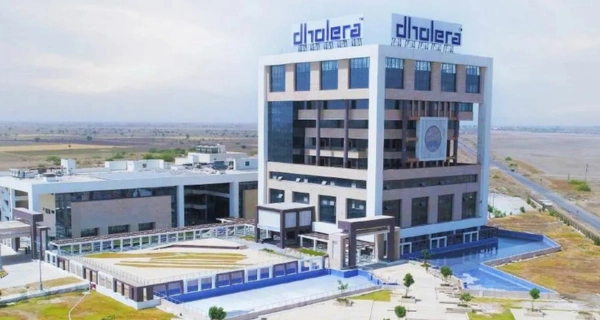
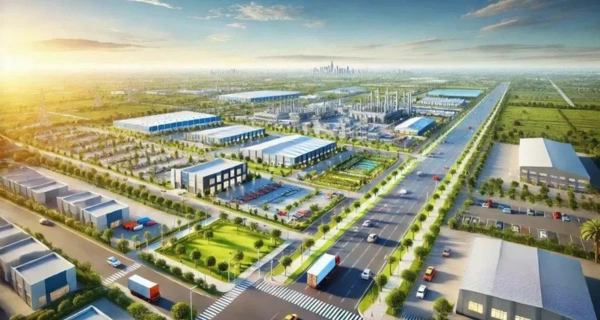
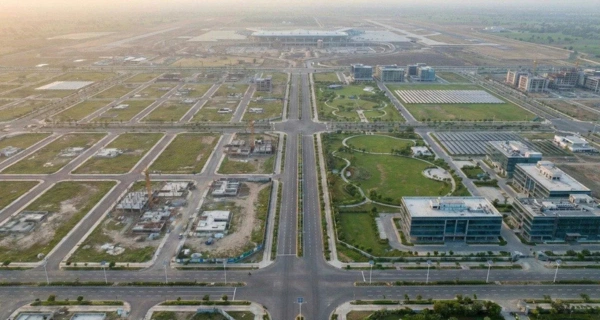
Dholera SIR is a planned smart industrial city spread across roughly 920 sq km in the Ahmedabad district of Gujarat. Unlike organically grown industrial belts, it was designed from the ground up with plug-and-play infrastructure: trunk utilities, an ABCD command centre, wide arterial roads, dedicated water and power lines, and an upcoming international airport.
That matters enormously for chipmaking. A semiconductor fab needs ultra-pure water, uninterrupted power, vibration-controlled land and fast logistics — the exact things retrofitted industrial zones struggle to supply. Dholera SIR was purpose-built for them, which is why it beat several other Indian locations for India’s first commercial fab.
The Tata Electronics Fab: Dholera’s Anchor Project
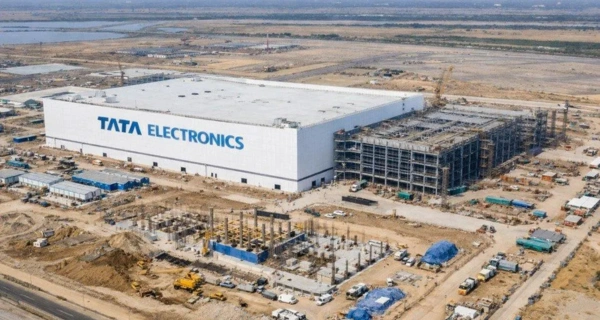
The single biggest reason Dholera SIR dominates India’s chip conversation is the Tata Electronics–PSMC fabrication plant, approved by the Union Cabinet in February 2024 with an investment of about ₹91,000 crore (roughly $11 billion).
Key specifications investors track:
- Capacity: up to 50,000 wafer starts per month
- Technology partner: Powerchip Semiconductor Manufacturing Corp (PSMC), Taiwan
- Starting node: 28nm, with a roadmap toward 22nm
- Wafer size: 300mm
- Target markets: automotive, AI compute, power management ICs, display drivers, telecom
- Progress: construction crossed the 50% mark in 2026, with trial production targeted around December 2026 and commercial ramp-up through 2027–2028
Tata has also signed agreements with ASML for advanced lithography support — a signal that equipment procurement, historically the longest pole in any fab timeline, is being locked in early.
Sanand’s First Exports Prove the Model Works
Dholera SIR does not operate in isolation. About 100 km away, the CG Semi OSAT unit in Sanand — a joint venture between CG Power, Renesas Electronics and Stars Microelectronics — has begun commercial shipments of packaged chips.
OSAT stands for Outsourced Semiconductor Assembly and Test. These facilities don’t fabricate wafers; they handle the critical back-end work of assembly, packaging, testing and quality validation before chips reach electronics manufacturers. CG Semi has committed over ₹7,600 crore across two units: G1, with about 0.5 million units per day, and the far larger G2, planned at roughly 14.5 million units per day.
The significance is strategic. A fab without nearby packaging capacity ships wafers overseas and imports finished chips back. With Dholera fabricating and Sanand packaging, Gujarat is assembling a genuinely end-to-end semiconductor value chain — front-end and back-end within a few hours’ drive.
Jobs, Investment and the Ripple Effect
The Tata fab alone is projected to generate more than 20,000 direct and indirect skilled jobs in its first phase. Around that core, a supplier ecosystem is forming: specialty gases, chemicals, precision components, cleanroom services, logistics and testing labs.
Gujarat has reinforced this with capital subsidies under the state semiconductor policy, layered on top of central support through the India Semiconductor Mission. An SEZ notification for the Tata project in April 2026 added further trade and tax advantages, while a new state data centre policy widens the high-tech base around Dholera SIR.
Why Global Chipmakers Are Watching Dholera SIR
International interest has followed the infrastructure. Gujarat’s SemiConnect conference drew chipmakers and policymakers from Japan, Taiwan and the United States, and additional players have signed MoUs to explore semiconductor manufacturing in the state.
For global firms diversifying beyond concentrated East Asian supply chains, India offers scale, engineering talent and policy support. Dholera SIR offers something rarer: a site where land, power, water and approvals are already sorted.
What to Watch Over the Next 24 Months
The near-term milestones are clear. Watch for trial chip production at the Tata fab around December 2026, the commissioning of Dholera International Airport, CG Semi’s G2 capacity ramp, and the arrival of second-tier suppliers setting up inside the region.
If those land on schedule, Dholera SIR shifts from promising project to operating industrial cluster — and India moves from importing nearly all its chips to producing a meaningful share domestically.
Stay updated: Follow our Dholera latest news section for verified project milestones, policy changes and infrastructure progress across Dholera SIR.
FAQ
Dholera SIR is a Special Investment Region in Gujarat — a planned greenfield smart industrial city on the Delhi–Mumbai Industrial Corridor, developed as India’s flagship destination for semiconductors, electronics and advanced manufacturing.
Tata Electronics, in partnership with Taiwan’s PSMC, is building India’s first commercial semiconductor fabrication plant in Dholera SIR at an investment of about ₹91,000 crore.
Trial production is targeted for around December 2026, with commercial output scaling progressively through 2027 and 2028.
The Dholera fab is a front-end facility that manufactures silicon wafers into chips. CG Semi’s Sanand plant is an OSAT unit that assembles, packages and tests chips — the back-end stage that prepares them for use in electronic products.
The Tata fab is expected to create over 20,000 direct and indirect skilled jobs in phase one, with wider employment across suppliers, logistics, construction and services.