
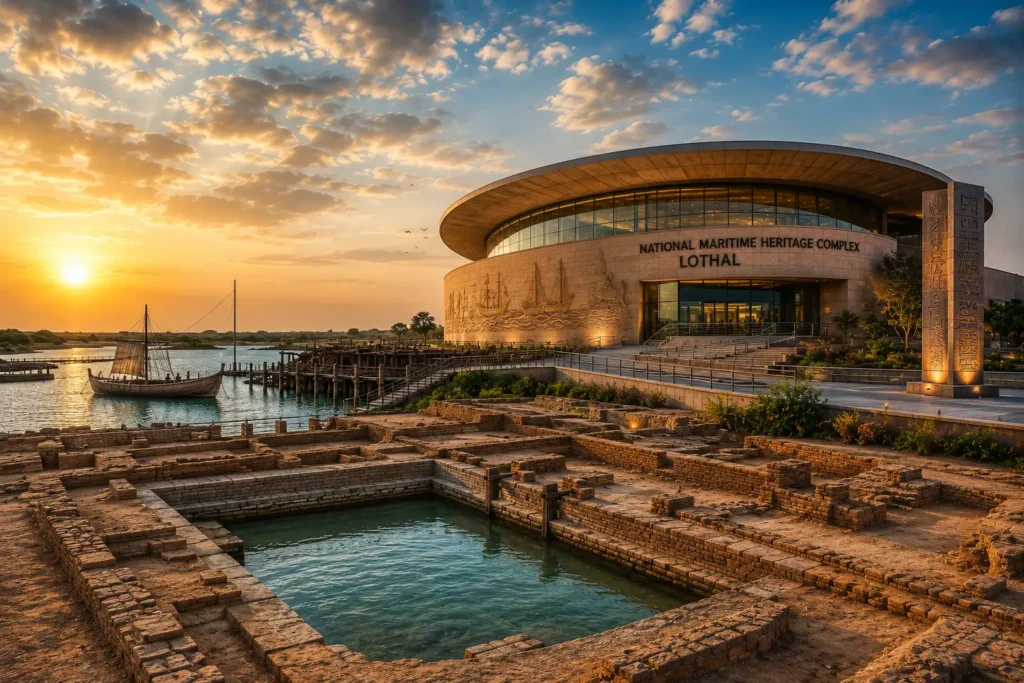
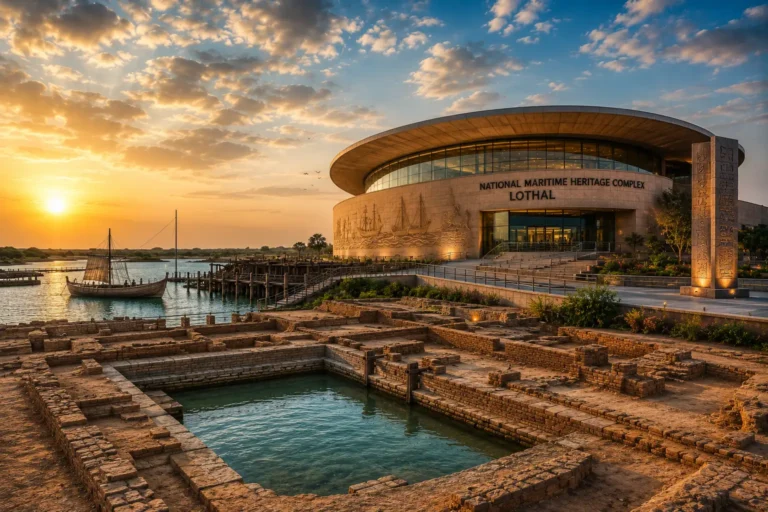
Lothal Museum is located near Saragwala village in Gujarat, on land that changed how we understand ancient trade. This historic site is home to one of the world’s oldest known dockyards, built more than 4,000 years ago. Today, it is also home to the developing National Maritime Heritage Complex, or NMHC. Here is a simple, plain-language guide to what visitors can expect to find there.
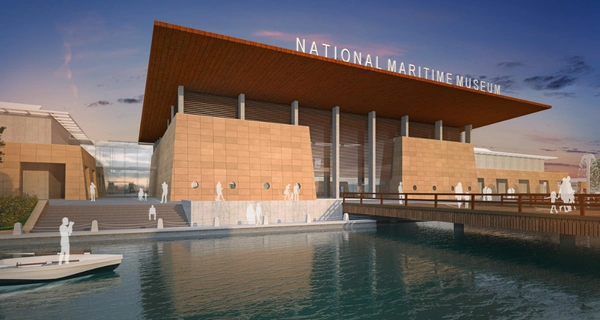
What is the NMHC?
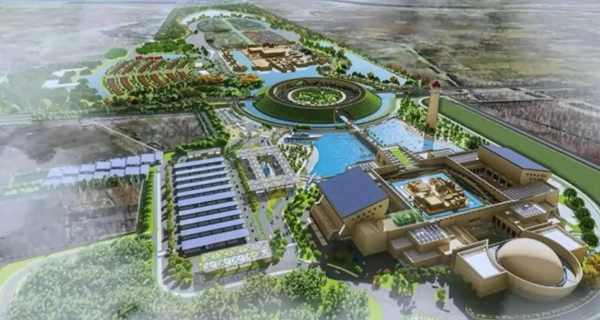
It’s not just one museum building. It’s a large site being built in stages. Right now, it has a museum with numbered galleries, old naval ships and aircraft on display, and boating. In the future, it will also have a lighthouse museum, theme parks, and resort-style stays. The project falls under India’s Ministry of Ports, Shipping and Waterways. The goal is simple: turn Lothal from a small archaeological site into a full national destination.
Why Lothal was chosen
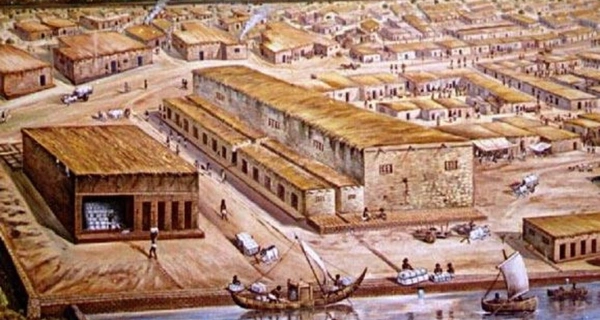
This is the part that explains everything else. Long before any construction began, Lothal was already famous among archaeologists. It has the oldest man-made dockyard ever found, dating back to around 2400 BCE. It was a working Harappan port. Traders here did business with regions as far away as the Persian Gulf, Oman, Mesopotamia, and Egypt. So the museum isn’t built on a made-up story. It’s built on a real one, already sitting in the ground.
Walking through the galleries
The museum has 14 galleries planned in total. Right now, the first few are open and tell the story in order.
Gallery 1 Works as an introduction. It covers ocean science, underwater archaeology, and old myths about water. Gods like Varuna, Ganga, and Vishnu appear here. Visitors get a preview of the rest of the museum through interactive screens, not just text panels.
Gallery 2 is about the Harappans. It shows how port towns like Lothal and Dholavira worked, what they traded, and how goods moved along the Makran coast toward the Gulf region.
Gallery 3 picks up after the Harappan civilization declined. It shows how people moved to new areas, how metalworking spread across India, and how early trade routes and writing systems slowly took shape.
More galleries will open later and carry the story into more recent history.
What's outside the galleries
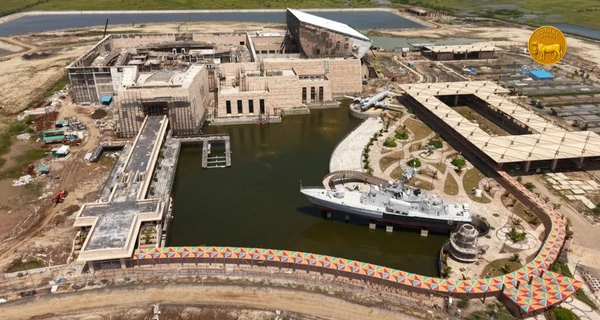
Step outside, and the mood changes from ancient history to modern navy hardware. There’s a decommissioned naval warship on display. There’s also a maritime patrol aircraft and a fighter jet once used on aircraft carriers. Boating is available too, so the visit doesn’t feel like a non-stop history lesson.
What's still being built
A large part of NMHC exists only on paper today. Future plans include a 5D dome auditorium, a lighthouse museum, a rebuilt Lothal township, pavilions for India’s coastal states, and an entertainment zone with theme parks and rides. There are also plans for themed hotels and an eco-resort. Check the latest notifications on the official site before you plan a trip around these, since they are not open yet.
A project with global attention
NMHC has drawn interest from outside India too. It has collaboration ties with 11 countries: Portugal, Vietnam, UAE, Thailand, Oman, South Korea, Italy, the Netherlands, Israel, Germany, and Denmark. Senior Indian officials, including the Prime Minister, have also visited the site, which shows how much importance it holds at a national level. According to the official visitor counter, the site has already recorded over 3.39 lakh (339,000+) visitors.
Quick facts
- – Location: Lothal, Saragwala, Gujarat – 382230
- – Total planned galleries: 14
- – Age of the Lothal dockyard: roughly 4,000+ years
- – International collaborations: 11 countries
- – Contact number: 079-49170773
Planning your visit
Since the site is being built in phases, check the official brochure and recent notifications before you go, as timings and open sections can change. The site offers help with booking, accessibility, food, and audio guides. Because the complex is spread out, plan for at least half a day, more if you want to see everything without rushing.
Is it worth visiting?
NMHC isn’t fully finished yet, and it’s fair to know that going in. But what’s open already gives you something rare: a real archaeological site, a well-built museum, and naval hardware you can walk right up to. If you’re curious about how old India’s link with the sea really is, this is one of the most direct ways to see it.
Frequently Asked Questions
1. What is the National Maritime Heritage Complex (NMHC)?
It’s a large heritage and museum project at Lothal, Gujarat, built to showcase India’s maritime history, from the Harappan era to modern naval history.
2. Where is the Lothal Museum located?
It’s located at Lothal, Saragwala, Gujarat, 382230, India.
3. Why is Lothal historically important?
Lothal has the world’s oldest known man-made dockyard, built around 4,000 years ago during the Harappan period.
4. How many galleries does the museum have?
The full plan includes 14 galleries. As of now, the first few galleries are open to visitors, with more planned in future phases.
5. Can visitors see naval ships and aircraft at NMHC?
Yes. The complex displays a decommissioned naval warship, a maritime patrol aircraft, and a fighter jet, all open for public viewing.





One thought on “Lothal Museum: A Simple Guide to India’s National Maritime Heritage Complex”