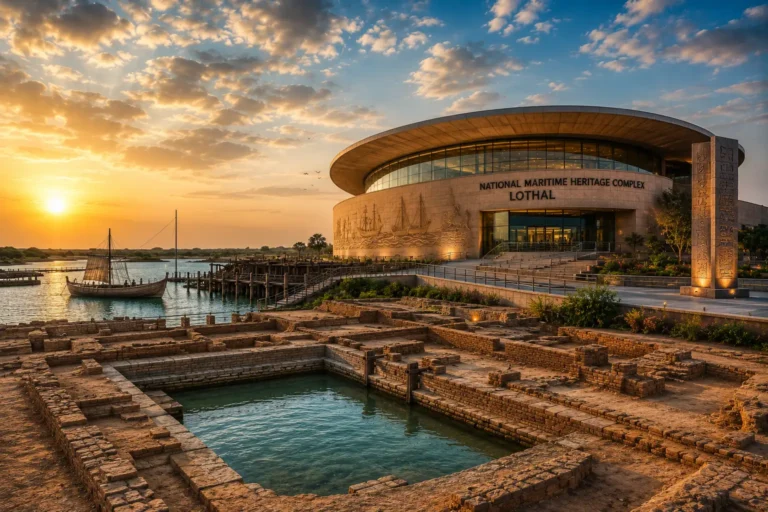
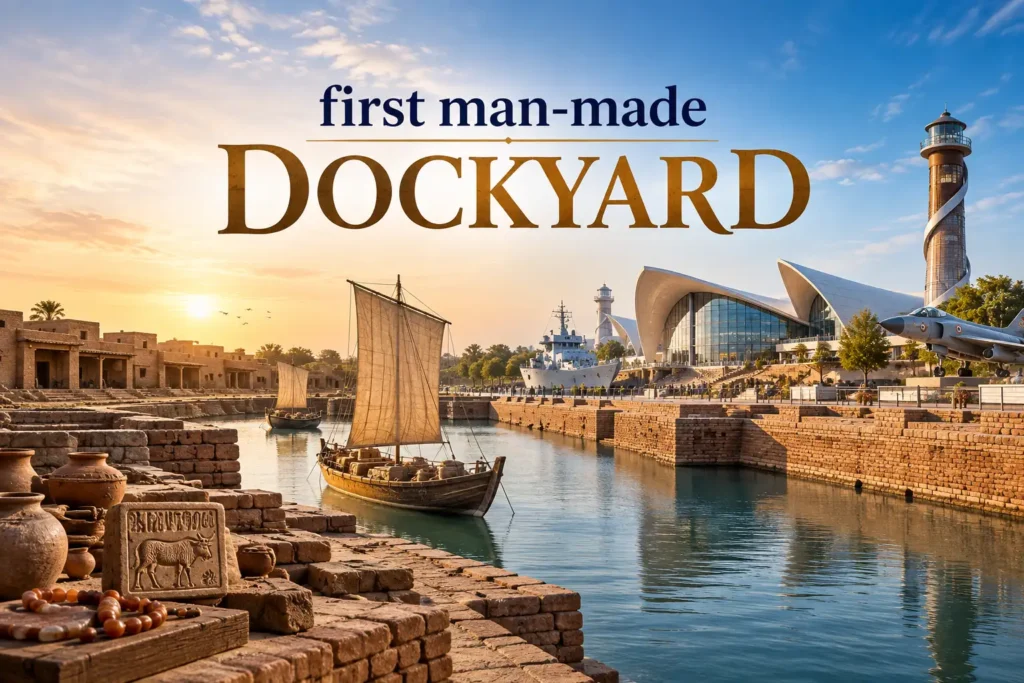
Long before modern harbours and container ships, a small town in Gujarat was already building boats a safe place to rest. That town was Lothal. Today, archaeologists recognise it as home to the first man-made dockyard known to history.
Now, more than 4,000 years later, Lothal is getting a second life. The National Maritime Heritage Complex (NMHC) is being developed right beside the ancient site. Let’s explore both stories, the old and the new.
Where Is Lothal and Why Does It Matter?
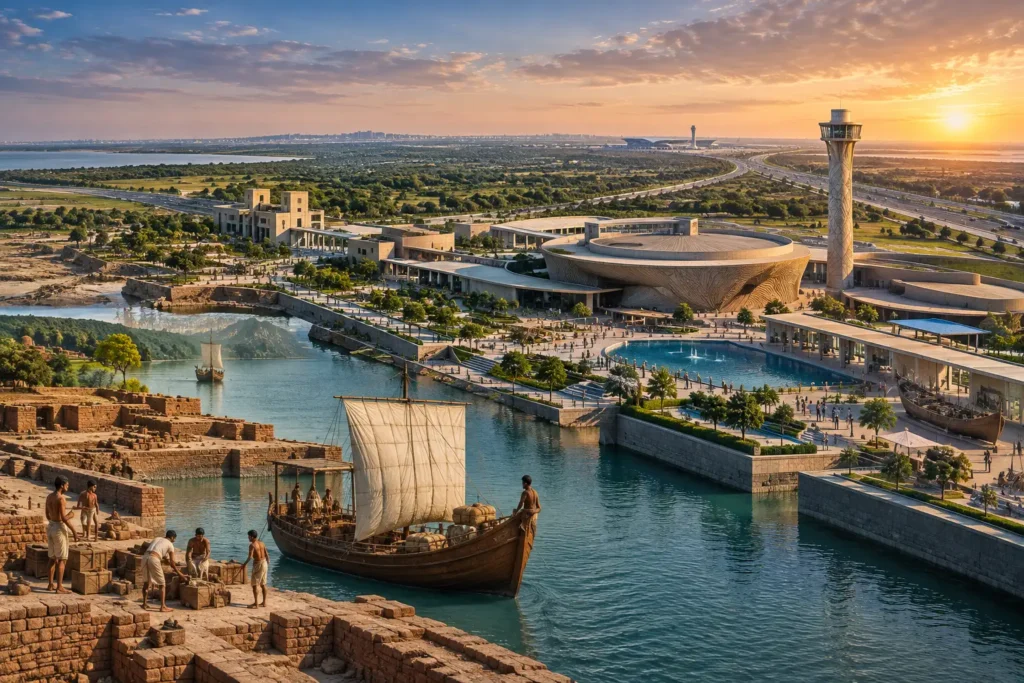
Lothal sits in the Ahmedabad district of Gujarat, near the village of Saragwala. It lies roughly 80 km from Ahmedabad city, in the flat Bhal region close to the Gulf of Khambhat.
The name loosely translates to “mound of the dead” in Gujarati. Yet the place was anything but lifeless. Around 2400 BCE, it was a busy port town of the Harappan (Indus Valley) Civilisation.
What makes Lothal special is simple. It shows that Indians were engineering waterfronts at a time when most of the world had barely begun sailing.
Inside the First Man-Made Dockyard
The star of Lothal is its brick-lined dock basin. It stretches roughly 220 metres long and about 37 metres wide. Builders used kiln-fired bricks, which held up well against salty water.
The dock connected to an old channel of the Sabarmati river. Ships could sail in during high tide and stay protected from strong currents.
Experts believe the Harappans added a sluice gate or spillway. This helped control water levels, so boats did not get stranded when the tide went out. For 2400 BCE, that is remarkable planning.
Next to the dock stood a large warehouse on a raised platform. Goods were likely stored, checked and sealed here before loading or after unloading.
A Busy Trade Hub of the Ancient World
Lothal was not just a parking spot for boats. It was a trading powerhouse.
Craftsmen here made beads from carnelian, agate and other semi-precious stones. A dedicated bead-making workshop has been found on site. Shell work, copper tools and fine pottery were also produced.
These goods travelled far. Trade links reached the Persian Gulf, Oman and Mesopotamia. A seal of Persian Gulf style found at Lothal hints at this long-distance contact.
The town itself was well planned. It had an upper area (acropolis), a lower town, straight streets, drains and bathing platforms. Like other Harappan cities, it showed a strong sense of order.
Discovery and Excavation
For centuries, Lothal lay buried under silt and soil. In 1954, archaeologist S.R. Rao of the Archaeological Survey of India identified the site.
Excavations continued between 1955 and 1960. Slowly, the dock, warehouse, houses and workshops emerged. The findings changed how historians viewed early Indian seafaring.
A small site museum run by the ASI now displays pottery, beads, tools and seals recovered during digging. It is worth a visit on any trip to the area.
NMHC: Bringing Lothal’s Legacy Back to Life
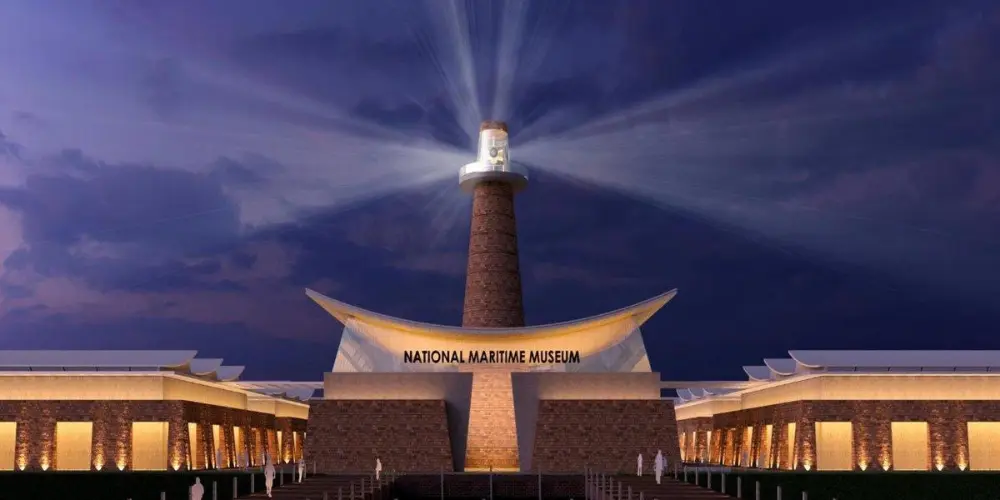
To honour this heritage, the Ministry of Ports, Shipping and Waterways is building the National Maritime Heritage Complex at Lothal. It aims to become one of the largest maritime heritage projects in the world.
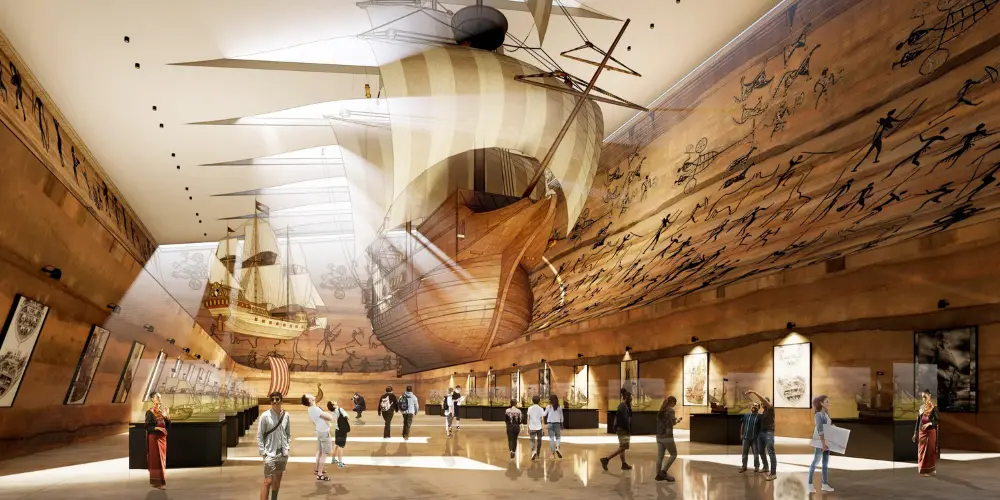
The museum is planned across 14 galleries. Each one covers a chapter of India’s long relationship with the sea.
The early galleries start with ocean science, underwater archaeology and sea-related myths. Another gallery focuses on the Harappans as pioneer sailors, including Lothal and Dholavira. Later sections trace trade with the Greco-Roman world, the rise of the Indian Navy and the Coast Guard, and much more.
One exciting feature is “Lothal Town.” This will be a recreated mini Harappan settlement inside the museum courtyard. It will be surrounded by water to echo the ancient dock. Visitors can walk through old-style streets, watch evening shows, and even try a barter-based market, just like trade before money existed.
Attractions You Can Enjoy at NMHC
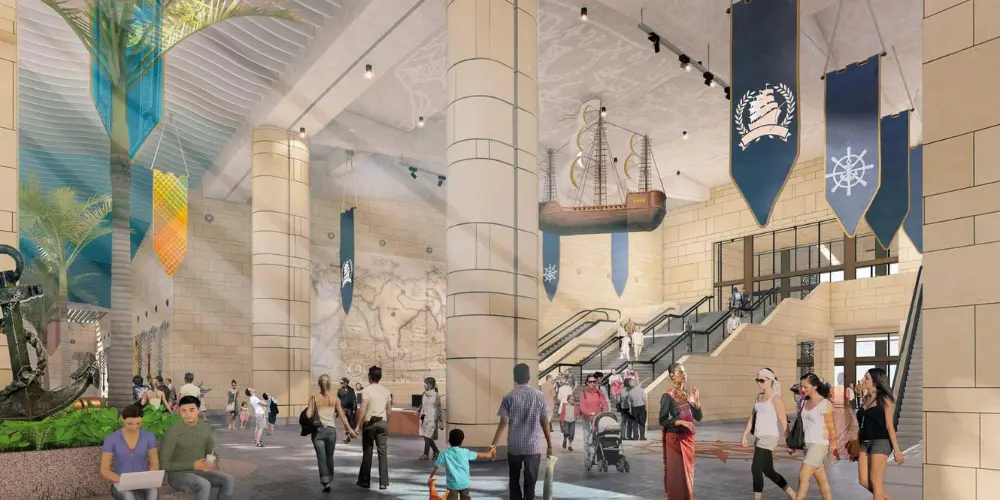
Beyond the galleries, NMHC offers some thrilling hands-on attractions.
Visitors can see the decommissioned warship INS Nishank, an IL-38 SD maritime aircraft, and a Sea Harrier fighter jet. These give a close look at India’s modern naval power.
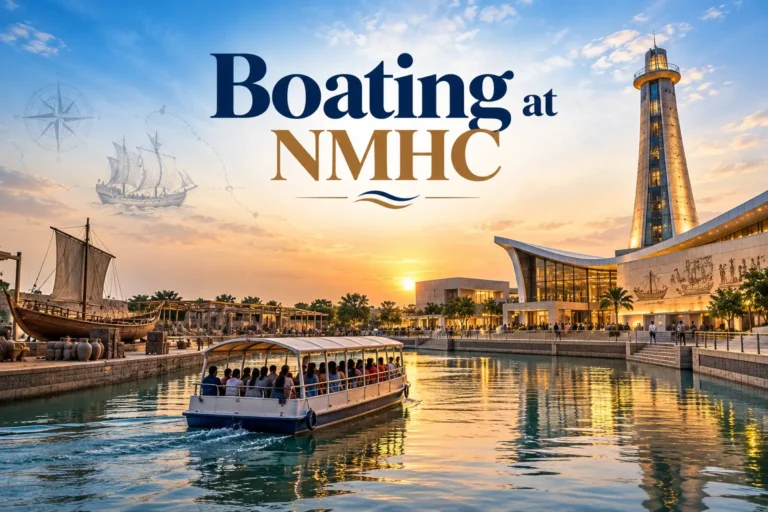
Boating is also available on site. It adds a fun touch for families and young visitors.
Future plans are even bigger. They include a lighthouse museum, a 5D dome auditorium, pavilions for India’s coastal states, themed parks, eco-resorts and “museotels” where guests can stay overnight.
The complex has also partnered with countries such as Portugal, Vietnam, the UAE, Oman, Italy and the Netherlands. This gives the project a global flavour.
Planning Your Visit to Lothal
The best time to visit is between October and March, when Gujarat’s weather is pleasant. Summers can be very hot in the Bhal region.
The nearest major airport and railhead is Ahmedabad. From there, a road trip of around two hours brings you to Lothal. Nearby Lothal-Bhurkhi station offers a smaller rail option.
Plan to spend a full day. Start with the ancient dockyard and ASI museum, then head to NMHC for its galleries and attractions. Always check the official NMHC website for timings and ticket details before you go.
Frequently Asked Questions
Lothal in Gujarat, India, is considered the earliest known man-made dockyard, dating back to around 2400 BCE.
Archaeologist S.R. Rao of the Archaeological Survey of India identified it in 1954.
It was built by the Harappan, or Indus Valley, Civilisation.
NMHC stands for National Maritime Heritage Complex, a major museum and heritage project at Lothal showcasing India’s maritime history.
The museum is planned with 14 galleries covering ancient to modern maritime history.