Ask a 22-year-old in Bhavnagar or Ahmedabad what a ₹7 lakh crore investment plan means, and the answer is short: does it come with a job?
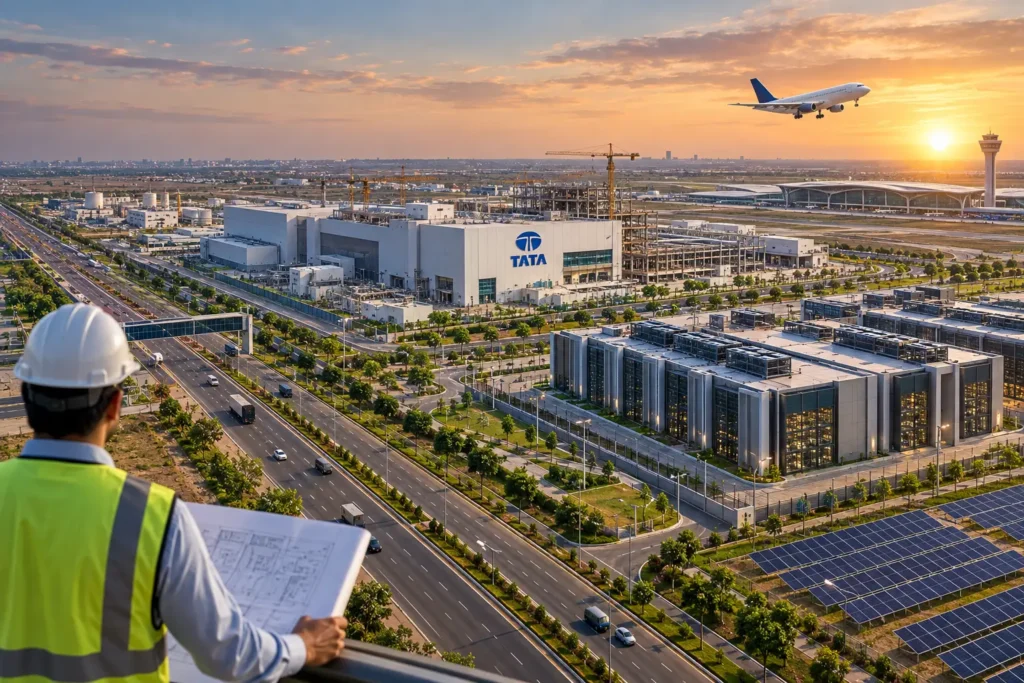
That is the real test facing the Vibrant Gujarat Global Summit 2027, scheduled in Gandhinagar from January 10 to 12. At the New Delhi curtain-raiser, Chief Minister Bhupendra Patel spent his time on global diplomatic conversations built around two words — semiconductors and data centres. Both lead to the same 920 sq km of coastal Gujarat. So most Dholera updates worth reading right now are really about whether announcements convert into payrolls.
First, decode the number
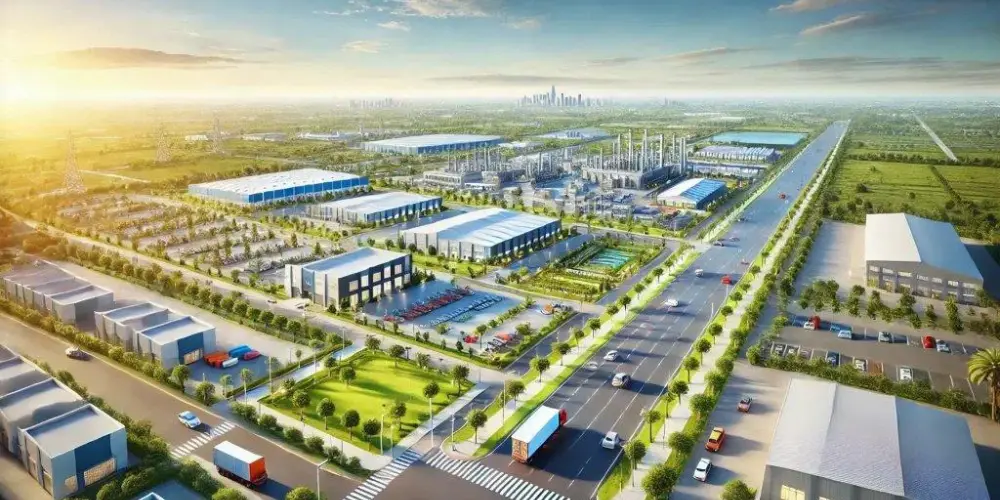
₹7 lakh crore is not a single commitment. It is a pipeline stitched from two policy pushes.
The bigger piece is digital. In July 2026, Gujarat became the first Indian state with a dedicated data centre policy — Viksit Gujarat Data Centre Policy 2026-29. The government said around 14 companies had already submitted proposals, with over ₹6 lakh crore expected in phase one against a 7.5 GW capacity target. Officials indicated Dholera alone could absorb a 7 to 8 GW cluster.
The smaller piece is silicon, and it carries more strategic weight. At the curtain-raiser, Patel said six of India’s twelve approved semiconductor projects sit in Gujarat, three of them already operational.
Stack the two together and you get the headline figure now circulating ahead of the summit.
Where the money physically lands
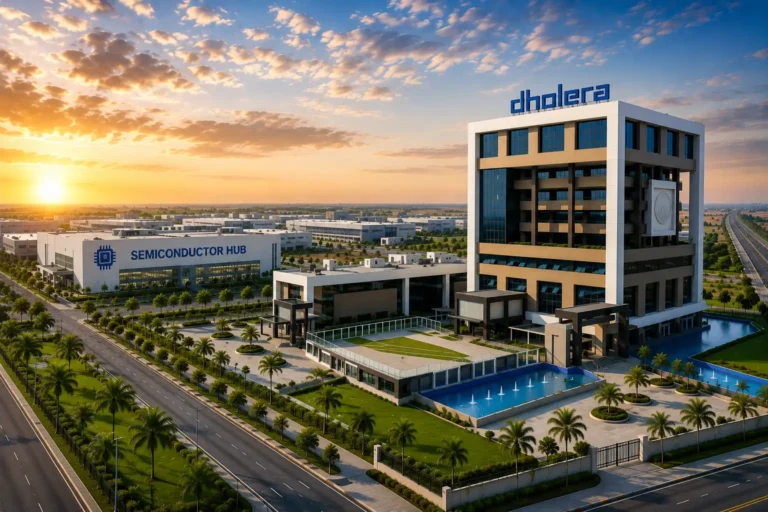
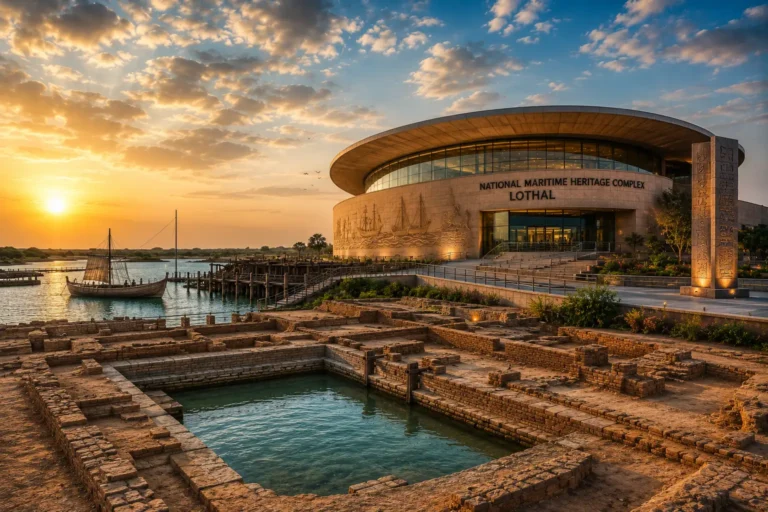
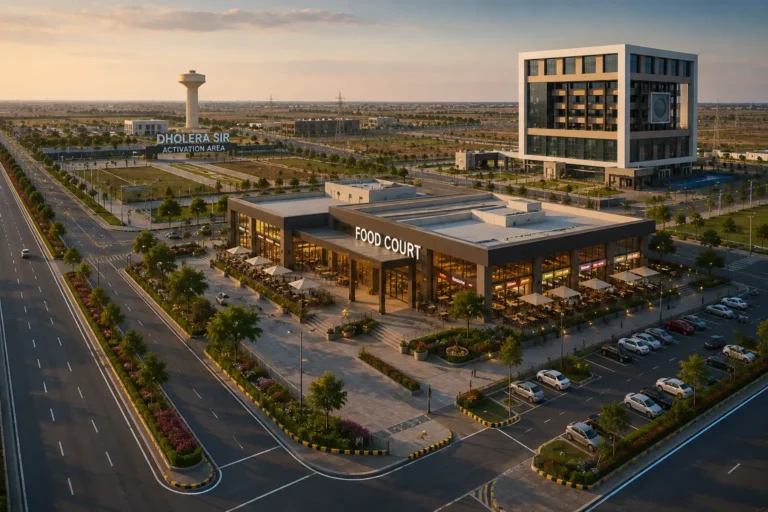
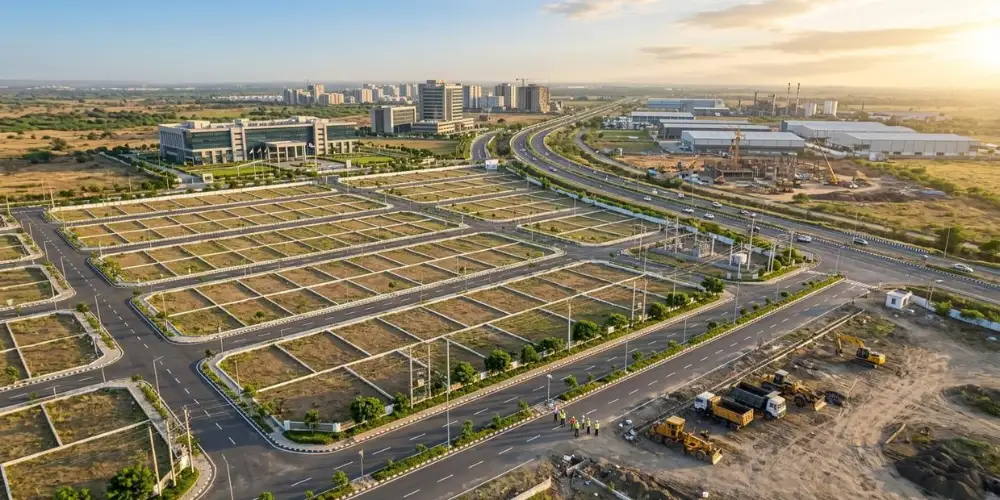
Dholera Special Investment Region spent a decade being called a future city. In 2026 it started looking like a construction site with deadlines.
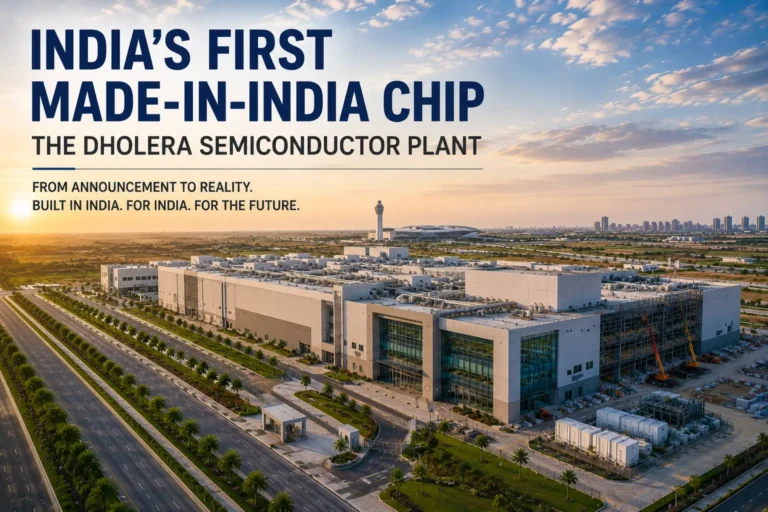
The anchor is the Tata Electronics-PSMC fab, approved in February 2024 at roughly ₹91,000 crore, designed for up to 50,000 wafers a month starting at 28nm — power management ICs, display drivers, microcontrollers, automotive chips. As of April 2026 the site was reported around 50% complete, past foundations and into the difficult work: cleanrooms, tool integration, process calibration.
December 2026 is the widely quoted date for India’s first commercially fabricated chip. Read it as a target. Fabs slip everywhere in the world, and a delay would be ordinary rather than damning.
On the digital side, L&T Vyoma committed ₹25,000 crore in February 2026 for a 250 MW green AI data centre in Dholera, targeting 2028. The incentives explain the pull: a 2.5% capital subsidy specific to the Dholera region, up to 4% interest subsidy capped at ₹25 crore a year, a ₹1 per unit power tariff subsidy for twenty years, stamp duty exemption and long-run SGST reimbursement. In exchange, operators must draw at least 51% renewable power and meet water needs through captive desalination instead of local freshwater.
Supporting infrastructure is moving too. The Dholera international airport was reported roughly 80% complete in mid-2026, a semi-high-speed rail link to Ahmedabad is planned, and Fujifilm India has signed an MoU to explore supplying process chemicals to the fab.
The second layer, not a replacement
Gujarat’s industrial identity has been brass parts in Jamnagar, diesel engines in Rajkot, textiles in Surat, diamonds in Ahmedabad and Surat. None of that is being retired.
What is new is a layer built on top of it — fabs, hyperscale compute, green hydrogen, global capability centres, fintech — closer to the clusters emerging in Andhra Pradesh and Telangana. Dholera is the purest example, because it was planned for exactly this: large contiguous land, engineered utilities, port and expressway access.
Who actually gets hired
The employment story has three tiers, and they are not equal.
Tier one is construction. This is the largest number and the shortest-lived. Multi-gigawatt data centre builds and fab civil work absorb thousands of workers for a few years, then release them.
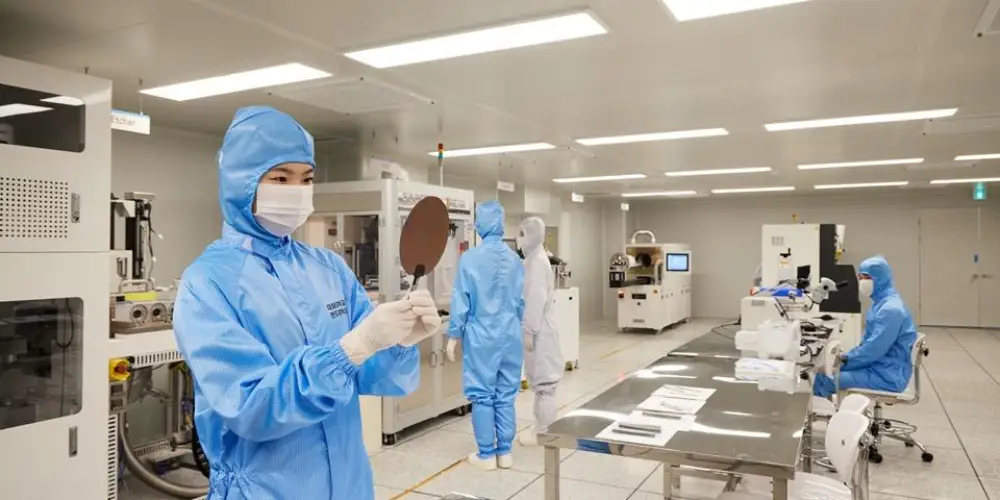
Tier two is operations. The Tata fab alone is estimated at over 20,000 direct and indirect jobs, but the operational core is specialised — process engineers, metrology and cleanroom technicians, power and network engineers. A running data centre employs far fewer people per crore invested than a textile mill.
Tier three is the ecosystem, and it may quietly be the biggest: chemicals, precision engineering, logistics, warehousing, facility management, housing, transport and food services around the SIR.
The determining variable is skilling. Whether Gujarati youth take tier-two roles or watch them go to Bengaluru, Hyderabad and Taipei depends on how fast the state’s ITIs, polytechnics and engineering colleges build fab-adjacent lab capacity. And a standing caution: MoU value is not realised investment. Vibrant Gujarat has a long record of that gap.
The January scoreboard
Four checkpoints will tell you whether Dholera is converting announcements into output: whether a wafer actually emerges from the Tata fab; how many of the 14 data centre proposals become signed land allotments; whether the airport opens on time; and how much skilling money is aimed specifically at semiconductor and data centre roles.
VGGS-2027 in January is where those answers get counted.
FAQs
January 10-12, 2027, in Gandhinagar — the 11th edition, themed “Viksit Gujarat: Shaping Global Future.”
Mainly the ₹6 lakh crore-plus data centre pipeline plus Gujarat’s semiconductor projects, heavily concentrated in Dholera.
Trial output is targeted for December 2026, scaling commercially through 2027. Fab timelines commonly slip.
About ₹91,000 crore, up to 50,000 wafers per month at 28nm and above.
The fab alone is estimated at 20,000-plus direct and indirect roles, with more from data centres, suppliers and construction — though most construction work is temporary.