For years, people tracking Dholera have asked one practical question: how will goods, workers and residents actually move in and out of the city? Roads and an airport answer part of it. The newly approved Dholera rail line answers a much bigger part.
The Government of India has approved the Final Location Survey (FLS) for a 65 km railway connecting Bhavnagar to Dholera. Railway Minister Ashwini Vaishnaw announced the approval. This guide explains what the project is, what an FLS approval really means, and why the Dholera rail line matters for the wider region.
What Is the Dholera Rail Line?
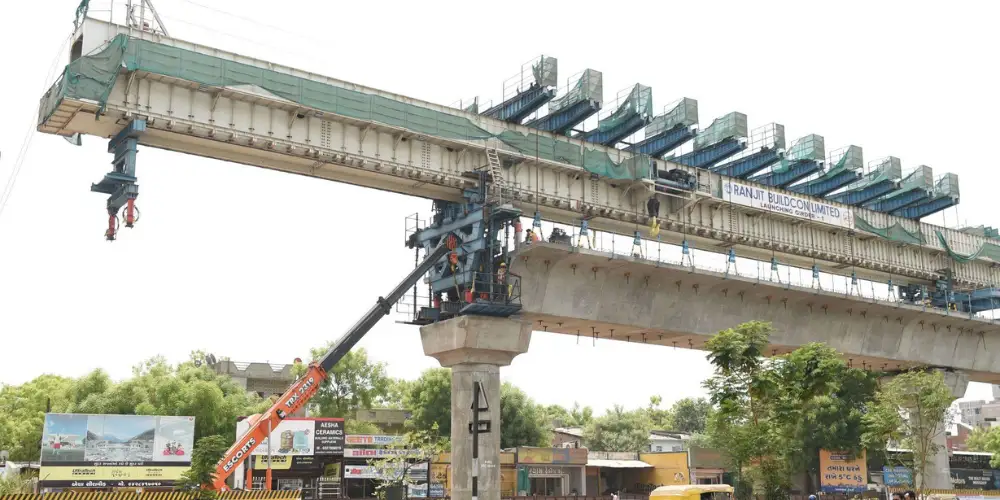
The Dholera rail line is a proposed 65 km railway that will link Bhavnagar, a coastal city and port hub in Saurashtra, with Dholera in Ahmedabad district. It is a new alignment, not an upgrade of an existing track.
Today, moving cargo between the Bhavnagar coast and the Dholera region depends almost entirely on roads. A direct rail corridor gives industries a cheaper, higher-volume option for heavy and bulk freight. It also opens the door to passenger services later, depending on how the project is designed.
Official details on the exact route, stations, cost and construction timeline have not yet been published. Those usually emerge after the survey stage is complete.
Understanding the Final Location Survey (FLS)
A Final Location Survey is one of the first formal steps in building any new railway in India. It is not construction approval, but it is far more than an idea on paper.
During an FLS, railway engineers:
- Walk and map the proposed alignment on the ground
- Fix the precise centre line of the track
- Identify where stations, bridges and level crossings may go
- Estimate the land that must be acquired
- Prepare data for the Detailed Project Report (DPR)
Once the survey is done, the DPR is prepared and sent for financial sanction. Only after that does tendering and construction begin. So the FLS approval tells us the Dholera rail line has moved from planning talk into the official engineering pipeline.
Why Bhavnagar and Dholera Make a Natural Pair
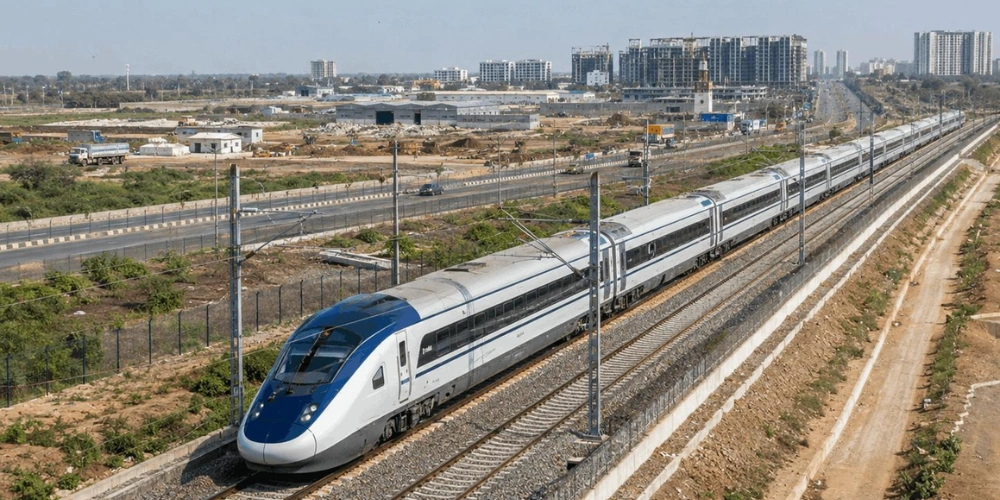
Bhavnagar and Dholera sit on opposite sides of the Gulf of Khambhat’s northern edge. Geography already ties them together; transport has simply lagged behind.
Bhavnagar brings a working port, shipbuilding and ship-breaking activity, and established trade networks. Dholera brings planned industrial land, new factories and space to grow. A rail link lets each side use what the other has.
For manufacturers in Dholera, the Dholera rail line could shorten the path to coastal shipping. For Bhavnagar, it creates a direct feeder from one of Gujarat’s largest planned industrial zones.
Dholera Smart City at a Glance
To see why the Dholera rail line is significant, it helps to understand Dholera itself.
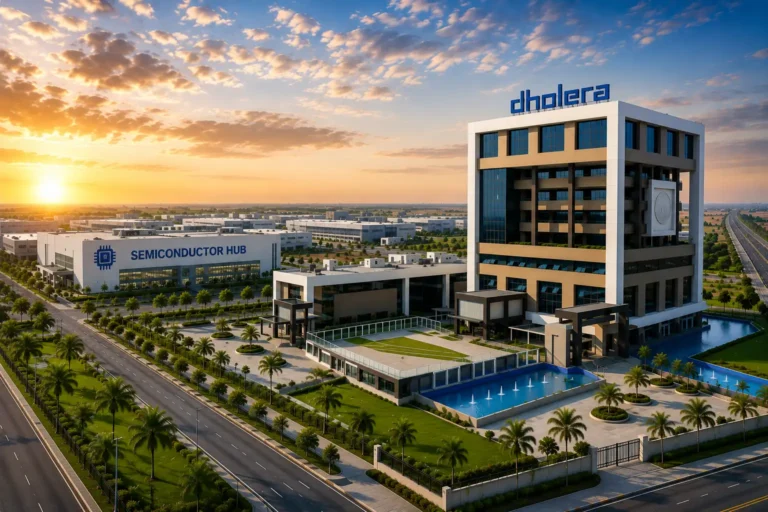
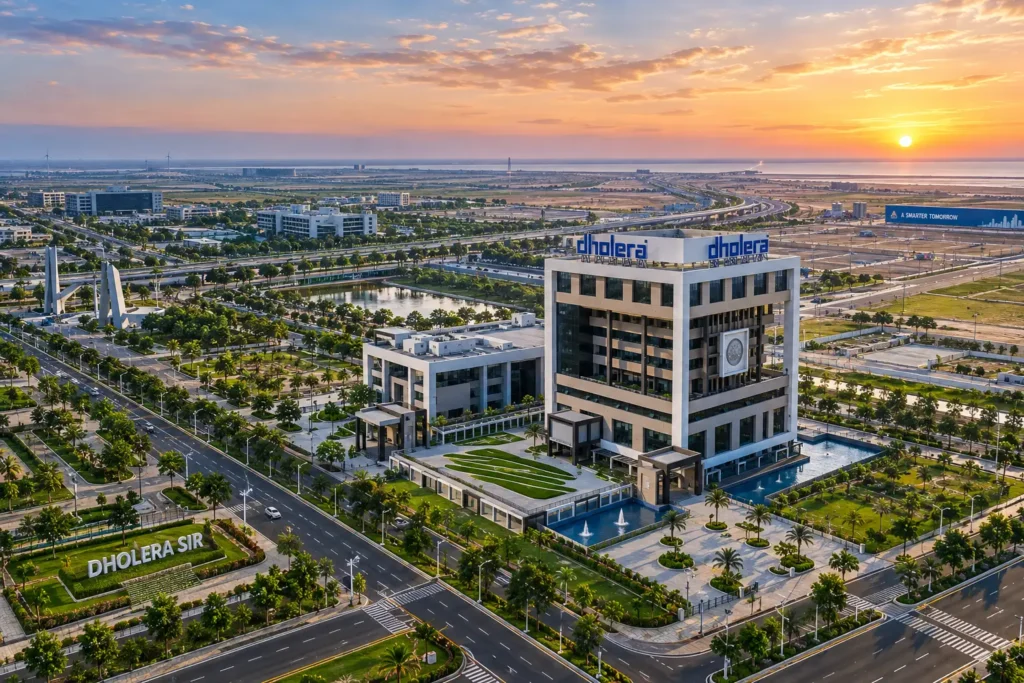
Dholera Special Investment Region (Dholera SIR) is planned as India’s first greenfield smart city under the Delhi–Mumbai Industrial Corridor (DMIC). “Greenfield” means it is being built on largely undeveloped land, with roads, utilities and zoning designed before buildings go up.
Key planning features include:
- Dedicated industrial zones for large manufacturing units
- An activation area, the first zone where infrastructure is being rolled out
- Flood-conscious design, since the region is low-lying and close to the coast
- Smart utilities, including planned water, power and digital networks
Industrial cities live or die by logistics. That is why rail, road and air links are being built alongside the city rather than after it.
The Wider Connectivity Picture
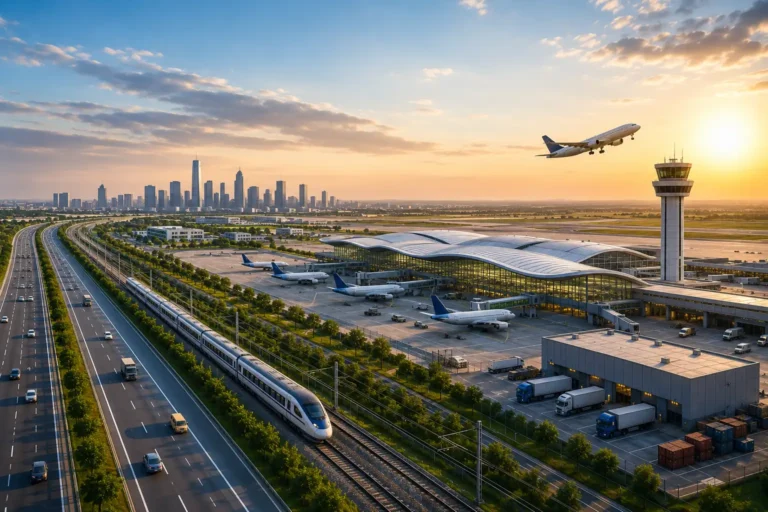
The Dholera rail line does not stand alone. It joins a set of projects meant to make Dholera reachable from every direction.
Ahmedabad–Dholera Expressway This access-controlled expressway connects Dholera to Ahmedabad and is designed to cut travel time significantly compared with older state highways.
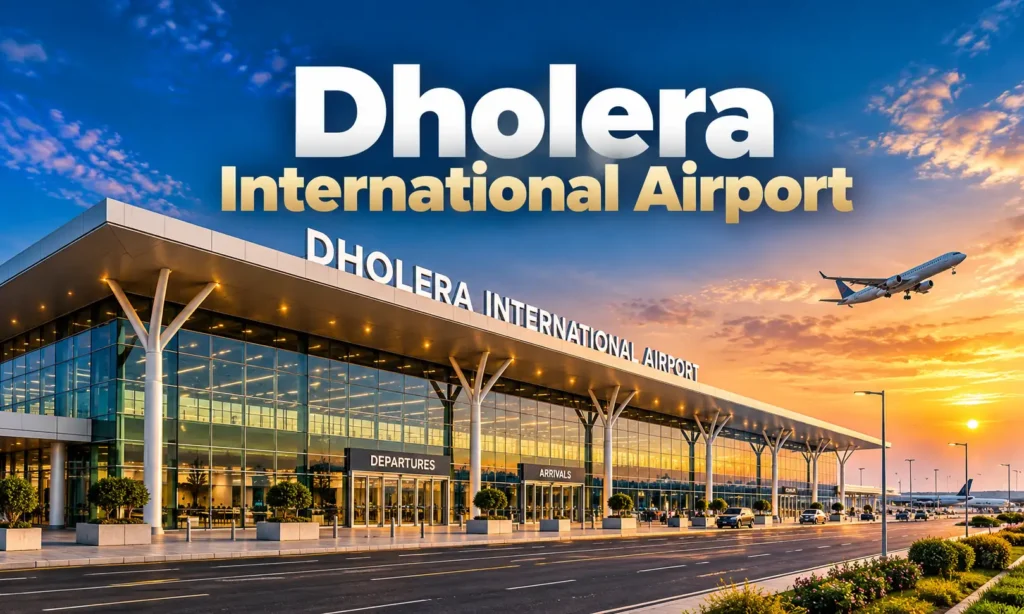
Dholera International Airport A new greenfield airport is being built near the city and is reported to be close to completion. It is meant to handle passengers and air cargo.
DMIC integration As part of the Delhi–Mumbai Industrial Corridor, Dholera is planned to connect with the Western Dedicated Freight Corridor and the national rail network.
Bhavnagar–Dholera railway The new rail link adds a coastal freight route that the other projects do not cover.
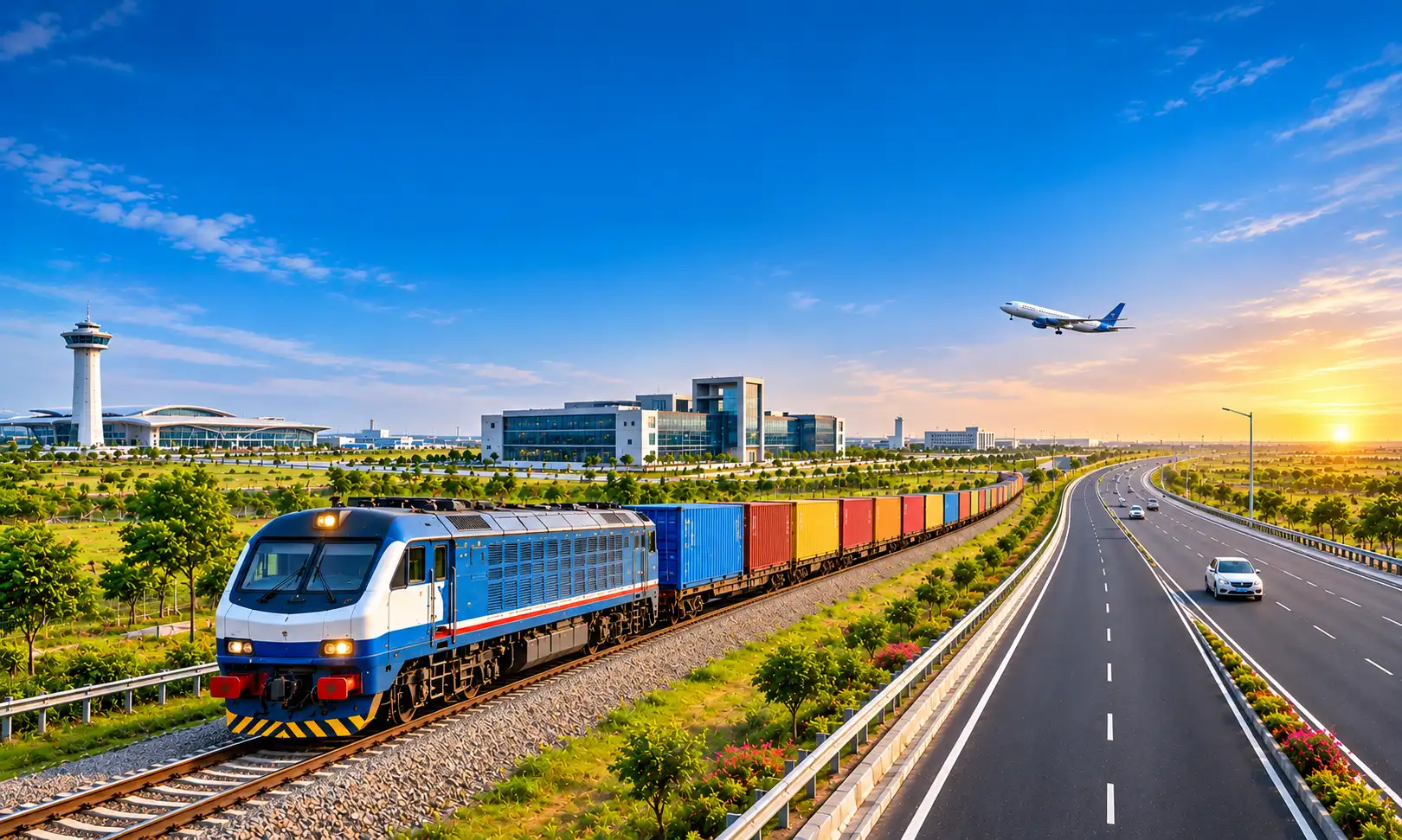
Together, these turn Dholera from a remote stretch of land into a node with road, rail and air access. The Dholera rail line is the piece that ties the city most directly to the coast.
How the Rail Link Supports Industry
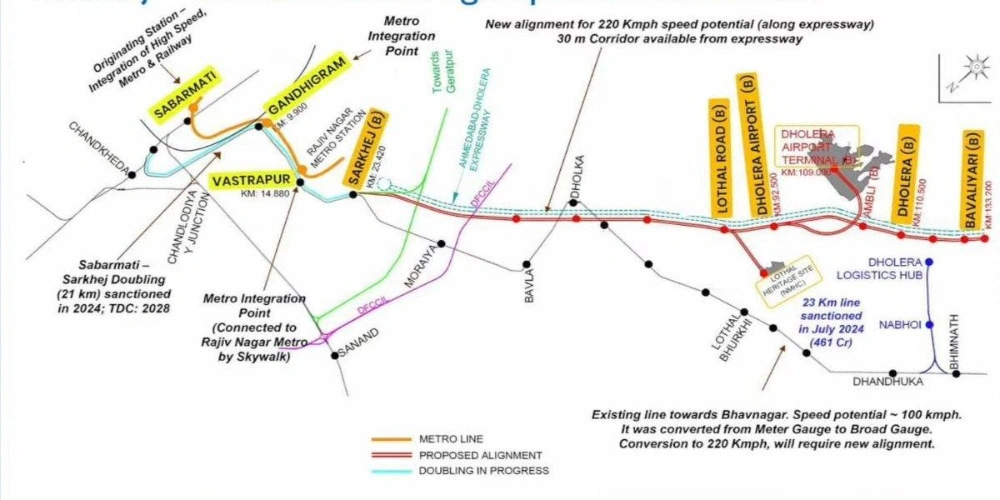
Heavy industry needs cheap, reliable bulk transport. Trucks work for short distances and smaller loads. Rail is usually more efficient for large, regular shipments over longer distances.
The Dholera rail line is expected to support several sectors:
- Semiconductors and electronics: The Tata–PSMC semiconductor fabrication plant in Dholera will need steady movement of equipment, chemicals and finished goods.
- Heavy engineering: Large machinery and components are easier to move by rail.
- Manufacturing: Factories in the industrial zones can send raw materials in and products out at lower cost.
- Logistics and warehousing: A rail siding attracts warehouses, container yards and distribution centres.
- Exports: A direct line to the Bhavnagar coast makes it easier to route goods toward shipping.
For a city still in its early stages, early rail commitment can shape where investors decide to set up.
What It Could Mean for Jobs and Daily Life
Infrastructure is not only about freight. When a new railway arrives, it often changes how people live and work around it.
Construction itself creates short-term jobs. Over the long term, factories and logistics parks that follow the Dholera rail line can bring steady employment to nearby towns and villages.
If passenger services are added, residents of Bhavnagar district and the Dholera area could travel between them without relying on buses or private vehicles. Better links also make it easier for skilled workers to move to the region.
What It Means for Land and Property in the Region
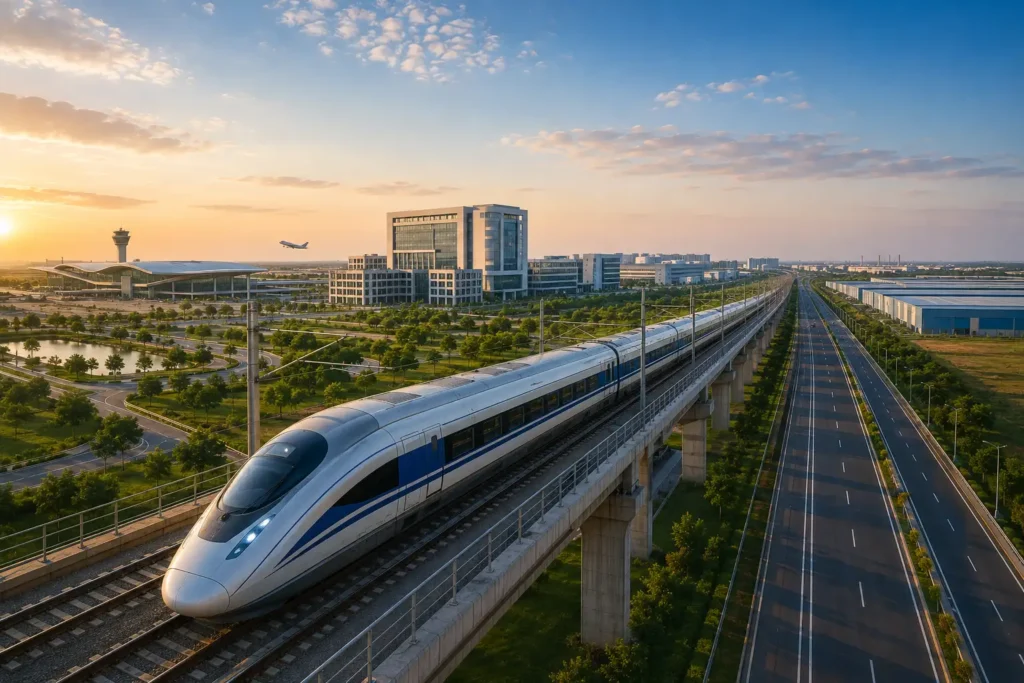
Transport projects tend to influence land use around them. Areas near new stations, freight yards and corridors often see more interest from industry, traders and homebuyers.
In Dholera, the property types commonly discussed include residential plots, commercial plots, villas, plotted developments and industrial land. The Dholera rail line may add to interest in pockets that end up close to the alignment.
However, a few cautions apply:
- The exact route and station locations are not yet public, so no one can say for sure which areas benefit most.
- Railway projects can take several years from survey to operation.
- Any land purchase should be checked against the official Dholera SIR development plan and zoning.
Anyone considering property should verify approvals, title and zoning directly with the relevant authorities before deciding.
What Happens Next
The path for the Dholera rail line from here usually looks like this:
- Completion of the Final Location Survey
- Preparation of the Detailed Project Report
- Financial sanction by the Railway Board and government
- Land acquisition along the approved alignment
- Tendering and award of construction contracts
- Construction, testing and commissioning
Each step brings new public information, such as the cost estimate, station list and target completion date. Keeping an eye on official Indian Railways and Gujarat government announcements is the best way to track progress.
Final Thoughts
The approval of the survey for the 65 km Dholera rail line is an important milestone. It shows that Dholera’s planned connections are moving forward, not just being promised.
With the expressway, the international airport and the DMIC links, the Dholera rail line completes a coastal piece of the puzzle. It connects a planned industrial city to an established port region. How quickly it delivers results will depend on the next stages: the DPR, funding and construction.
FAQs
It is a proposed 65 km railway connecting Bhavnagar to Dholera in Gujarat, mainly to improve freight and regional connectivity.
The Government of India has approved its Final Location Survey. Construction approval comes later, after the DPR and financial sanction.
Railway Minister Ashwini Vaishnaw.
No official completion date has been announced yet. It will become clearer once the Detailed Project Report is finalised.
Semiconductors, heavy engineering, manufacturing, logistics and export-focused units in the Dholera region.