One brochure says 1,200 sq ft, another says 950 sq ft, and both describe the same home. The gap comes from three confusing terms: carpet area, built-up area and super built-up area.
In Dholera, there is a twist. Most buyers purchase open land, not flats, and for open land these terms barely matter.
This guide breaks down the carpet area vs built-up area vs super built-up area debate in plain language, then shows you which number actually protects your money in Dholera.
Why These Three Terms Exist in the First Place
A flat sits inside a building with walls, balconies, staircases, lifts and lobbies. Someone has to pay for all of that.
The three measurements show how much of that space is counted in your purchase. The smallest is what you can use. The largest includes your slice of everything shared. Two flats priced the same per square foot can deliver very different living space.
Carpet Area: The Space You Actually Use
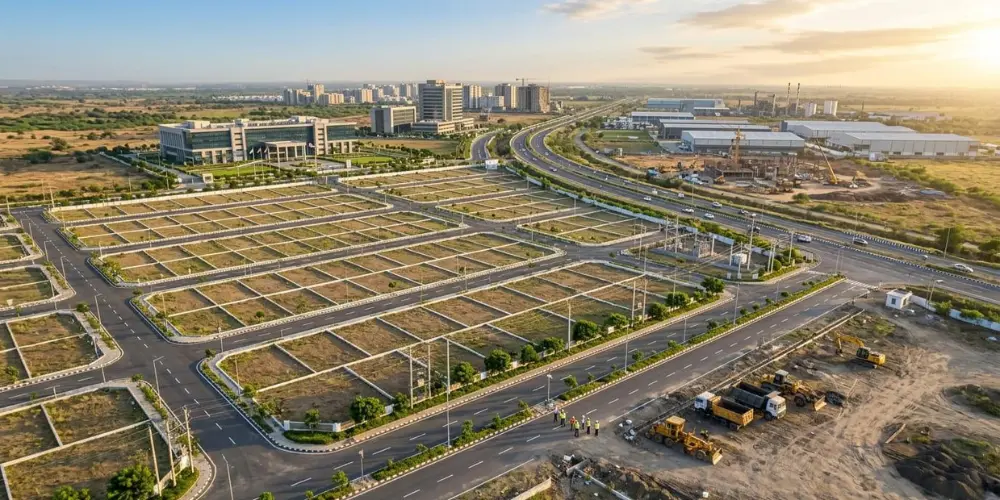
Carpet area is the most honest number on the table. It is also the only one with a legal definition.
Under Section 2(k) of the Real Estate (Regulation and Development) Act, 2016, carpet area means the net usable floor area of an apartment. Think of it as the floor you could cover with a carpet.
What carpet area includes:
- Area under internal partition walls inside the flat
What carpet area excludes:
- External walls
- Service shafts
- Exclusive balconies or verandahs
- Exclusive open terraces
Because the law defines it, carpet area is the most reliable figure for comparing two homes side by side.
Built-Up Area: Carpet Plus Walls
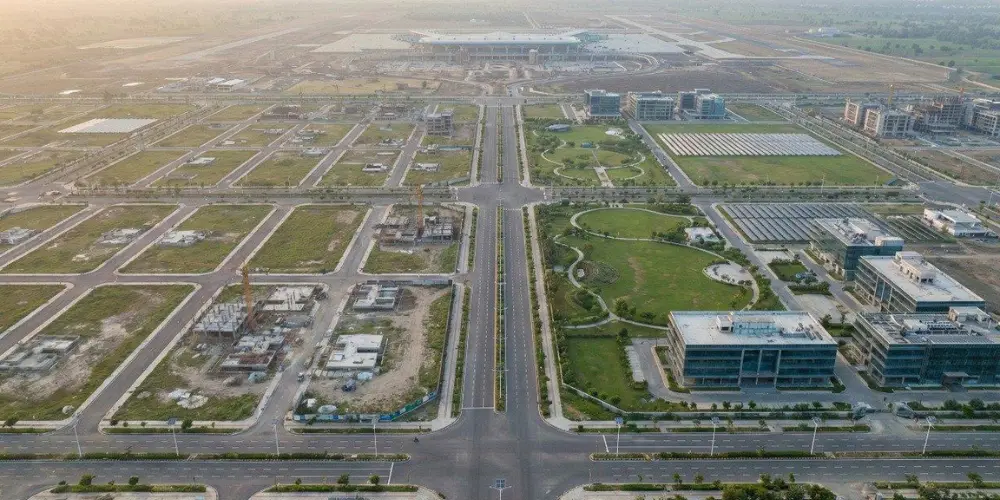
Built-up area takes the carpet area and adds the space occupied by walls. In common industry practice, it often includes exclusive balconies too.
Here is the catch. Built-up area has no uniform legal definition. One builder might include the balcony, while another leaves it out. That makes it a weaker number for comparison.
A simple way to picture it:
Built-up area ≈ Carpet area + Wall area (+ exclusive balconies, in common usage)
Treat this figure as indicative, not exact.
Super Built-Up Area: Your Share of Everything Shared
Super built-up area goes one step further. It adds a proportionate share of the building’s common spaces to the built-up area.
These common spaces usually include:
- Lobbies and entrance halls
- Staircases and lift shafts
- Corridors
- Shared amenities such as clubhouses or gyms
Super built-up area ≈ Built-up area + Proportionate common area
The difference between super built-up area and carpet area is called “loading.” A higher loading means you pay for more space you cannot use privately.
Like built-up area, super built-up area has no standard calculation. It varies from one project to the next, so always ask how it was worked out.
What RERA Changed for Buyers

RERA brought much-needed transparency to apartment sales. A few rules stand out:
- Promoters of registered projects must disclose the carpet area of each unit.
- Apartment sales are expected to be priced and agreed on a carpet-area basis.
- Buyers can therefore compare homes on usable space, not inflated totals.
For plotted developments, the rules work a little differently. Projects are generally exempt from RERA registration if the land is 500 square metres or less, or if the project has eight or fewer units.
If a Dholera plotted project is registered, you can verify it on the GujRERA portal. Always check before you pay.
The Big Twist: Open Plots Don’t Use These Terms
Carpet, built-up and super built-up area describe constructed units. Flats, apartments and commercial spaces use them. Open plots do not.
An empty piece of land has no walls, no lifts and no shared lobbies. So if someone sells you an open plot using apartment-style terms, treat it as a warning sign.
For Dholera plot buyers, the number that truly counts is the final plot area under the applicable Town Planning (TP) scheme.
Understanding Final Plot Area in Dholera

Dholera Special Investment Region is being developed under the Gujarat Town Planning and Urban Development Act, 1976. Development happens through TP schemes.
Here is how the process works:
- Land parcels in an area are pooled together.
- The pooled land is reconstituted into planned plots.
- Portions are set aside for roads, utilities and public amenities.
- Owners receive a “final plot” in return.
The result is important. Your final plot can be smaller than the original land parcel.
Back in 2014, the then CEO of the Dholera SIR Development Authority stated that land would be returned to owners as final plots after a deduction of up to 50%, along with infrastructure.
That means older survey records may show a much larger area than what you will actually own after reconstitution.
How Plots Are Measured in Dholera
Dholera plots are usually measured in square yards, locally called “var.” Some documents may also use square metres or square feet.
Keep these conversions handy:
| Unit | Equivalent |
| 1 square yard (var) | 9 square feet |
| 1 square yard (var) | ≈ 0.836 square metres |
When documents switch between units, convert everything to one unit before comparing.
The Pricing Trap Every Plot Buyer Should Avoid
Imagine a seller quotes a rate per square yard. Sounds simple, right? Not quite.
You must confirm whether that rate applies to:
- The original survey area, or
- The final plot area after TP deductions
If the rate is based on the original area but you only receive a smaller final plot, your real cost per square yard is much higher than it looks.
The fix: always calculate the effective rate on the final plot area. That is the only fair way to compare two plots.
Which Measurement Matters for You?
Your focus depends on what you are buying:
- Buying a flat: Compare prices using the RERA-defined carpet area.
- Buying a plot to build on: Your permissible built-up area depends on the applicable development control regulations. Check them before planning construction.
- Buying an open plot as an investment: The verified final plot area under the relevant TP scheme matters most.
A Quick Checklist Before You Pay
Before handing over any money for a Dholera plot, run through this list:
- Confirm the TP scheme number from official records.
- Confirm the final plot number and final plot area.
- Ask for the exact plot area in official documents, not marketing material.
- Check RERA registration on the GujRERA portal, where applicable.
- Get all documents reviewed independently by a qualified professional.
- Be cautious of anyone using apartment terms like “super built-up” for open land.
Final Thoughts
When buying a flat, carpet area is your safest benchmark because the law defines it. But most Dholera buyers are purchasing land. For them, the key question is: what is the verified final plot area under the TP scheme? Get that right, calculate your rate on it, and verify every document.
Frequently Asked Questions
Carpet area. It is the only one legally defined under RERA, Section 2(k).
Loading is the difference between super built-up area and carpet area. It reflects your share of common spaces.
No. These terms apply to constructed units. Open plots are judged by final plot area.
It is the plot area you receive after land is pooled and reconstituted under a TP scheme.
Part of the land is set aside for roads, utilities and public amenities. Deductions of up to 50% were indicated in 2014.