Most Indian cities grew first and planned later. Dholera is doing the opposite.
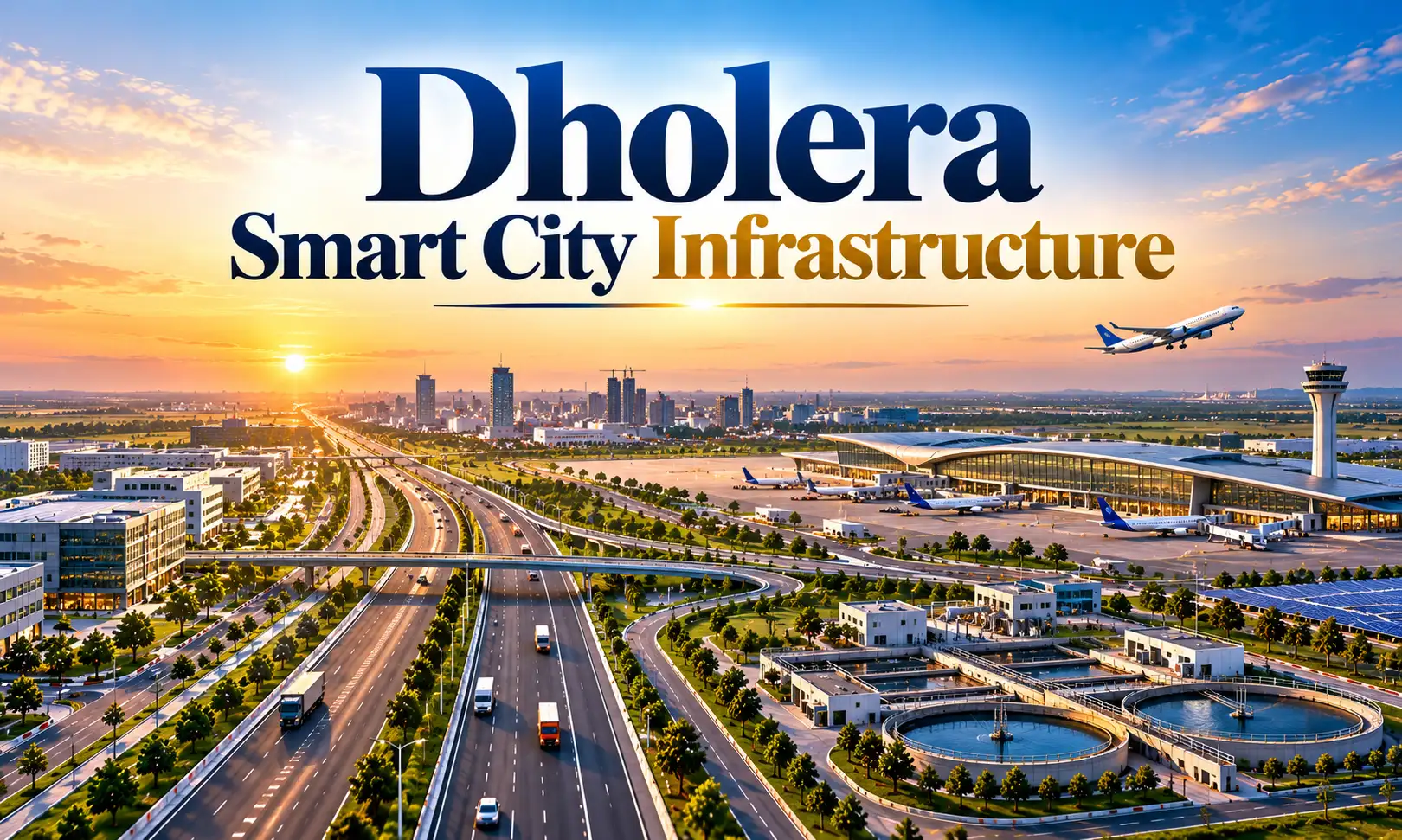
Here, roads, pipelines, power lines and fibre networks are laid before the factories and homes arrive. That is what makes Dholera Smart City infrastructure so different from anything else in the country.
In this guide, we break down what has been built, what is coming next, and why it matters for businesses, homebuyers and plot investors.
1. Dholera SIR at a Glance: Planned Big From Day One
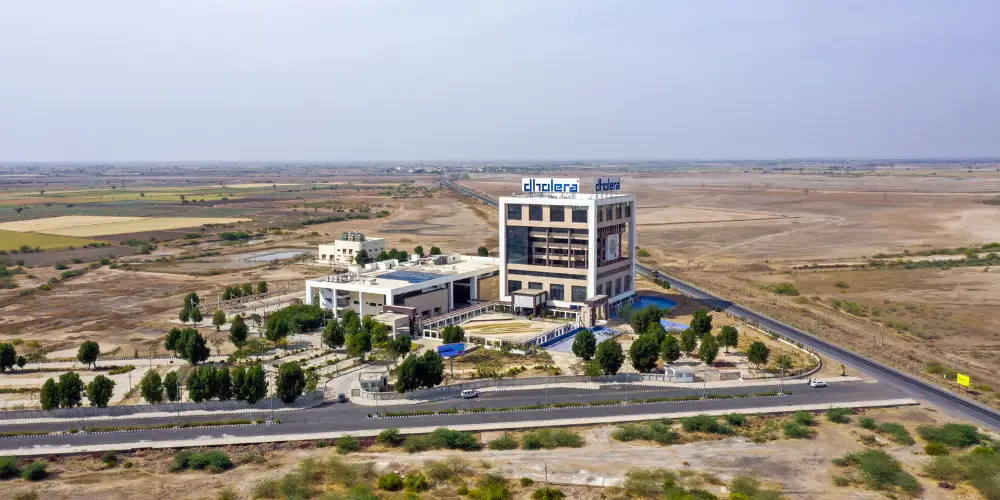
Dholera Special Investment Region (SIR) is located in Ahmedabad district, Gujarat. It was notified under Gujarat’s Special Investment Region Act, 2009.
It is also a key node of the Delhi–Mumbai Industrial Corridor (DMIC), approved in 2008.
The scale is massive. Dholera SIR covers about 920 sq. km – larger than Singapore. Of this, around 422 sq. km is marked as developable area.
By 2040, the region is planned to house about 2 million residents and create roughly 8 lakh jobs.
Because the area is so large, development is happening in phases. The first phase, known as the Activation Area, is where the world-class infrastructure is already visible on the ground.
2. The Activation Area: Where Infrastructure Is Already Ready
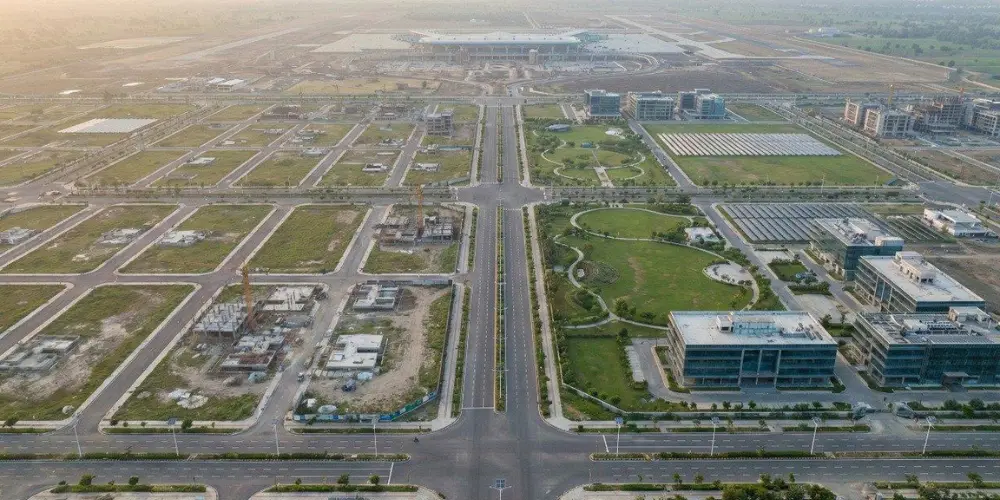
The Activation Area spans about 22.54 sq. km under Town Planning Schemes 2A and 4A.
A special purpose company, Dholera Industrial City Development Limited (DICDL), was set up in 2016 to execute this phase. Today, the trunk infrastructure in this zone is largely complete.
Industrial land parcels here range from 1 acre to 330 acres. This gives room for everyone, from mid-sized units to mega manufacturing plants.
The big idea is plug-and-play. A company buys land, connects to ready utilities, and starts building. No waiting years for water, power or roads.
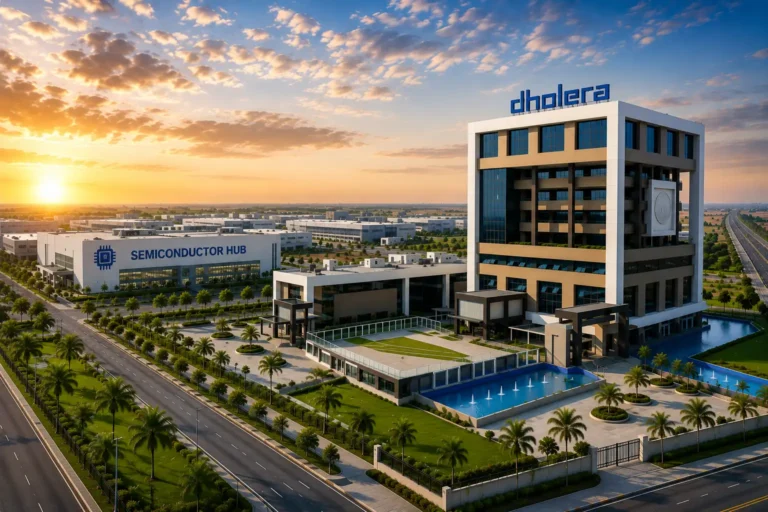
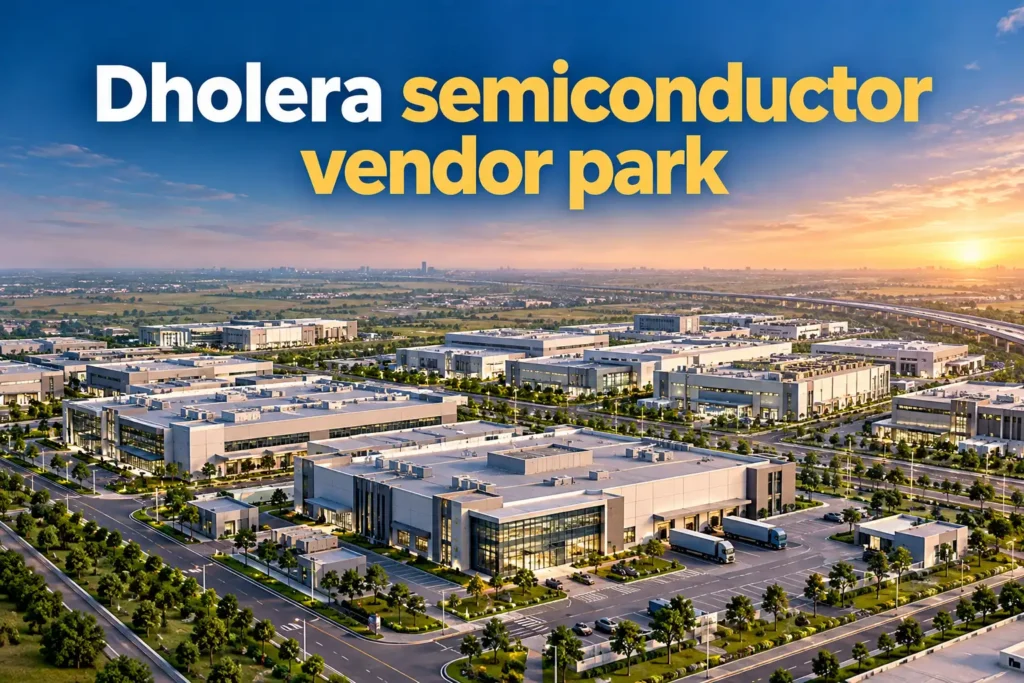
This is also why Dholera has become the chosen site for India’s first major semiconductor fabrication project.
For businesses, this saves time and money. Instead of building their own water lines, power connections or approach roads, companies can focus directly on setting up operations. Faster setup means faster production and quicker returns.
3. Smart Roads and Underground Utility Corridors

Roads are the backbone of any city. In Dholera, they also carry the city’s lifelines underneath.
Key road and utility features:
- 72 km internal road network in the Activation Area
- Wide arterial roads with dedicated utility corridors
- Underground networks for water, wastewater, ICT, gas and storm water drainage
- Smart street lighting across the zone
Since utilities run in planned underground corridors, there is no repeated digging of roads. Maintenance is easier, and the city looks clean and organised.
Flood management has also been planned. River training and bunding work on the Adhiya river helps protect the region from waterlogging.
4. Water, Sewage and Effluent Treatment: Built to Scale
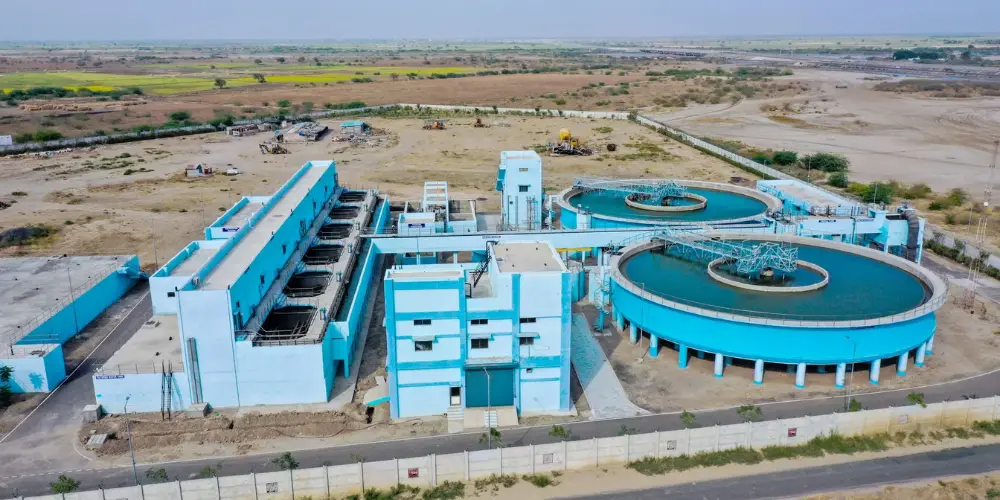
Water is a major concern for industry, especially for sectors like semiconductors that need large volumes of treated water. Dholera has planned for this from the start.
Water infrastructure highlights:
| Facility | Current Capacity | Scalable Up To |
| Water Treatment Plant (WTP) | 50 MLD | 150 MLD |
| Common Effluent Treatment Plant (CETP) | 20 MLD | 60 MLD |
| Sewage Treatment Plant (STP) | 10 MLD | 30 MLD |
The 50 MLD water treatment plant is located just about 5 km from the Activation Area.
Treated water is stored in a Master Balancing Reservoir and distributed through Elevated Service Reservoirs via a piped network.
There is also a strong recycling focus. Recycled water from the STP and CETP is made available for industrial and non-potable use. This reduces pressure on fresh water sources and supports sustainability goals.
5. Reliable Power, Solar Energy and Digital Connectivity
Power Supply
Industries cannot afford power cuts. Dholera’s Activation Area has provision for two power distribution companies (DISCOMs).
A dual-source power system and a modern Gas Insulated Substation support uninterrupted electricity. This matters greatly for sensitive industries such as electronics and chip manufacturing.
Renewable Energy
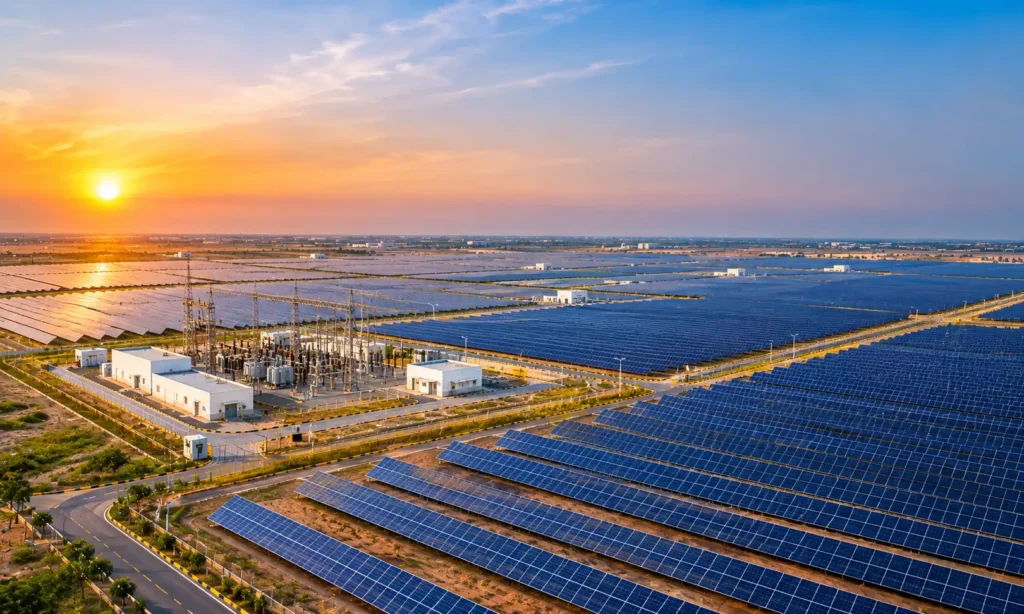
Dholera is also home to a large solar park planned within the region. Renewable energy is being integrated into the city’s power mix, supporting its green city vision.
ICT and Smart City Systems
Every land parcel is designed to be ICT-enabled. Space for local area controls and mobile towers has been reserved in advance.
A City Integrated Operations Centre monitors key services such as water, traffic and lighting in real time. This is what turns Dholera from a planned city into a truly smart one.
Dholera SIR also holds a Platinum rating from the Indian Green Building Council (IGBC) – a first for a greenfield industrial smart city in India.
6. Connectivity: Expressway, Airport, Rail and Ports
Great infrastructure inside the city needs equally strong links outside. Dholera’s connectivity has improved sharply in 2026.
Ahmedabad–Dholera Expressway
The 109 km Ahmedabad–Dholera Expressway was inaugurated on 31 March 2026. It runs from Sarkhej on Ahmedabad’s SP Ring Road to Adhelai near Bhavnagar.
It is a four-lane, access-controlled road, expandable to eight lanes. Travel time from Ahmedabad to Dholera has dropped to roughly 45 minutes.
Dholera International Airport
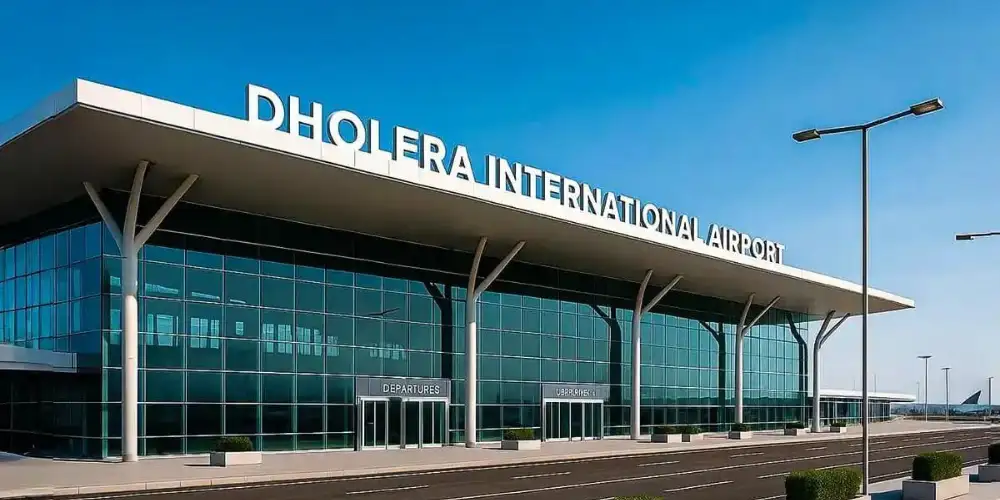
A greenfield international airport is coming up at Navagam, about 20 km from the SIR core, directly on the expressway route.
The runway and key structures are in place, with commercial operations targeted soon. Once running, it will support passengers and air cargo for Dholera’s industries, and ease load on Ahmedabad’s existing airport.
Rail Connectivity
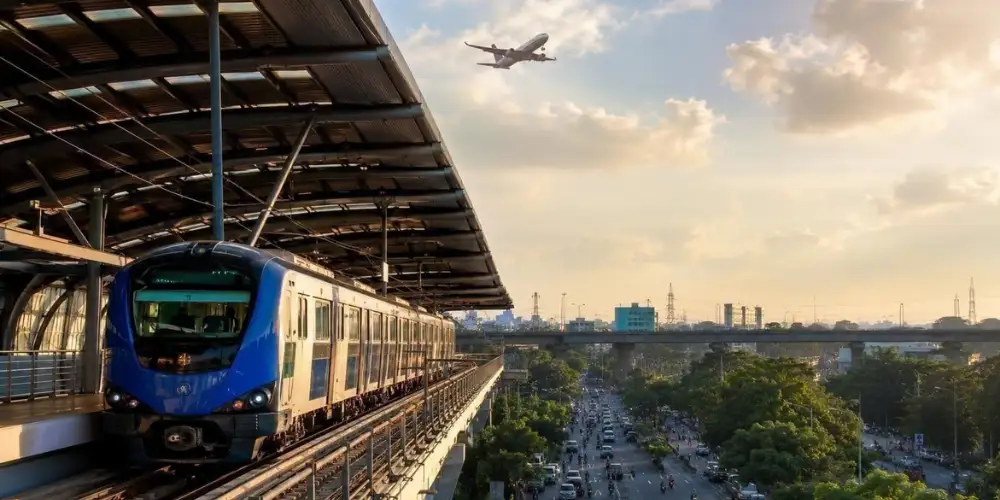
- Bhimnath–Dholera freight rail line for moving industrial cargo
- Ahmedabad–Dholera semi high-speed rail corridor, approved in 2026, for faster passenger travel
Port Access
Dholera has access to major Gujarat ports by road and rail:
- Pipavav Port – about 200 km
- Kandla Port – about 300 km
- Mundra Port – about 350 km
Together, these links make Dholera a strong base for both domestic trade and exports.
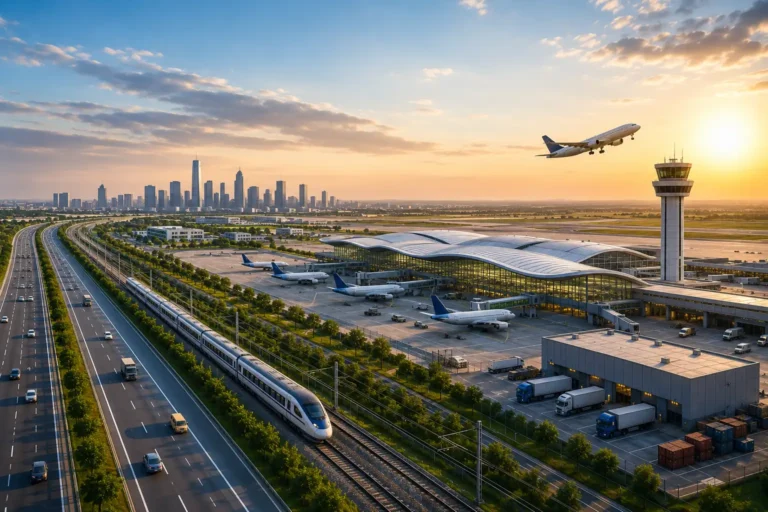
This multi-modal network – road, air, rail and sea – is rare for a new city. It means raw materials can come in easily, and finished goods can reach national and global markets without delay.
7. Social Infrastructure and What It Means for Investors
A city is not only about factories. People need schools, hospitals and safe neighbourhoods.
The Activation Area land use plan has reserved space for:
- Residential zones
- Healthcare and education
- Police and fire stations
- Recreation and community facilities
Projects such as a 192-bed hospital, a school up to Class 12, a fire station and a premium hospitality zone for business visitors are already in progress.
As industries bring in thousands of jobs, demand for homes, shops and services nearby will naturally grow. Planned social infrastructure ensures that this growth stays organised and liveable.
Why This Matters for Plot Buyers
In planned cities, property values often rise most when infrastructure moves from “on paper” to “on the ground.” Dholera is right at that stage now.
- The expressway is open
- Trunk infrastructure in the Activation Area is in place
- Big-ticket industrial projects are under way
- The airport is nearing operation
That said, Dholera remains a long-term investment. Full development is planned up to 2040. Buyers should always check the Town Planning scheme, zone status and approvals of any plot before investing.
Conclusion
Dholera Smart City infrastructure is not a promise anymore. Roads, water plants, treatment facilities, power systems and digital networks are already built in the Activation Area.
Add the operational expressway, the upcoming international airport and new rail links, and Dholera’s case becomes very strong.
For industries, it offers plug-and-play readiness. For families and investors, it offers a rare chance to be part of India’s first greenfield smart city early in its growth story.
Frequently Asked Questions (FAQs)
Dholera SIR is a 920 sq. km planned industrial smart city in Gujarat, developed under the SIR Act, 2009, as part of the Delhi–Mumbai Industrial Corridor.
It is the first development phase, covering about 22.54 sq. km, where trunk infrastructure like roads, water and power is largely complete.
It means land comes with ready connections for roads, water, power, gas and ICT, so businesses can start construction quickly.
About 109 km via the Ahmedabad–Dholera Expressway, which takes around 45 minutes.
At Navagam, about 20 km from the Dholera SIR core, right on the expressway route.