Introduction
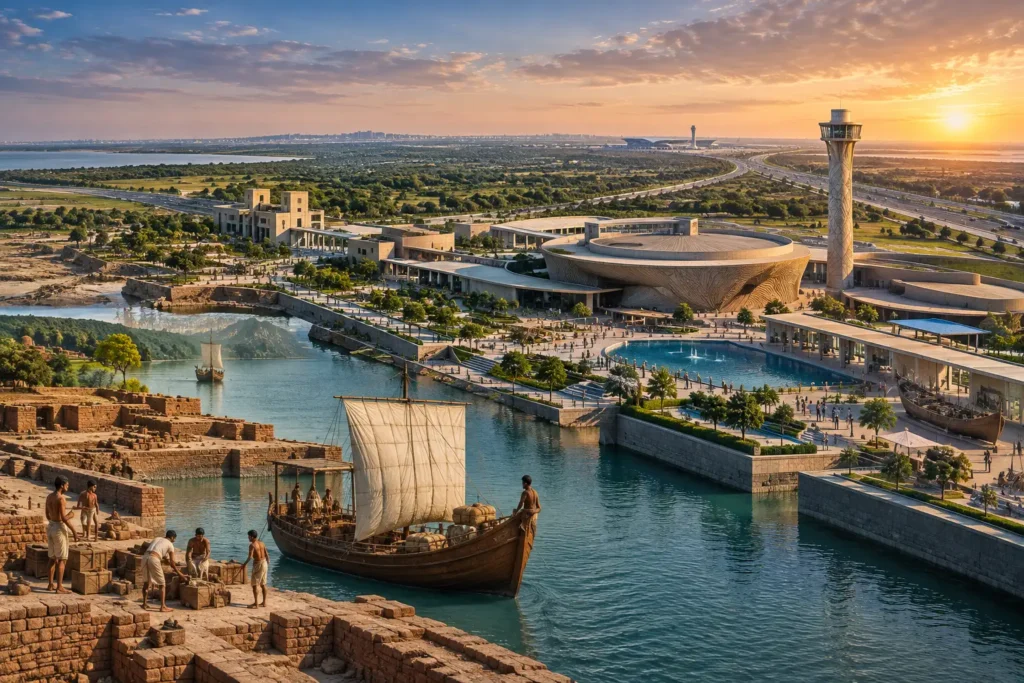
Long before modern ports existed, a small town on the Gujarat coast was already loading and unloading cargo bound for Mesopotamia. That town was Lothal, and archaeologists believe it held the world’s earliest known dockyard, built more than 4,000 years ago by the people of the Indus Valley Civilisation.
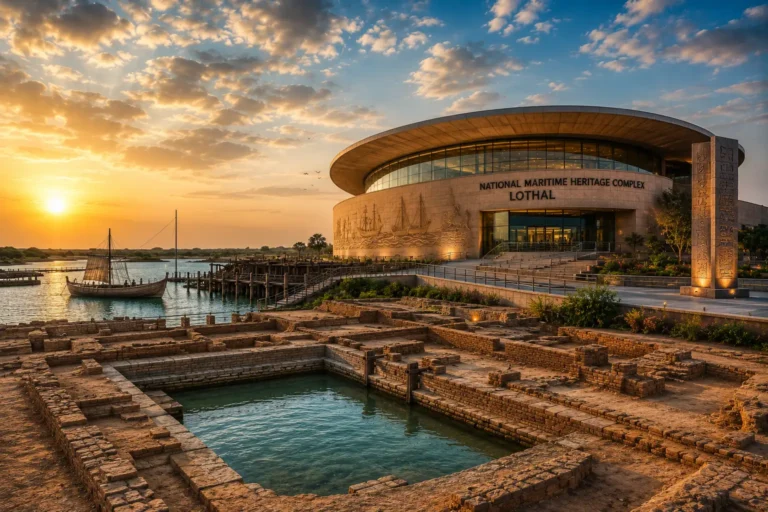
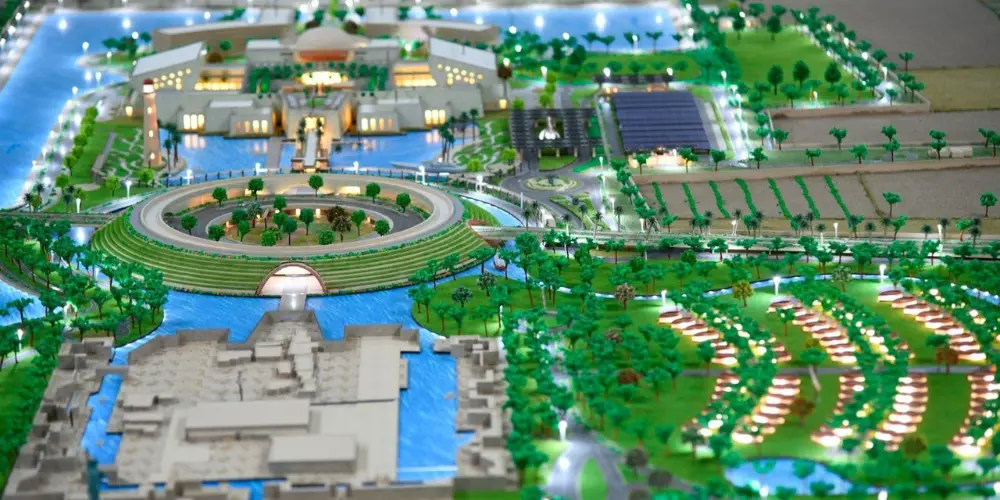
Today, that same stretch of land is being transformed into one of the most ambitious cultural projects India has ever attempted. The Lothal Maritime Heritage Complex, officially the National Maritime Heritage Complex, is being developed across more than 400 acres to tell the full story of India’s seafaring past. For anyone tracking the growth of Dholera and its surrounding region, this is far more than a museum. It is a tourism anchor with the power to reshape land value, footfall and infrastructure across the entire corridor.
Lothal: The Town That Traded With the World
Lothal was discovered in 1953 by archaeologist S. R. Rao, and what came out of the ground changed how historians understood ancient India. This was not a sleepy settlement. It was a planned town with a brick-lined tidal basin, warehouses, a bead factory and a drainage system that would look competent even by modern standards.
The dockyard is the centrepiece. Its scale and engineering suggest a community that understood tides, monsoon winds and long-distance trade routes. Seals and artefacts recovered from the site point to commercial links stretching all the way to the Persian Gulf and Mesopotamia.
The takeaway is simple: India’s maritime story did not begin with colonial ports. It began here, roughly 4,500 years ago.
What Is the Lothal Maritime Heritage Complex?
The complex is a flagship project of the Ministry of Ports, Shipping and Waterways, developed under the Sagarmala programme at an estimated cost of around ₹4,500 crore. The master plan comes from architect Hafeez Contractor, and construction of the first phase has been executed by Tata Projects.
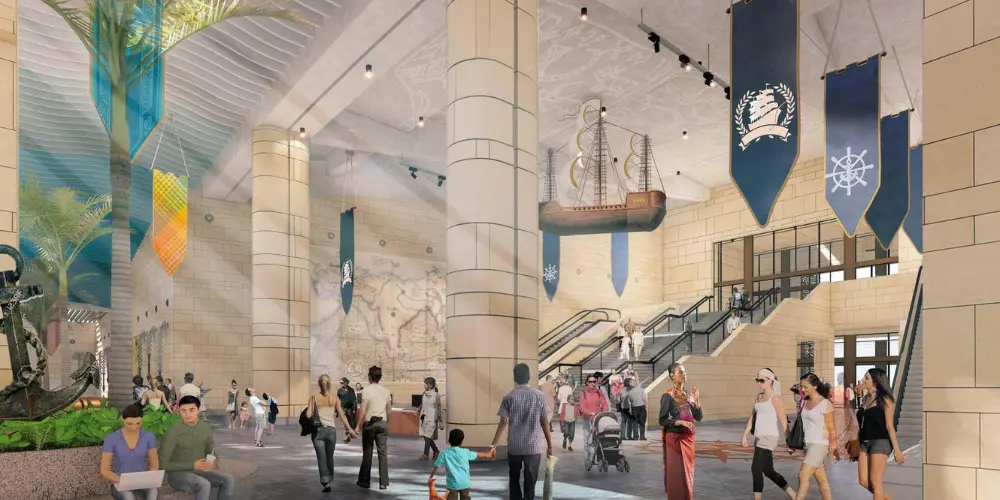
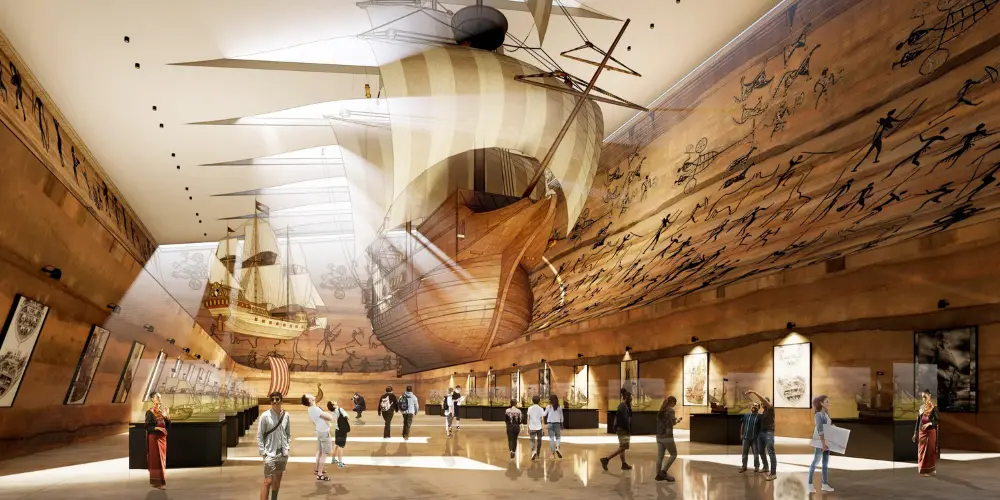
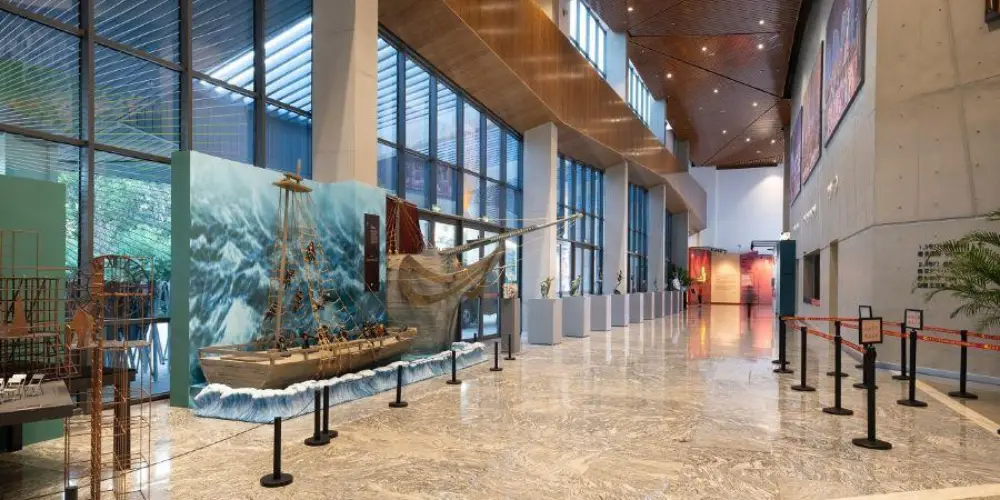
The aim is not a quiet gallery of glass cases. It is designed as an experiential destination where visitors walk through recreated Harappan streets, view working models of ancient ships and move between immersive galleries covering everything from Harappan trade to the modern Indian Navy.
Key project facts at a glance:
- Spread across roughly 400 acres near Lothal, Gujarat
- Positioned to become one of the largest maritime museum complexes in the world
- Around 85 km from Ahmedabad, close to the Dholera Special Investment Region
- Fourteen galleries planned across phases, covering Harappan times to the present
- Anticipated daily footfall of up to 25,000 visitors once fully operational
- Expected to generate a substantial number of direct and indirect jobs in the region
Inside the Complex: What Visitors Will Experience
The complex has been planned as a full-day destination rather than a single-building museum, with attractions grouped across a large campus.
Highlights include:
- Maritime Heritage Museum with themed galleries tracing India’s shipbuilding, navigation and trade history
- Recreated Lothal township, allowing visitors to walk through Harappan-era streets, markets and civic spaces
- Lighthouse Museum, planned as the tallest of its kind anywhere in the world
- Open aquatic gallery, envisaged as one of the largest open aquatic displays globally
- Indian Navy and Coast Guard gallery, among the largest naval galleries in the country
- Jetty walkway offering a direct connection to the water-facing experience
- Coastal states pavilions, showcasing the maritime traditions of every coastal state and union territory
- Theme parks, an amphitheatre and cultural spaces for events, performances and school programmes
The mix of archaeology, technology and entertainment is deliberate. It is built to hold the attention of a research scholar and a ten-year-old on a school trip at the same time.
Project Phases and Current Status
The project is being delivered in stages rather than opening all at once, which is worth understanding if you are planning a visit or evaluating the region.
- Phase 1A includes six museum galleries, the recreated Lothal township, aquatic and common-area theming, a jetty walkway and Indian Navy artefacts. The Ministry has targeted July 2026 for its completion.
- Phase 1B adds around eight more galleries, the Lighthouse Museum, the Bageecha complex with parking and food halls, and a large dome theatre, at an additional investment of roughly ₹3,000 crore.
- Phase 2 expands the campus further with coastal states pavilions, a maritime institute, museum-themed hotels and eco resorts, and multiple theme parks including maritime, naval, climate change and adventure zones.
The project has also drawn international participation, with India signing memoranda of understanding with several maritime nations including the Netherlands, Denmark, Germany, South Korea, the UAE, Portugal, Vietnam, Oman, Israel and Thailand.
Strategic Location: Lothal, Dholera and the Expressway
Location is where this project becomes genuinely interesting for investors rather than only for historians.
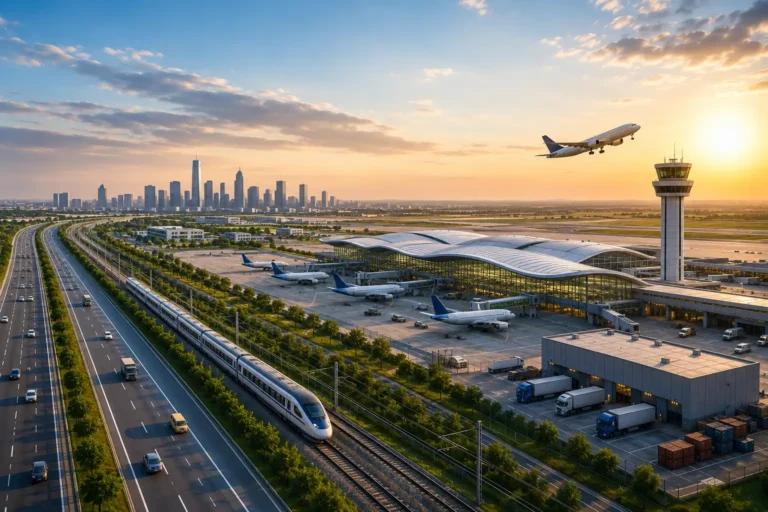
Lothal sits within comfortable reach of the Dholera Special Investment Region, India’s first greenfield smart city, and is connected through the Ahmedabad–Dholera Expressway. That single road has already compressed travel time between Ahmedabad and the Dholera belt dramatically. Add the upcoming Dholera International Airport and improving rail links, and the region moves from remote to reachable.
What the connectivity unlocks:
- Faster access from Ahmedabad for weekend and day-trip tourism
- A natural tourism circuit linking Lothal, Dholera, the Gulf of Khambhat and Velavadar
- Higher demand for hotels, restaurants, retail and transport services along the corridor
- Stronger justification for continued public investment in roads and civic infrastructure
Why It Matters for Dholera’s Growth Story
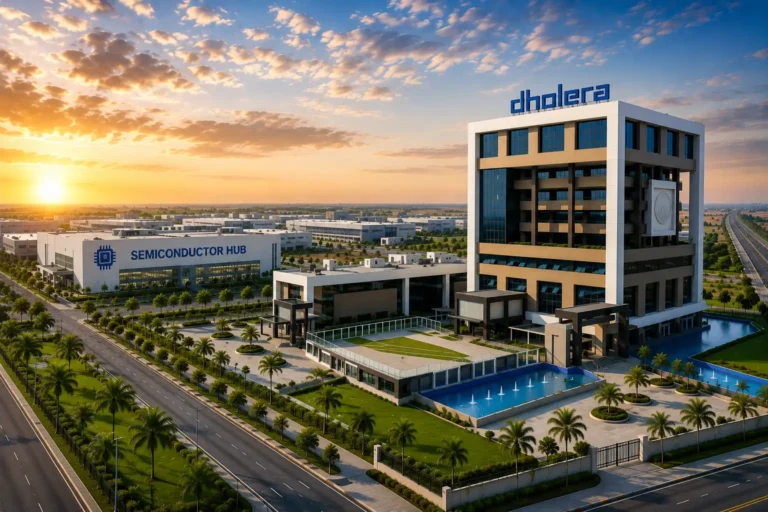
Dholera’s momentum has so far been driven by industry, with semiconductor manufacturing, renewable energy and electronics investments anchoring the activation zone. The Lothal complex adds a second engine: tourism.
Cities that grow on industry alone tend to stay functional. Cities that combine industry with culture and tourism become places people actually want to live in. A large, well-run heritage destination brings hospitality, F&B, retail, transport and services demand that industrial parks alone do not generate.
For the surrounding region, that translates into:
- Rising visibility for Dholera on national and international travel maps
- Long-term appreciation potential for land and property near the corridor
- Employment across hospitality, guiding, retail, logistics and maintenance
- A more diversified local economy that is less dependent on any single sector
FAQs
It is located near Lothal in Ahmedabad district, Gujarat, roughly 85 km from Ahmedabad and close to the Dholera Special Investment Region.
Lothal is an important Indus Valley Civilisation site and is widely believed to have had the world’s earliest known dockyard, dating back over 4,000 years.
The complex spans more than 400 acres and is planned as one of the largest maritime museum complexes in the world.
The project is being delivered in phases. Phase 1A has been targeted for completion in July 2026, with further phases to follow.
By road via the Ahmedabad–Dholera Expressway and connecting state highways, which typically takes around two hours.