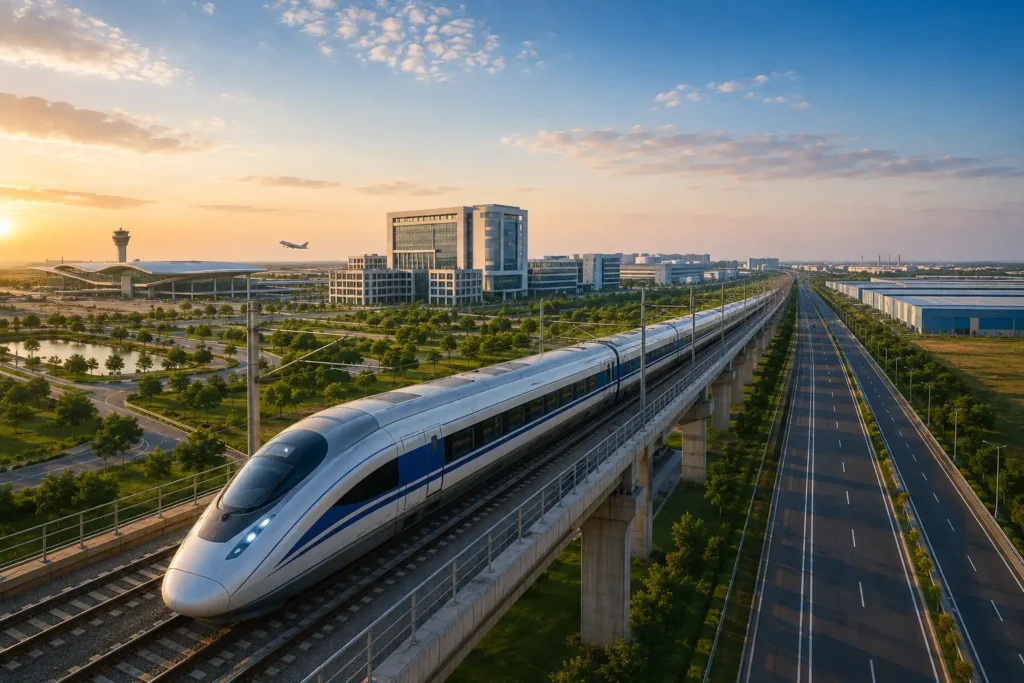
India’s infrastructure landscape just got a major boost. The Union Cabinet has approved the Dholera Rail project, a semi high-speed corridor connecting Sarkhej (Ahmedabad) to Dholera. This is a significant milestone not just for Gujarat, but for India’s broader vision of building world-class transport infrastructure to support industrial and economic expansion.
What Is the Dholera Rail Project?
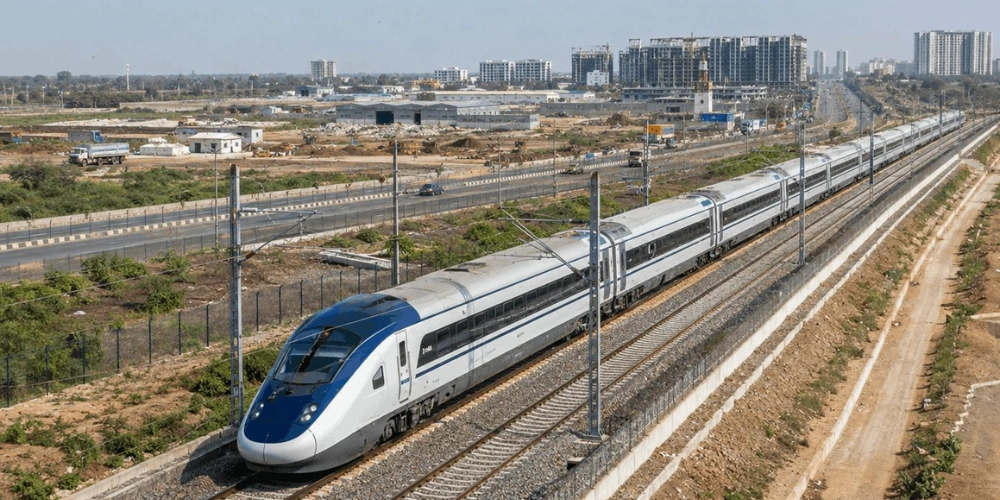
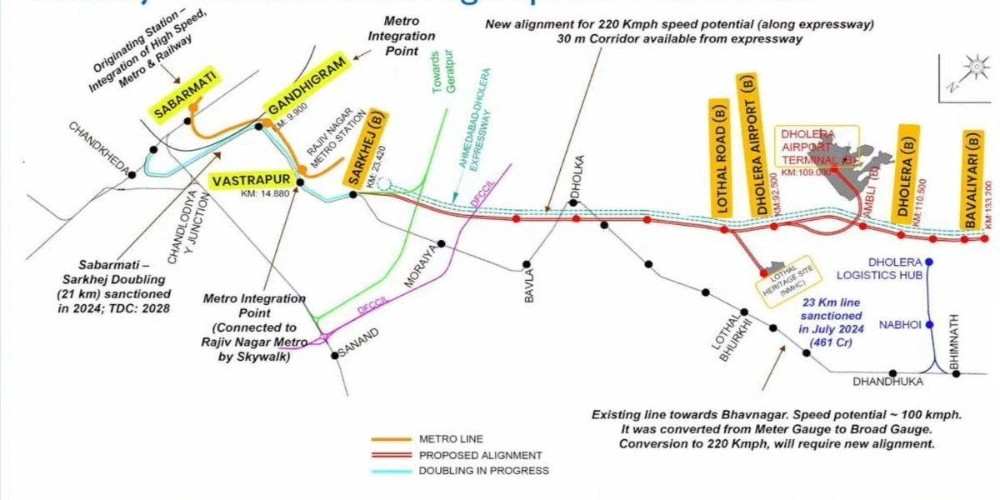
The newly sanctioned corridor is a 134-km double-line rail link between Sarkhej, on the outskirts of Ahmedabad, and Dholera. With a total investment of ₹20,667 crore, the Dholera Rail line will offer significantly faster and more reliable travel compared to conventional rail services, while being distinct from the bullet train category.
The corridor is designed to connect three major hubs:
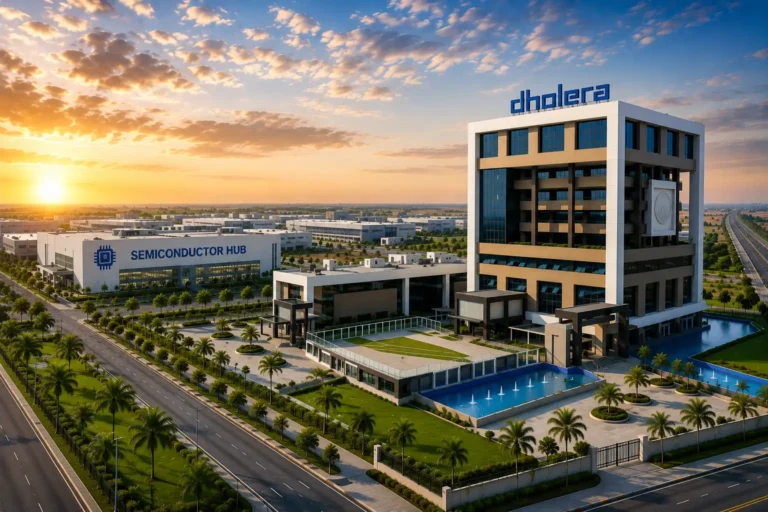
- Dholera SIR – One of India’s largest greenfield industrial smart cities, planned under the Delhi-Mumbai Industrial Corridor (DMIC).
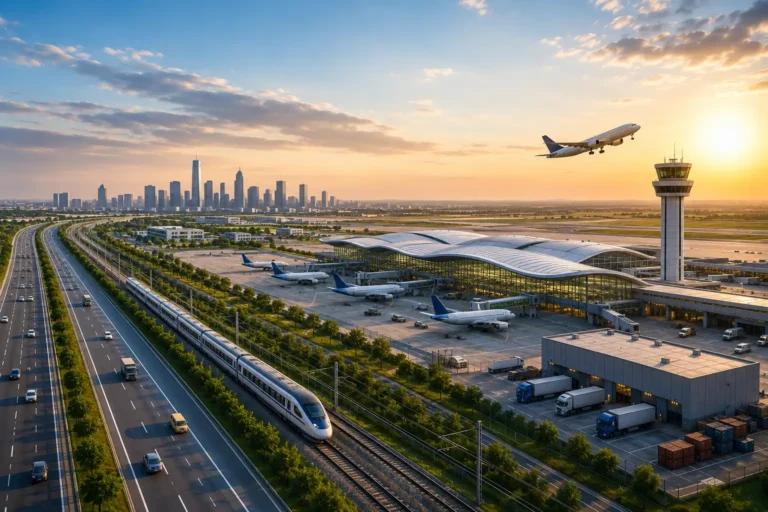
- Dholera International Airport – A new greenfield airport being developed to handle both cargo and passenger traffic.
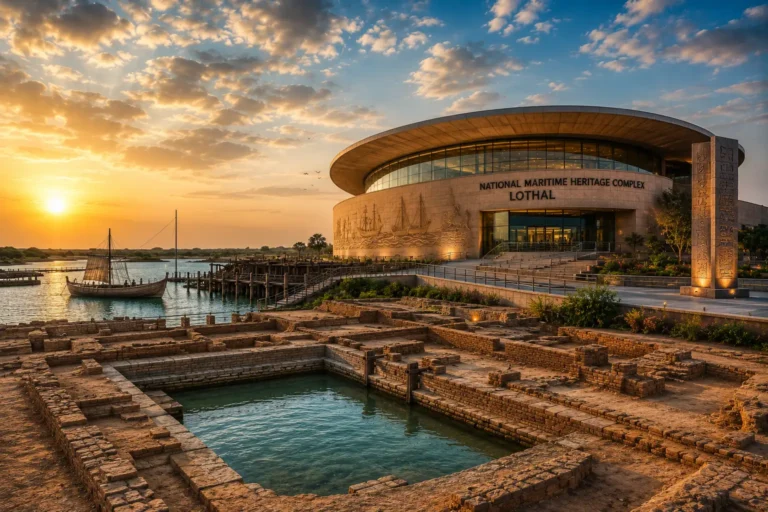
- Lothal Maritime Heritage Complex – A landmark project showcasing India’s ancient maritime history, centered around the archaeological site of Lothal, one of the earliest known port cities of the Indus Valley Civilization.
By linking these three destinations through a single line, the Dholera Rail project aims to create a seamless, integrated transport ecosystem that supports industrial logistics, tourism, and passenger mobility all at once.
Key Highlights of the Project
- Route Length: 134 km, double-line configuration
- Total Cost: ₹20,667 crore
- Type: Semi high-speed rail corridor
- Connectivity: Sarkhej (Ahmedabad) to Dholera
- Major Destinations Linked: Dholera SIR, Dholera Airport, Lothal Maritime Heritage Complex
- Target Completion: 2030-31
- Special Feature: A direct railway station is proposed near the airport terminal, enabling smooth inter-modal transfers between air and rail travel
This last point is particularly noteworthy. A railway station located directly at the airport terminal will allow passengers to switch between flights and trains with minimal hassle, a facility that many global cities have adopted to boost multi-modal transport efficiency.
Why the Dholera Rail Project Matters for Dholera SIR
Dholera SIR has long been envisioned as a model smart city and manufacturing hub, but connectivity has historically been one of the biggest challenges holding back faster development. With Ahmedabad being the nearest major metropolitan and economic center, a fast, reliable rail link is essential for:
- Attracting Industrial Investment: Manufacturers and logistics companies need efficient transport links to move goods, raw materials, and workers.
- Boosting Real Estate and Urban Growth: Improved connectivity typically triggers a surge in residential and commercial real estate demand along the corridor.
- Enabling Workforce Mobility: Employees working in Dholera’s industrial zones will be able to commute more easily from Ahmedabad and surrounding areas.
- Supporting Tourism: The Lothal Maritime Heritage Complex is expected to draw significant domestic and international tourist interest, and a direct rail connection will make it far more accessible.
Timeline and Implementation
The government has set a target completion date of 2030-31 for the entire Dholera Rail corridor. While this gives planners nearly five years to execute land acquisition, construction, and testing phases, semi high-speed rail projects of this scale typically require careful coordination between multiple agencies, including Indian Railways, state authorities, and the Dholera Industrial City Development Limited (DICDL).
Given the scale of investment and the strategic importance of Dholera SIR to India’s manufacturing ambitions, this project is likely to receive priority execution status, similar to other DMIC-linked infrastructure works.
Broader Impact on Gujarat’s Infrastructure Vision
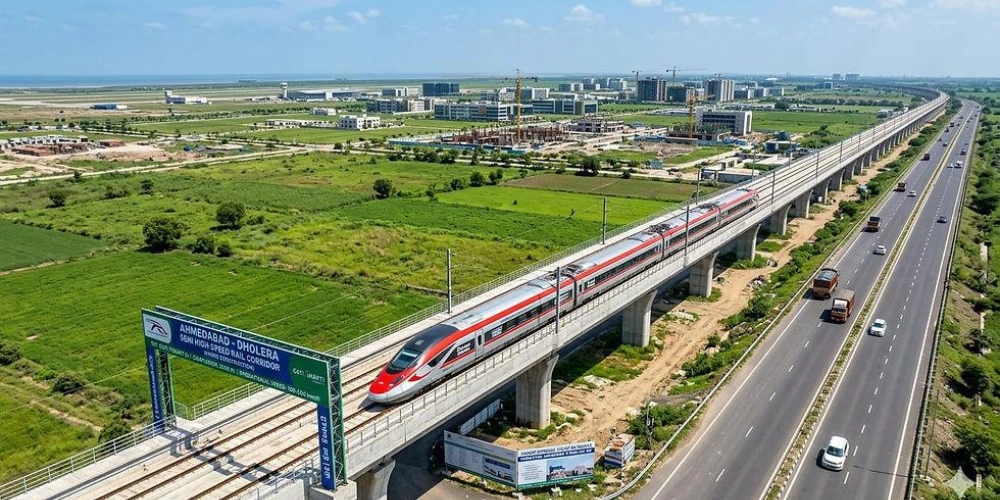
This rail corridor is not an isolated initiative. It fits into a larger pattern of infrastructure investment in Gujarat, which already boasts projects like the Ahmedabad-Mumbai Bullet Train, expanding metro networks, and multiple industrial corridors. The Dholera Rail project adds another critical layer to this network, effectively creating a triangle of connectivity between Ahmedabad, Dholera, and the broader western Gujarat region.
For businesses evaluating Dholera as a manufacturing or logistics base, this approval significantly strengthens the investment case. Reduced travel time to Ahmedabad’s airport, financial institutions, and talent pool removes one of the last major infrastructure gaps in the region.
Conclusion
The Cabinet’s approval of the Dholera Rail project is a decisive step toward realizing the full potential of the Dholera SIR. By connecting the industrial city, its upcoming airport, and the historically significant Lothal Maritime Heritage Complex through a single, efficient rail line, the government is laying the groundwork for a transport-driven growth model. As construction moves forward toward the 2030-31 target, this corridor is set to become one of the defining infrastructure achievements shaping Gujarat’s economic future.
FAQs
A 134-km double-line semi high-speed rail corridor connecting Sarkhej (Ahmedabad) to Dholera, approved at a cost of ₹20,667 crore.
The target completion is 2030-31.
Dholera SIR, Dholera International Airport, and the Lothal Maritime Heritage Complex.
Yes, a direct railway station is proposed near the airport terminal.
No, it’s a separate semi high-speed line, distinct from the Ahmedabad-Mumbai Bullet Train.