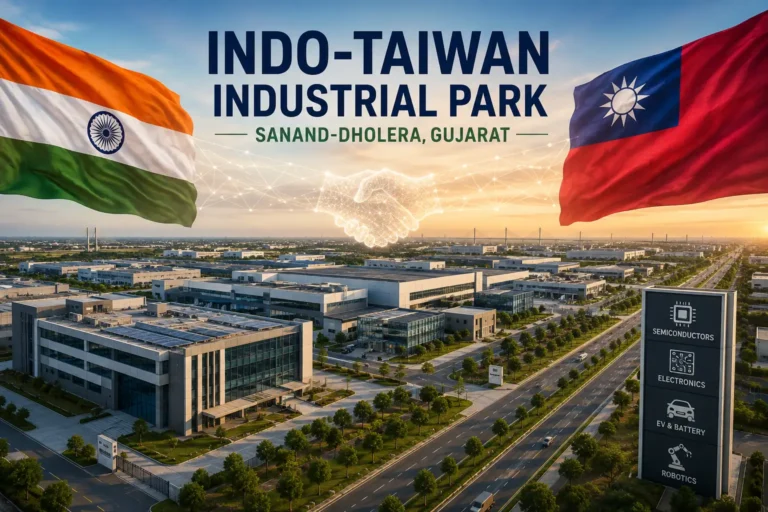
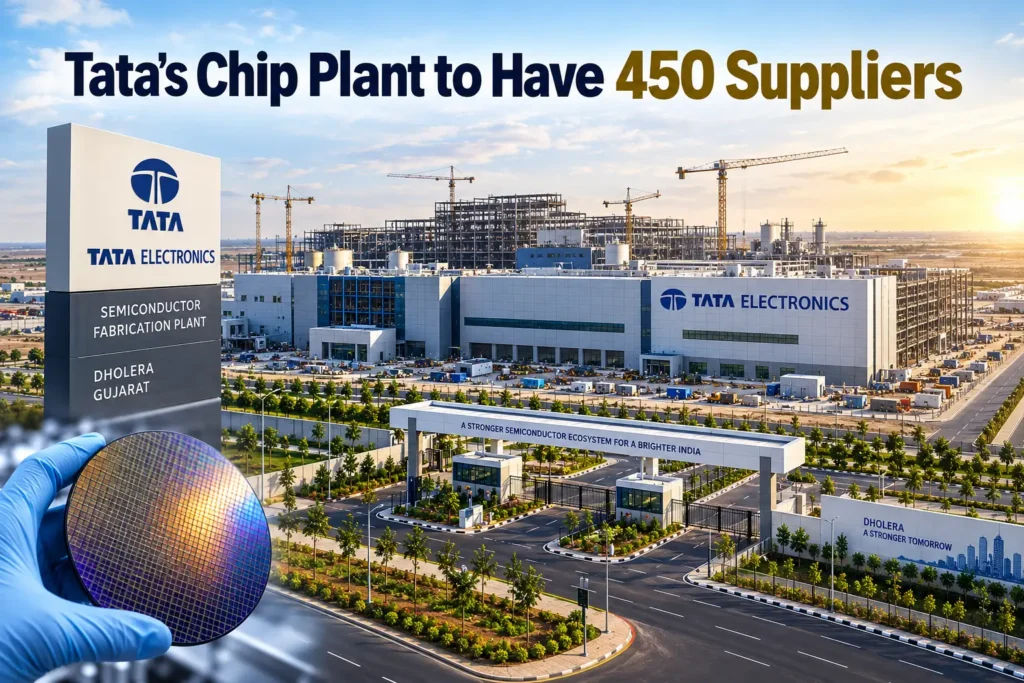
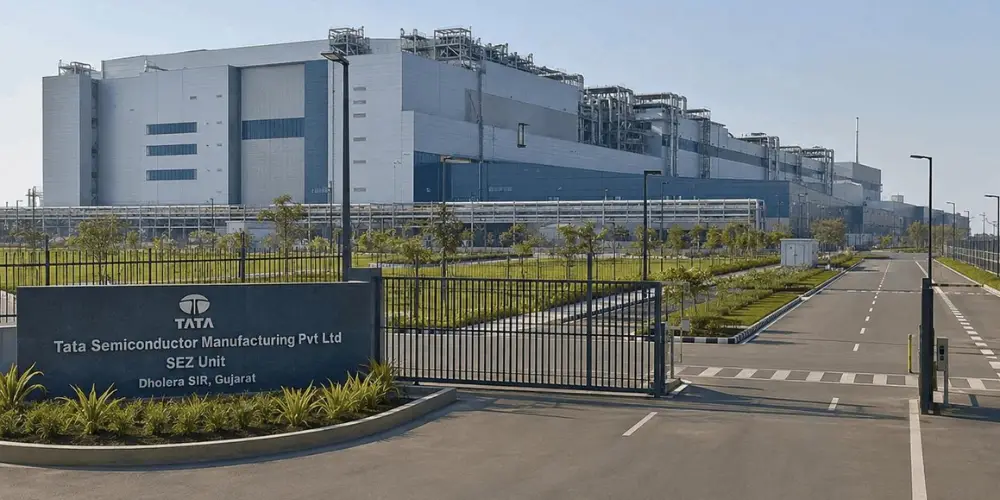
India’s semiconductor ambitions just took another big step forward. Tata Electronics has revealed that its upcoming chip fabrication plant in Dholera, Gujarat, will be supported by around 450 suppliers.
To bring these suppliers close to the fab, the company is developing a dedicated 363-acre vendor park. The announcement was made at the SEMICON India conference, where Tata Electronics also signed a series of strategic agreements with global and domestic partners.
This move signals that Tata is not just building a factory. It is building an entire ecosystem around it.
A Rs 91,000 Crore Bet on India’s Chip Future
The Tata Electronics chip manufacturing unit in Dholera is being set up with an investment of around Rs 91,000 crore. It is India’s first large commercial semiconductor fab and one of the most closely watched industrial projects in the country.
The fab is being built in partnership with Taiwan’s Powerchip Semiconductor Manufacturing Corporation (PSMC), which brings the technology and manufacturing expertise. Tata, in turn, brings execution strength, capital, and long-term commitment.
But a chip fab does not run in isolation. It depends on a constant, reliable flow of materials, equipment support, and specialised services. That is exactly why the Tata chip plant vendor park matters so much.
Why a Fab Needs 450 Suppliers Close By
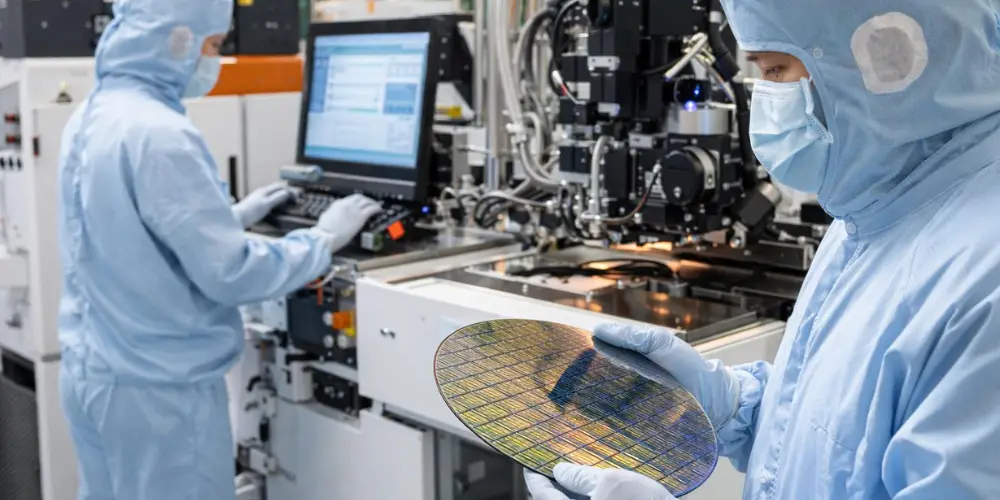
Semiconductor manufacturing is one of the most complex industrial processes in the world. A single chip passes through hundreds of steps, each requiring precision tools, ultra-pure chemicals, and specialty gases.
According to the official, repair and maintenance support, spare parts, chemicals, and gases all need to be built into the local infrastructure. The goal is to keep the “mean time to repair” as short as possible.
In simple terms, if a machine breaks down, the fix must happen fast. Every hour of downtime in a fab can mean massive financial losses. Waiting days for a spare part to arrive from overseas is simply not an option.
By placing hundreds of suppliers right next to the plant, Tata aims to:
- Cut downtime by keeping spare parts and technicians within reach.
- Secure a steady supply of critical chemicals and gases.
- Reduce logistics costs and import delays.
- Build a local industrial cluster that attracts more investment over time.
This is the same model that powers the world’s leading chip hubs in Taiwan, South Korea, and Japan, where fabs are surrounded by dense networks of suppliers.
Inside the 363-Acre Plug-and-Play Vendor Park
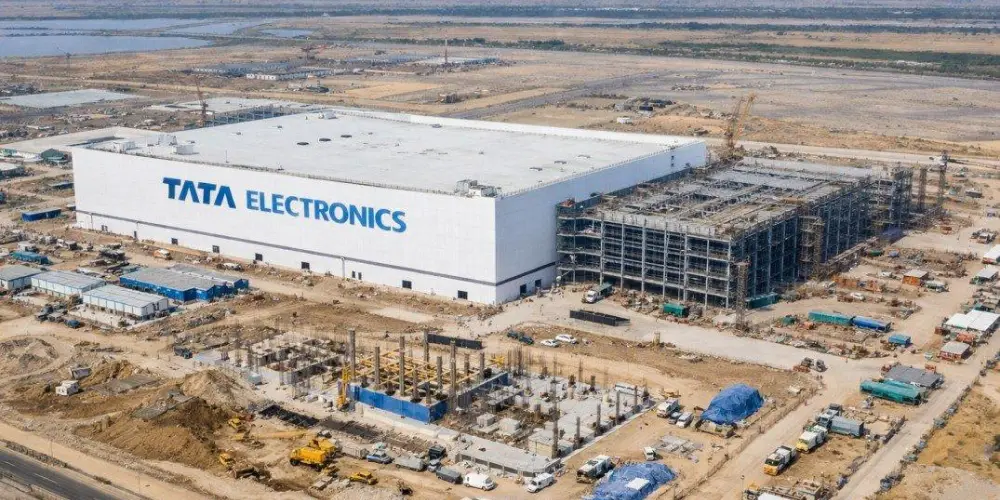
The vendor park is being developed with a reputed developer from Singapore. It will span 363 acres in Dholera and follow a plug-and-play model.
The official explained that international vendors will be able to acquire land within the park directly. This makes it easier for global companies to set up operations in India without navigating lengthy approvals and infrastructure hurdles on their own.
The plug-and-play setup means core infrastructure will be ready from day one. This includes power, water, utilities, and roads. In some cases, even the shell of the buildings will be provided to interested parties.
For a foreign supplier weighing whether to enter India, this lowers the barrier significantly. Instead of building from scratch, they can move in, install equipment, and start serving the fab much sooner.
The partnership with a Singaporean developer is also notable. Singapore has deep experience in building high-tech industrial parks, especially for the semiconductor and electronics sectors. That expertise could help Dholera match global standards.
16 Agreements Planned at SEMICON India
Tata Electronics CEO Randhir Thakur said the company will sign 16 agreements at the SEMICON India conference. These deals involve players from Europe, Japan, Singapore, and India.
Thakur also confirmed that both the Dholera fab and the company’s semiconductor packaging facility in Assam are “on track.” He said they are progressing as per the commitments made to the government.
That reassurance is important. Large semiconductor projects often face delays due to equipment shortages, technical complexity, or funding challenges. Staying on schedule builds confidence among investors, suppliers, and policymakers alike.
Seven Key Pacts Signed at the Event
At the event itself, Tata Electronics signed seven agreements. Each one targets a different part of the semiconductor value chain.
Nexperia: The partnership spans wafer fabrication, semiconductor assembly and testing, technology collaboration, and ecosystem development. The aim is to strengthen supply chain resilience and boost manufacturing capabilities in India.
Fujifilm: This pact focuses on building India’s semiconductor materials ecosystem. It aims to localise critical raw materials and develop a resilient supply chain around the Dholera fab.
Besi: This agreement will strengthen advanced semiconductor packaging capabilities at Tata’s facility in Jagiroad, Assam. It also supports the growth of India’s OSAT (Outsourced Semiconductor Assembly and Test) ecosystem.
Semiconductor Laboratory (SCL): The state-run lab and Tata will work together on semiconductor indigenisation. The focus areas include chip design, process technologies, supply chain localisation, and talent development.
Gati Shakti Vishwavidyalaya: This partnership aims to develop a future-ready workforce. It will build specialised skills in semiconductor manufacturing, infrastructure, project management, and supply chain operations.
Together, these agreements cover materials, technology, packaging, research, and people. They show a clear strategy: build every layer of the ecosystem, not just the factory.
What This Means for India’s Semiconductor Ecosystem
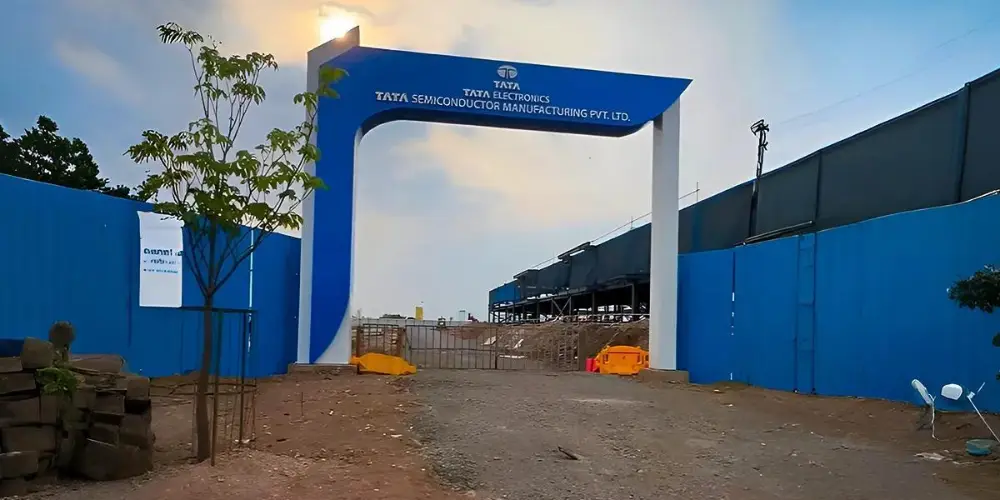
For years, India has been strong in chip design but has depended almost entirely on other countries for manufacturing. The Tata fab, and the vendor park around it, could help change that.
Here is why this development is significant:
Supply chain resilience: Global chip shortages during the pandemic exposed how vulnerable countries are when production is concentrated in a few places. Local manufacturing and local suppliers reduce that risk.
Job creation: A fab supported by 450 suppliers will create thousands of direct and indirect jobs. These range from highly skilled engineering roles to logistics, construction, and service positions.
Foreign investment: The plug-and-play model is designed to attract international vendors. Once global suppliers set up in Dholera, they may serve other fabs and electronics makers in India too.
Skill building: The pacts with SCL and Gati Shakti Vishwavidyalaya address one of the industry’s biggest challenges, which is the shortage of trained talent.
Regional growth: Dholera is being developed as a special investment region. A thriving semiconductor cluster could turn it into one of India’s most important industrial hubs.
The Road Ahead
The announcement of 450 suppliers and a 363-acre vendor park shows that Tata Electronics is thinking long-term. It recognises that a world-class fab needs a world-class ecosystem around it.
Challenges remain, of course. Attracting global suppliers, maintaining stable power and water, and training skilled workers at scale will all take time and effort. Execution will be the real test.
Still, the signs are encouraging. The projects are reported to be on track, major global partners are signing on, and the infrastructure is being built with investors’ needs in mind.
If Tata delivers on this vision, Dholera could become the heart of India’s semiconductor industry. And the Tata chip plant vendor park may well be remembered as the foundation that made it possible.
Frequently Asked Questions
It is located in Dholera, Gujarat.
Around Rs 91,000 crore.
Around 450 suppliers are expected to support the fab.
The vendor park will cover 363 acres in Dholera.
Tata Electronics is developing it with a reputed developer from Singapore.