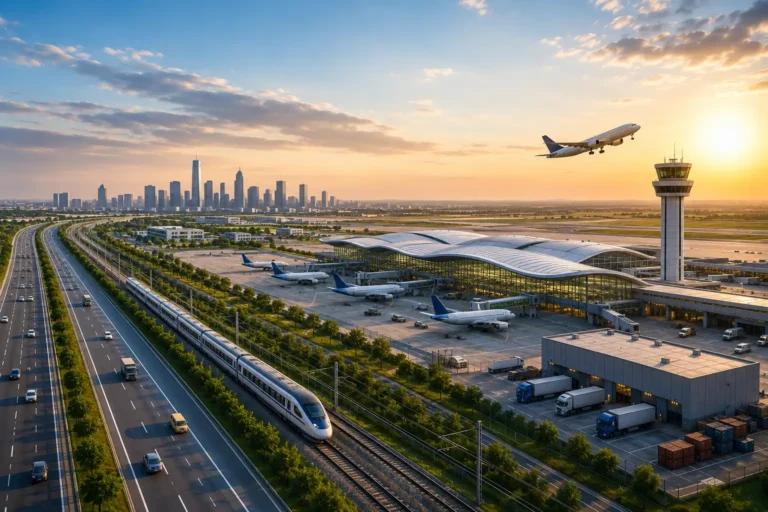

Ahmedabad’s transport map is about to be redrawn. The Gujarat Metro Rail Corporation (GMRC) has moved beyond file-level clearances and started actual groundwork for the city’s most ambitious rail extension yet.
This is the update Dholera watchers have been waiting for.
Ahmedabad Metro Phase 3 Moves From Paper to Ground
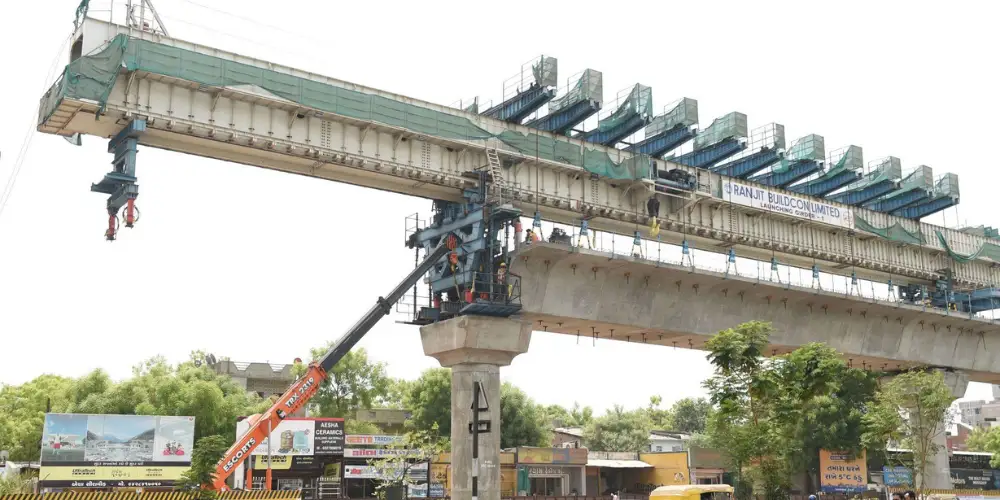
For months, Ahmedabad Metro Phase 3 existed largely as a proposal moving through government departments. That has changed.
GMRC has now initiated pre-construction activity on the proposed corridor, beginning with utility shifting along the main alignment. In infrastructure terms, this is the moment a project stops being an announcement and starts becoming a site.
Key signals from this development:
- Pre-construction work has formally commenced
- Utility shifting has been taken up as the first priority
- Tender packages have been floated, not just planned
- Work is proceeding while final Cabinet approval is awaited
When a metro corporation starts moving pipelines and cables, the intent behind the project is no longer in question.
Rs 35.81 Crore Utility Shifting: Four Packages Announced
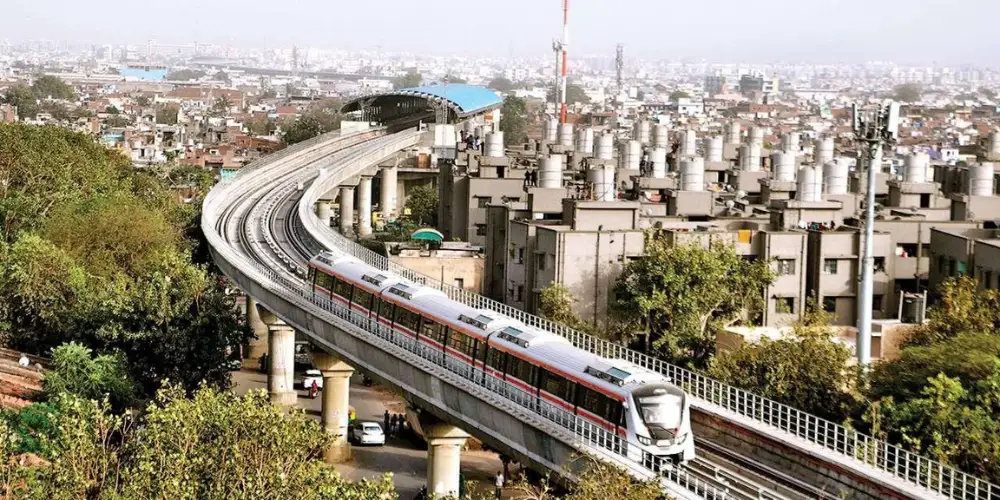
GMRC has released four separate utility shifting packages worth a combined Rs 35.81 crore.
Splitting the work into four packages allows multiple contractors to operate on different stretches simultaneously. That parallel execution is what keeps timelines from slipping before civil work even begins.
Why this step comes first:
- Underground services must be cleared before piling and foundation work
- Relocating utilities mid-construction causes expensive delays
- Citizens along the corridor must not lose basic services during construction
- Safety clearances depend on accurate mapping of existing networks
This early spending is modest compared to the eventual project cost, but it is the step that unlocks everything else in Ahmedabad Metro Phase 3.
What Is Being Shifted Before Construction Begins
Utility shifting sounds routine. On a 60 km urban corridor, it is anything but.
The work under these packages covers both underground and overground civic infrastructure that falls in the metro’s path. Each of these will either be relocated to a safe position or protected in place.
Services being handled include:
- Water pipelines — municipal supply lines running beneath the alignment
- Electricity cables — high-tension and distribution networks
- Gas network — piped natural gas distribution lines
- Sewage system — drainage and sewerage mains
- Telecom cables — fibre and communication infrastructure
The objective is straightforward: residents and businesses along the route should not face water cuts, power outages or internet disruption once heavy civil construction starts.
60 KM Route and 41 Stations: What We Know So Far
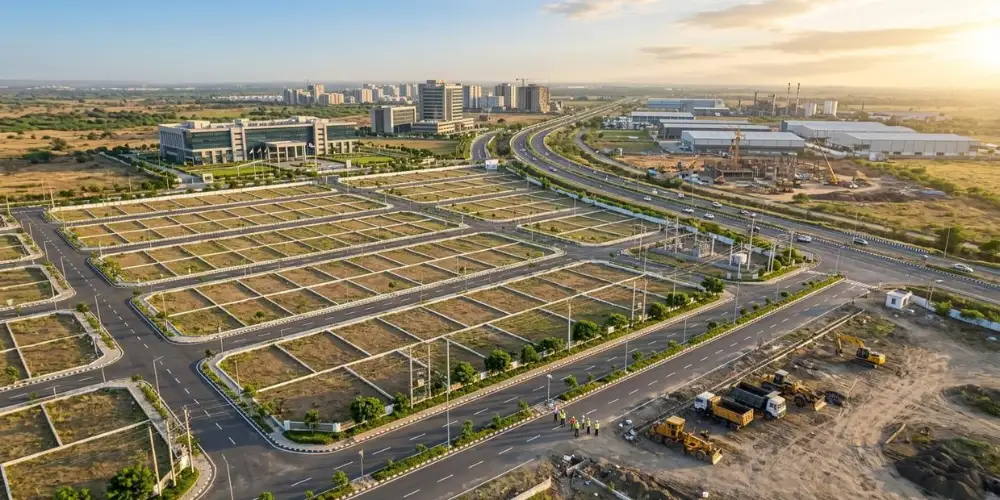
The headline numbers for Ahmedabad Metro Phase 3 are significant by any Indian metro standard.
Route length: Approximately 60 kilometres Stations planned: 41 Status: Cleared by PIB, awaiting Union Cabinet approval
A 60 km corridor with 41 stations means an average spacing of roughly 1.5 km between stations — dense enough for genuine urban utility, spaced enough to maintain reasonable travel speeds over a long-haul route.
This is not a short intra-city loop. It is a regional connector designed to link Ahmedabad’s existing metro network with destinations that currently require road travel.
Detailed station names and the final alignment will be confirmed once the Detailed Project Report clears the Union Cabinet stage. Until then, the corridor’s two anchor destinations are what matter most.
Dholera Airport Connectivity Is the Real Game-Changer
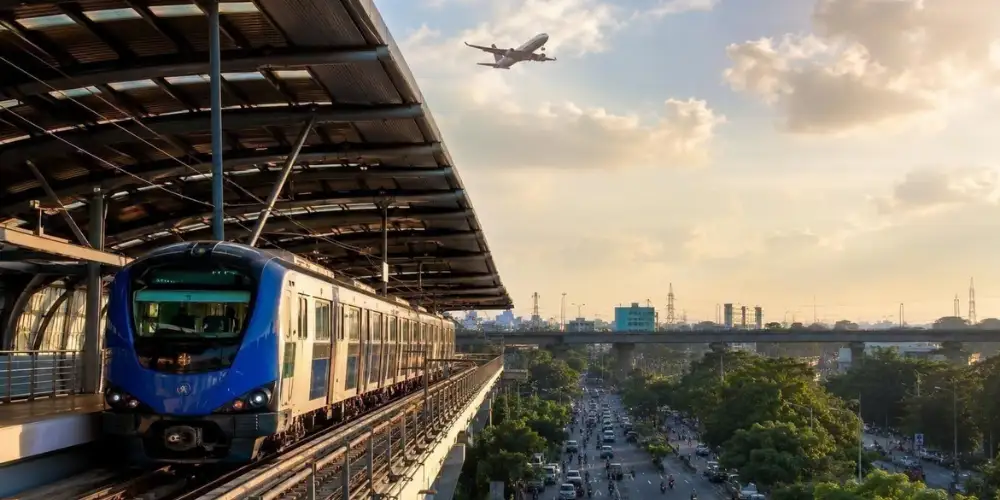
The single most consequential element of Ahmedabad Metro Phase 3 is its extension towards Dholera International Airport.
Dholera has spent the last decade being described as India’s first greenfield smart city. The Special Investment Region, the expressway, the airport and the semiconductor ecosystem have all progressed in parallel. What has been missing is fast, reliable mass transit between Ahmedabad and Dholera.
A metro link changes the equation in several ways:
- Daily commuting becomes viable — workers can live in Ahmedabad and work in Dholera SIR
- Airport access improves — passengers get a fixed-cost, fixed-time alternative to road travel
- Land value follows the line — metro corridors historically lift property demand along station catchments
- Industrial recruitment gets easier — companies setting up in Dholera can promise employees real connectivity
- Dependence on the expressway reduces — a second high-capacity link builds resilience
For anyone tracking Dholera as an investment destination, this is the infrastructure layer that ties the rest of the story together.
Commonwealth Games Venue Gets a Metro Link
The proposed corridor is also planned to serve the Commonwealth Games venue.
Global sporting events place enormous pressure on host-city transport. Spectators, officials, media and athletes all move in concentrated bursts, and road networks alone rarely cope. A dedicated metro connection to the venue is standard practice for well-prepared host cities.
Building this into Ahmedabad Metro Phase 3 from the design stage — rather than retrofitting later — is a sensible sequencing decision. The infrastructure serves the event, then serves the city permanently afterwards.
Approval Status and What Happens Next
Here is where Ahmedabad Metro Phase 3 currently stands in the clearance pipeline:
- PIB (Public Investment Board): Green signal received
- Union Cabinet: Approval awaited
- Pre-construction utility shifting: Underway
- Major civil construction: Begins after final approval
The PIB clearance is the substantive technical and financial review. Cabinet approval is the final authorisation that releases full funding and allows large-scale civil tendering.
The fact that GMRC has begun utility shifting before that final nod suggests confidence in the outcome — and a desire to save several months on the overall schedule.
Conclusion
Ahmedabad Metro Phase 3 is no longer a proposal on a planning department desk. Contractors are being appointed, budgets are being spent and services are being relocated.
For Dholera specifically, a direct metro corridor to Ahmedabad addresses the region’s most persistent question — how will people actually get here every day? A 60 km line with 41 stations, terminating near the international airport, is a substantial answer.
Watch for the Union Cabinet decision. That is the trigger that will convert Ahmedabad Metro Phase 3 from preparatory work into full-scale construction, and it is the milestone that will most immediately affect sentiment across Dholera’s real estate and industrial market.
Frequently Asked Questions (FAQs)
The proposed third phase of Ahmedabad’s metro, a roughly 60 km corridor heading south towards Dholera.
41 stations across the 60 km route.
Gujarat Metro Rail Corporation (GMRC).
Yes — pre-construction work has begun, starting with utility shifting.
Rs 35.81 crore, released across four separate packages.