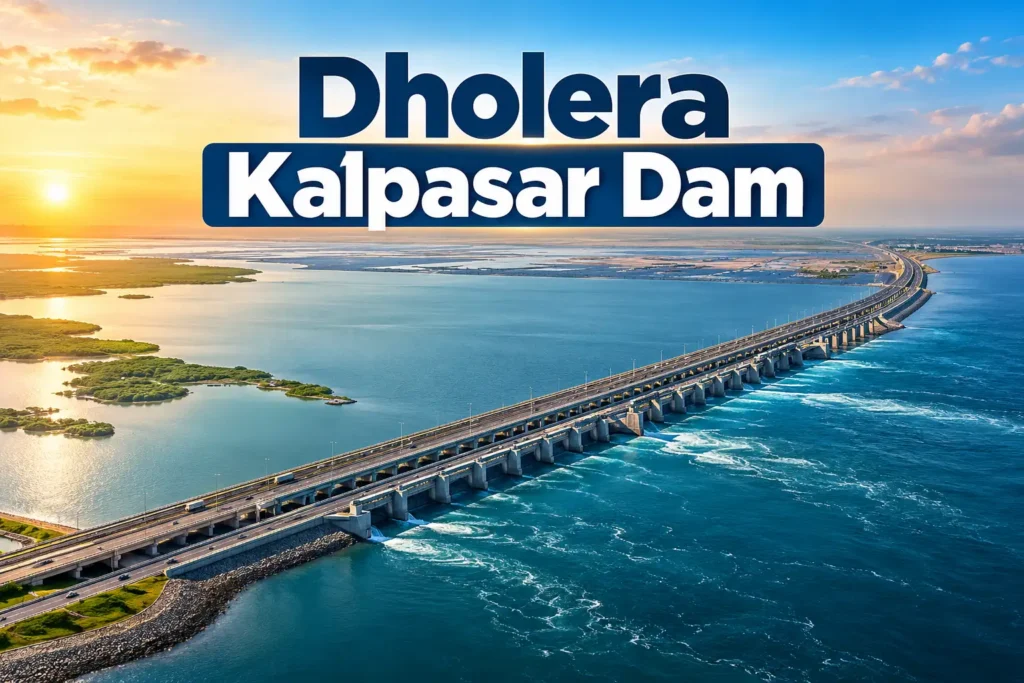
Gujarat is preparing for one of the boldest water projects in India’s history. The Kalpasar Dam, planned across the Gulf of Khambhat, could reshape how the state’s coastal belt stores water, moves goods and generates power.
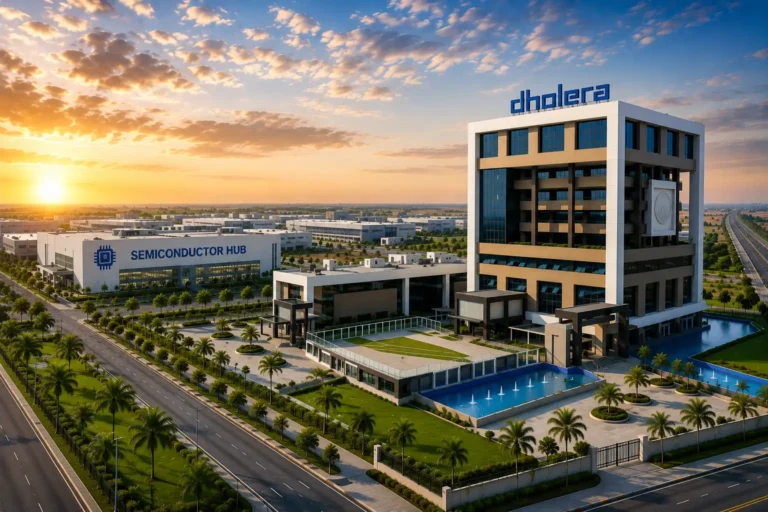
For anyone following Dholera, India’s first greenfield smart city, this project deserves close attention. Dholera sits near the head of the same gulf, so a mega dam on these waters is not distant news. It is part of the bigger picture.
In this blog, we explain what Kalpasar is, share its key numbers, and look at how it could strengthen the growth story of Dholera over the coming decade.
What Is the Kalpasar Dam Project?
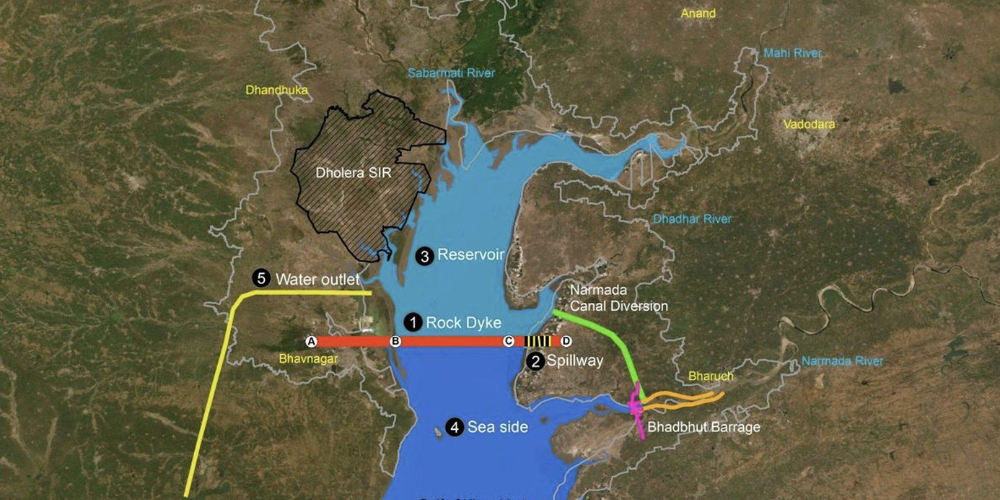
Kalpasar is officially known as the Gulf of Khambhat Development Project. It is a proposed multipurpose scheme meant to serve the irrigation, drinking water, transport and energy needs of Gujarat’s Saurashtra region.
The idea is simple, yet massive in scale. A long dam built across the gulf will hold back freshwater that several rivers currently release into the sea. Instead of being lost, that water will collect in a giant coastal reservoir.
The Netherlands is lending technical expertise and engineering cooperation. That makes sense, since Dutch engineers have decades of experience building sea dykes and reclaiming land from the ocean.
Kalpasar Dam at a Glance: Key Numbers
Here are the headline figures that make Kalpasar stand out:
- Dam length: about 64 km across the Gulf of Khambhat
- Reservoir area: roughly 2,000 sq km, among the largest coastal freshwater reservoirs in the world
- Gross storage: around 13,000 million cubic metres (MCM), more than Sardar Sarovar’s 9,460 MCM
- Feeder rivers: Sabarmati, Mahi, Dhadhar and Narmada
- Irrigation: close to 10 lakh hectares across nine districts of Saurashtra
- Renewable energy: about 2,470 MW of hybrid capacity
- Transport: a highway-cum-rail corridor running over the dam
These numbers explain why planners see Kalpasar as a game changer for coastal Gujarat, including the fast-growing region at the northern tip of the gulf.
Water Security for Saurashtra and Dholera
Water is the backbone of any modern city. Factories, homes, hospitals and data centres all need a dependable supply, every single day.
Saurashtra has struggled with water scarcity for generations. Erratic rainfall and salty groundwater have limited both farming and industry. Kalpasar aims to fix this by storing river water that would otherwise flow straight into the sea.
For Dholera, a stronger regional water network is welcome news. The Dholera Special Investment Region is planned for water-intensive sectors such as electronics, semiconductors and heavy manufacturing.
A large freshwater reserve in the gulf can ease pressure on existing sources. It also gives city planners more confidence when they map out long-term industrial and residential demand.
A Shorter Coastal Route: Connectivity Gains for Dholera
Kalpasar is not only about water. The dam will also carry a combined highway and rail corridor across the gulf.
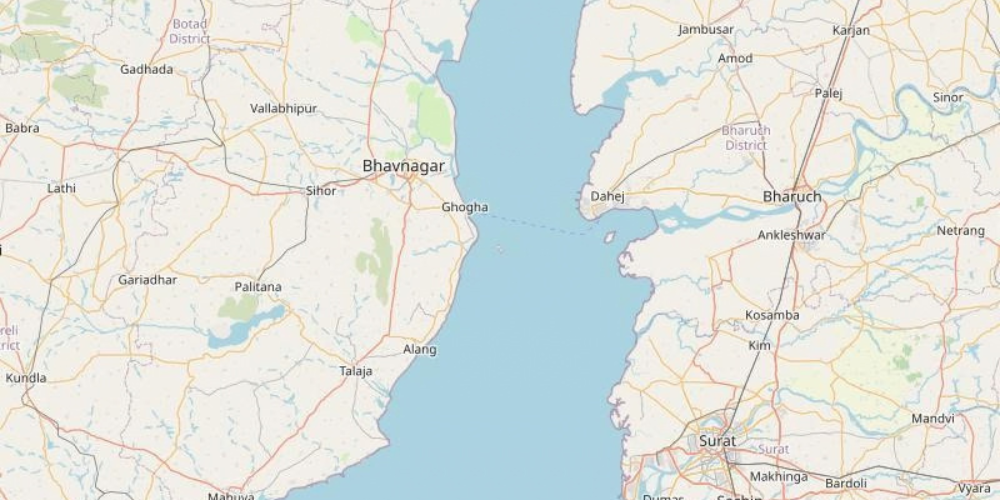
Today, the road trip from Bhavnagar to Surat covers about 356 km because vehicles must loop around the gulf. Using the proposed dyke, that distance could fall to roughly 177 km. That is a saving of nearly 179 km on every trip.
Dholera lies on the Ahmedabad–Bhavnagar side of the gulf. A direct link across the water would bring Surat, Bharuch and the Mumbai industrial belt much closer in travel time.
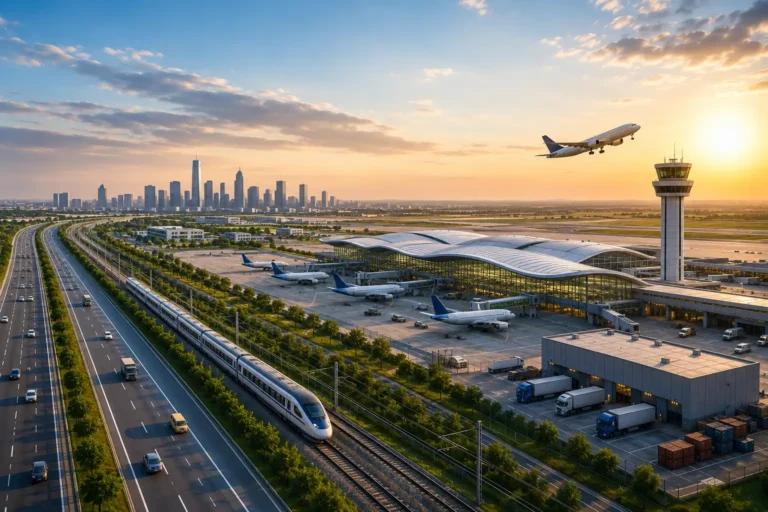
Add the Ahmedabad–Dholera Expressway and the new international airport, and the picture becomes clear. Kalpasar could help turn Dholera into a true coastal logistics and trade hub for western India.
Clean Energy That Supports Industry in Dholera
Kalpasar plans around 2,470 MW of hybrid renewable energy capacity. This will be built on reclaimed land that currently stays under water during high tide.
Part of this green power will run pumps that carry freshwater to farms across coastal Saurashtra. Any surplus will strengthen Gujarat’s clean energy grid.
Dholera is already linked with a large solar park in the region. More renewable capacity nearby supports the city’s image as a green, future-ready industrial city. Global manufacturers increasingly prefer locations where clean power is easy to source, and this gives the region another advantage.
What Kalpasar Means for Dholera Real Estate
Large infrastructure projects tend to lift land values around them. Water security, faster connectivity and clean power are three things that serious investors look for.
If Kalpasar moves forward, land in and around Dholera could benefit from easier access to south Gujarat and stronger regional resources. Commercial, logistics and warehousing demand may rise as travel times shrink.
Still, buyers should stay practical. Kalpasar is a long-term project, and its timelines can shift. Invest in Dholera based on verified approvals, clear land titles and the infrastructure that exists today, not only on future promises.
Current Status, Challenges and What to Watch
The Centre recently informed the Rajya Sabha that the Detailed Project Report (DPR) for Kalpasar is at an advanced stage of finalisation.
A project of this size also faces real hurdles. Building a 64-km dam in one of the world’s strongest tidal zones is a serious engineering test. The gulf carries heavy silt, and engineers must make sure the reservoir does not fill up with sediment over time.
Environmental questions matter too. The tidal mudflats and estuaries of the gulf support fish, migratory birds and coastal livelihoods. Local fishing communities will want clear answers on how the dam affects their catch and access to the sea.
Cost is another factor. Earlier studies have taken years, and funding for such a large scheme will need strong support from both the state and the Centre.
The key milestones to watch next are DPR approval, environmental clearances, funding and the start of construction. Each step will shape how soon the benefits reach Saurashtra, south
Gujarat and Dholera.
Conclusion: The Road Ahead for Dholera
Kalpasar is far more than a dam. It combines water storage, irrigation, road, rail and clean energy in a single mega project.
For Dholera, it promises stronger water security, faster links to south Gujarat and more green power close by. Keep an eye on the DPR and its approvals, because they will decide when this vision becomes reality on the ground.
Frequently Asked Questions
It is a proposed 64-km dam across the Gulf of Khambhat in Gujarat that will create a large freshwater reservoir for Saurashtra.
It is also called the Gulf of Khambhat Development Project.
The Sabarmati, Mahi, Dhadhar and Narmada rivers.
It can improve regional water security, offer a shorter route to Surat and south Gujarat, and add renewable power close by.
About 179 km between Bhavnagar and Surat, cutting the trip from roughly 356 km to 177 km.