
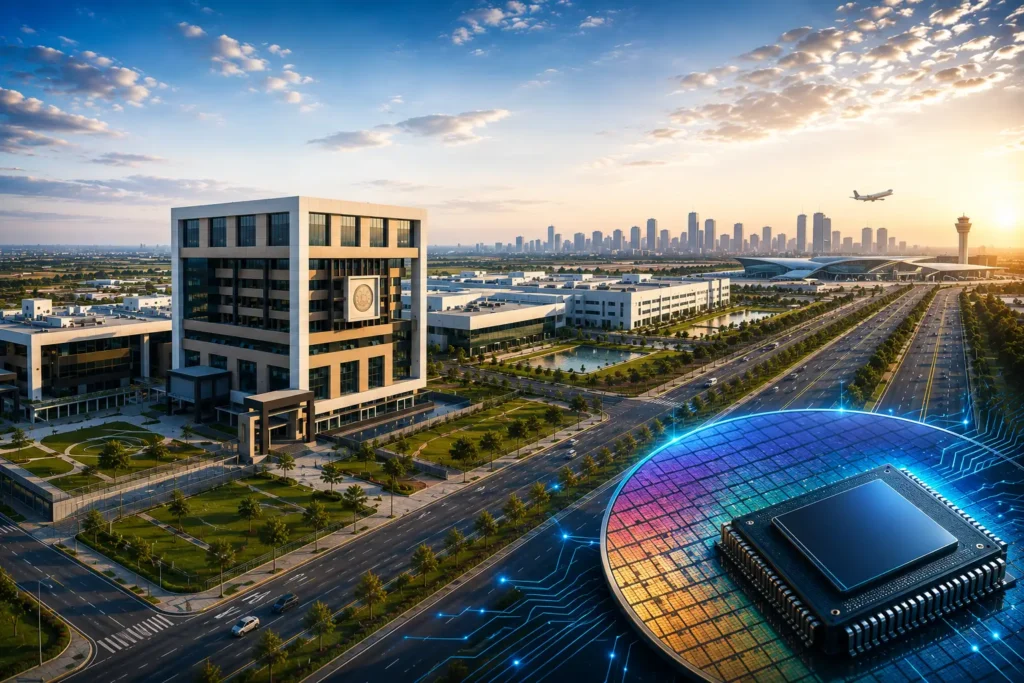
Gujarat is rapidly strengthening its position in India’s semiconductor manufacturing industry.
The state’s industrial infrastructure, supportive policies and competitive business environment are attracting major technology investments.
Mona Khandhar, IAS, Principal Secretary of Gujarat’s Department of Science and Technology, highlighted Gujarat’s cost advantage over international competitors such as Vietnam and Malaysia.
She also explained that Gujarat’s business-friendly environment makes the state an attractive destination for semiconductor manufacturing.
Dholera is at the centre of this transformation.
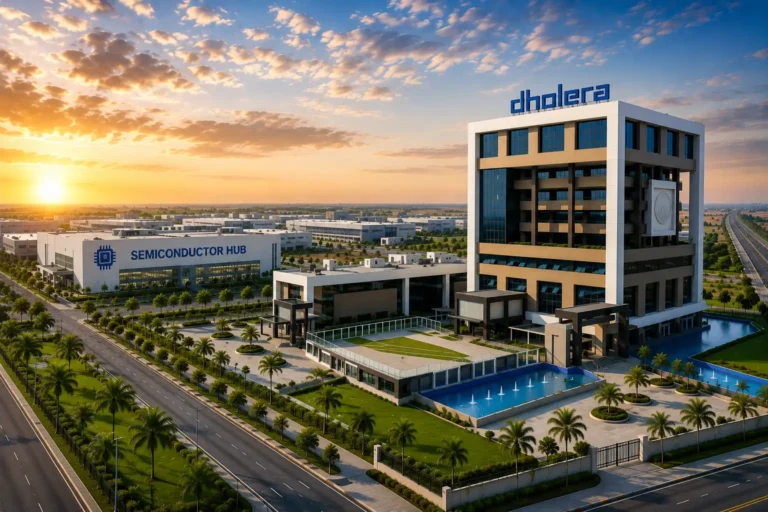
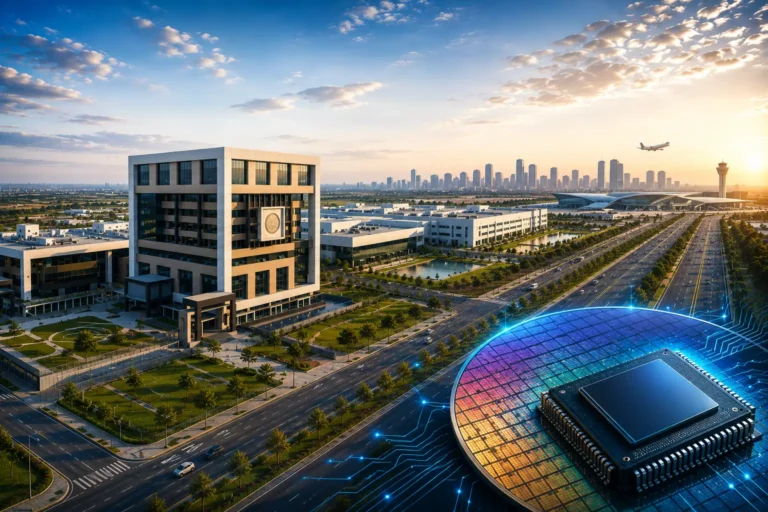
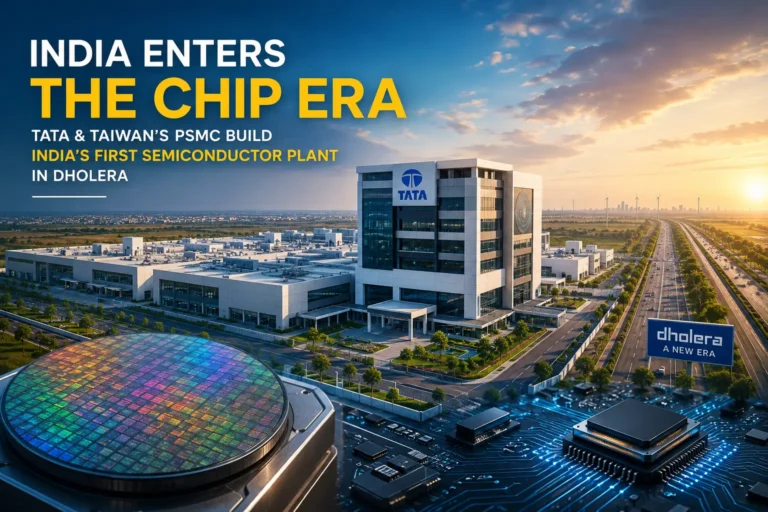
The development of the Dholera Semiconductor Hub, supported by Tata Electronics’ mega fabrication facility, could change the industrial future of the region.
1. Gujarat Is Emerging as a Semiconductor Hub
Semiconductors are essential components used in smartphones, vehicles, computers, industrial machines and medical equipment.
They are also important for artificial intelligence, defence, communication and renewable energy technologies.
Countries around the world are working to strengthen domestic semiconductor production. India is also developing its own chip-manufacturing ecosystem.
Gujarat has taken a leading role in this mission.
The state has attracted semiconductor fabrication, assembly, testing and packaging projects across Dholera and Sanand.
According to Gujarat government updates, multiple semiconductor units have already started taking shape in the state.
This rapid development is helping Gujarat emerge as an important destination for semiconductor manufacturing in India.
2. Why Dholera Is Important for Chip Manufacturing

The Dholera Semiconductor Hub is being developed within the Dholera Special Investment Region.
Dholera SIR is a planned greenfield industrial city designed to accommodate large manufacturing and technology companies.
Semiconductor plants need reliable electricity, water, transportation and digital connectivity.
They also require large land parcels and carefully controlled industrial environments.
Dholera’s planned development helps it meet many of these requirements.
The region offers industrial zones, modern infrastructure and space for future expansion.
Unlike congested industrial cities, Dholera allows factories and supporting businesses to develop within an organised urban plan.
This makes it suitable for capital-intensive industries that need long-term operational stability.
3. Tata’s ₹91,000 Crore Semiconductor Plant
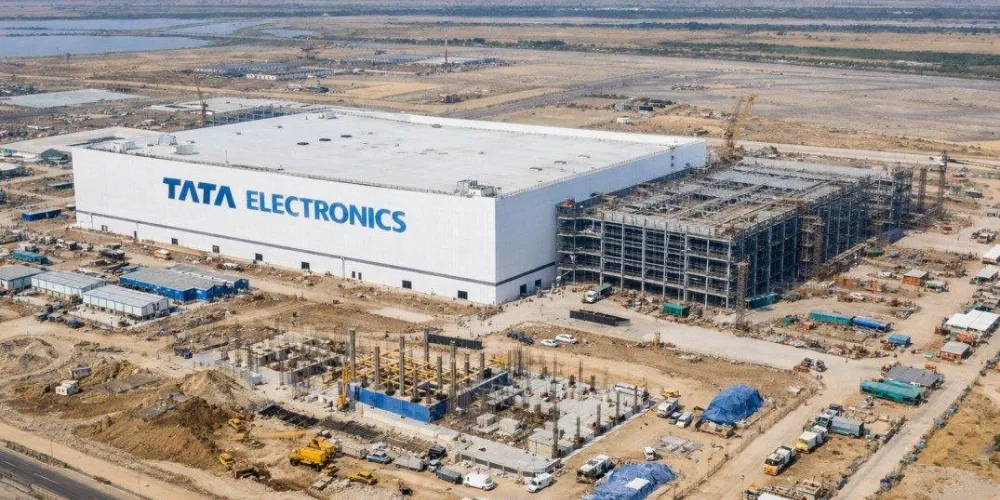
The largest project supporting the Dholera Semiconductor Hub is Tata Electronics’ semiconductor fabrication facility.
Tata Electronics is developing the plant in partnership with Taiwan’s Powerchip Semiconductor Manufacturing Corporation, also known as PSMC.
The project involves an investment of up to ₹91,000 crore.
It is planned as India’s first AI-enabled, state-of-the-art semiconductor fabrication facility.
The plant is expected to have a manufacturing capacity of up to 50,000 wafers per month.
It will produce semiconductor chips using technologies ranging from 28 nm to 110 nm.
These chips will be used in several important industries, including:
- Automotive and electric vehicles
- Artificial intelligence
- Mobile devices
- Power-management systems
- Display technology
- Industrial electronics
- Communication equipment
- Data storage
Tata Group has stated that the project could generate more than 20,000 direct and indirect skilled employment opportunities.
PSMC will provide engineering, design and technology-transfer support for the facility.
The plant will also use automation, data analytics and machine learning to improve manufacturing efficiency.
4. Infrastructure Supporting the Dholera Semiconductor Hub
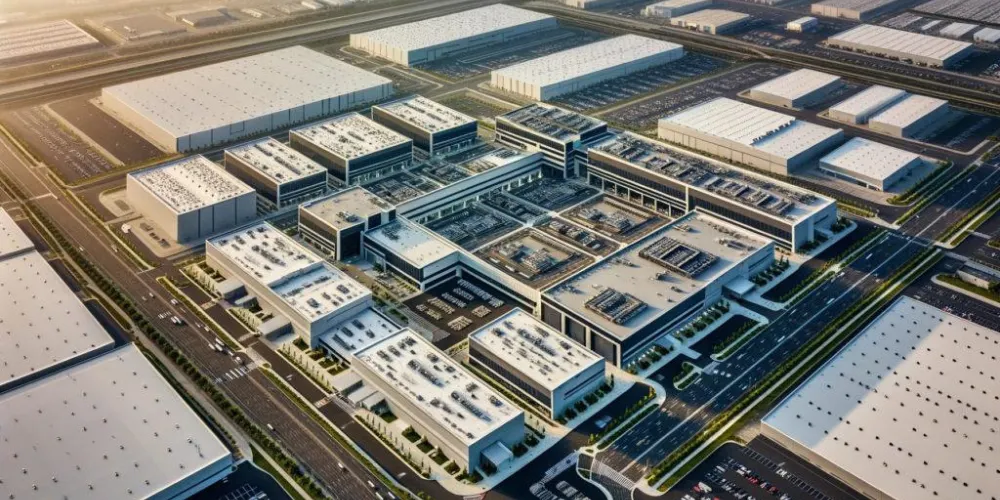
A semiconductor fabrication plant cannot operate independently.
It needs strong infrastructure and a network of suppliers, equipment manufacturers, logistics companies and technical service providers.
Dholera is being developed with trunk infrastructure to support large industrial operations.
This includes wide roads, power distribution, water supply, drainage and wastewater-management systems.
The city is also planned with modern information and communication technology infrastructure.
These facilities can help industries begin operations without developing every essential service independently.
Dholera’s external connectivity is another major advantage.
The Ahmedabad–Dholera Expressway improves road connectivity between Ahmedabad, Dholera SIR and nearby industrial areas.
Dholera International Airport is also being developed near the region.
Once operational, it is expected to support passenger travel, industrial movement and cargo-related activities.
Investors should always check the latest official status of infrastructure projects before making property or business decisions.
5. Global Partnerships Strengthen Dholera
The development of the Dholera Semiconductor Hub is attracting global technology partnerships.
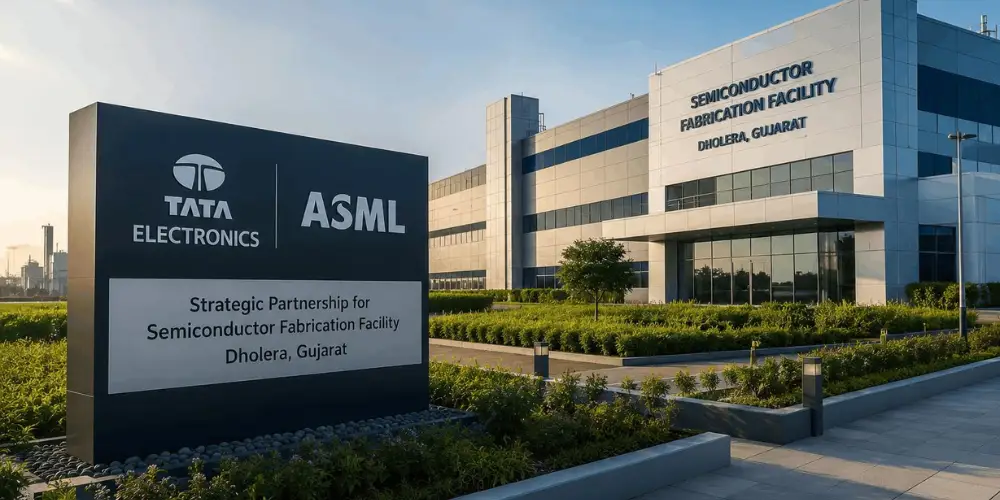
Along with Taiwan’s PSMC, Tata Electronics has also entered into a strategic partnership with ASML.
ASML is a Netherlands-based company and one of the world’s leading semiconductor-equipment manufacturers.
The collaboration is expected to support lithography equipment, technical capabilities, workforce training and supply-chain development.
These partnerships are important because semiconductor manufacturing requires specialised equipment and technical knowledge.
It must also follow strict international quality and production standards.
The participation of global companies can encourage more suppliers and technology businesses to establish operations near Dholera.
This could gradually create a complete semiconductor ecosystem around the city.
6. Employment and Business Opportunities
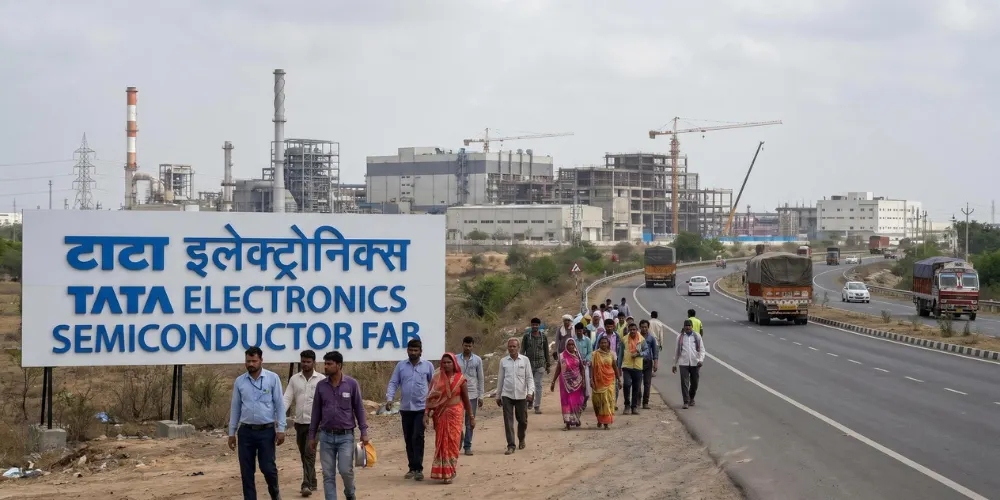
The semiconductor plant is expected to create demand for engineers, technicians and construction professionals.
It may also generate opportunities for logistics workers, facility managers, security teams and administrative staff.
As the working population grows, demand for supporting services may also increase.
These services could include housing, offices, hotels, schools, hospitals, retail stores and local transportation.
Small and medium-sized businesses may find opportunities in industrial maintenance, food services, warehousing and workforce support.
Equipment suppliers and technology-service companies may also explore locations near the Dholera Semiconductor Hub.
The Gujarat government has also supported plans for residential units for Tata fab employees, suppliers and expatriate professionals.
This indicates that Dholera’s development may expand from industrial infrastructure to residential and social infrastructure.
However, these opportunities will develop gradually as factories become operational and supporting companies enter the region.
7. What This Update Means for Dholera
Mona Khandhar’s statement highlights Gujarat’s effort to build a globally competitive semiconductor industry.
For Dholera, this development is much bigger than a single manufacturing plant.
A successful semiconductor cluster could attract equipment suppliers, component manufacturers and research centres.
It could also bring logistics providers, technology companies and workforce-support businesses to the region.
This industrial growth may contribute to future demand for residential, commercial and hospitality development.
However, buyers should not treat every nearby property as an automatically profitable investment.
The actual value of a property depends on its location, legal status, accessibility and approved land use.
Investors should check title documents, government approvals, development plans and the actual distance from major projects.
Claims of guaranteed returns or fixed appreciation should be avoided.
The Dholera Semiconductor Hub represents a long-term industrial transformation.
With strong infrastructure, government support and global technology partnerships, Dholera could become an important part of India’s semiconductor supply chain.
FAQs
It is the emerging semiconductor manufacturing ecosystem in Dholera SIR, led by Tata Electronics’ fabrication plant.
Tata Electronics has announced an investment of up to ₹91,000 crore for its semiconductor fabrication facility.
The plant will manufacture chips for automotive, mobile, AI, power-management, display and communication applications.
The plant is expected to manufacture up to 50,000 semiconductor wafers per month.



One thought on “Dholera Semiconductor Hub: Gujarat’s Next Industrial Growth Engine”