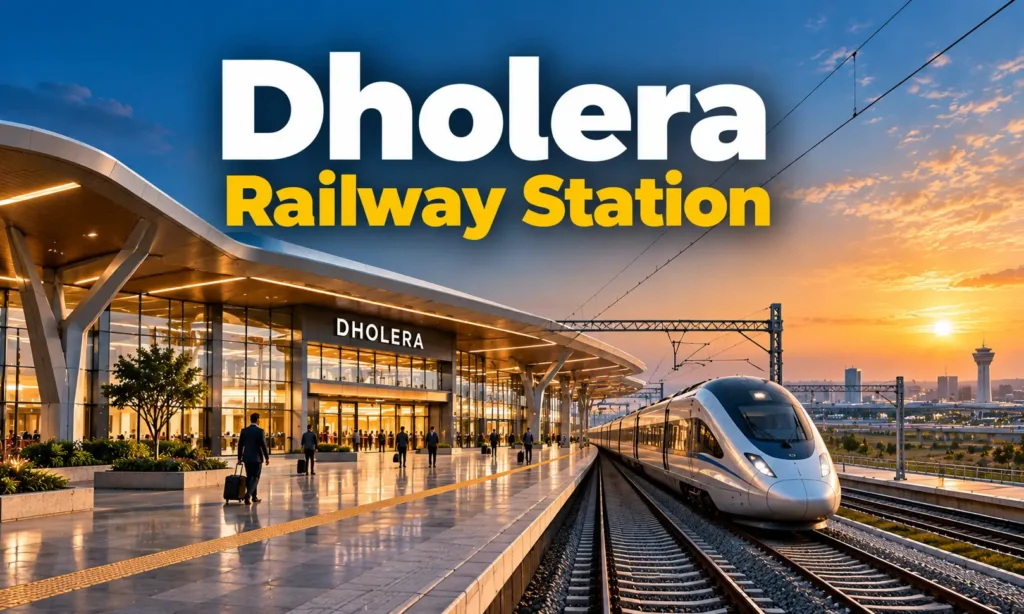
Does Dholera Have a Railway Station Right Now?
Not yet. Dholera SIR is a greenfield city, and its rail links were planned to follow roads, utilities and the airport. The expressway arrived first in March 2026; both rail projects are still at an early stage. For now, rail gets you close to Dholera and road covers the last stretch.
Nearest Railway Station to Dholera Today
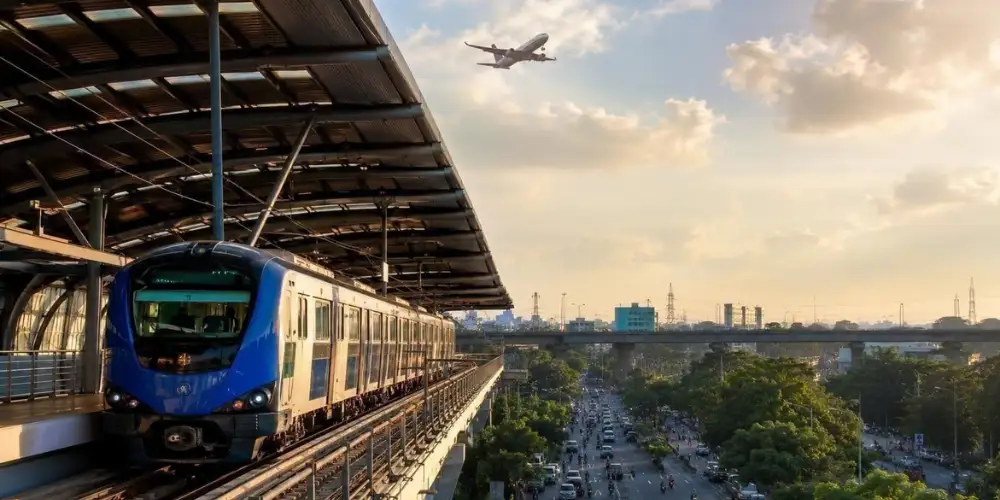
Dhandhuka (station code DCK)
Dhandhuka is the closest working station by distance, about 28 km by road from Dholera village. It sits on the Ahmedabad–Botad line, which was converted from metre gauge to broad gauge, with services into Ahmedabad’s Gandhigram station resuming in June 2022.
The most useful train is the daily Sabarmati–Bhavnagar Intercity (20965/20966), about two hours from Dhandhuka to Gandhigram in Ahmedabad. A few passenger trains also stop here, but timings are limited for outstation visitors.
Ahmedabad
For anyone coming from Delhi, Mumbai, Jaipur or other major cities, Ahmedabad is the practical choice. It has the widest choice of trains, and from the city you can drive down the Ahmedabad Dholera Expressway, a 109 km access-controlled road that opened on 31 March 2026.
In other words, Dhandhuka is the Dholera nearest railway station on the map, but Ahmedabad is the one most people actually use.
The Big One: Ahmedabad–Dholera Semi High Speed Rail
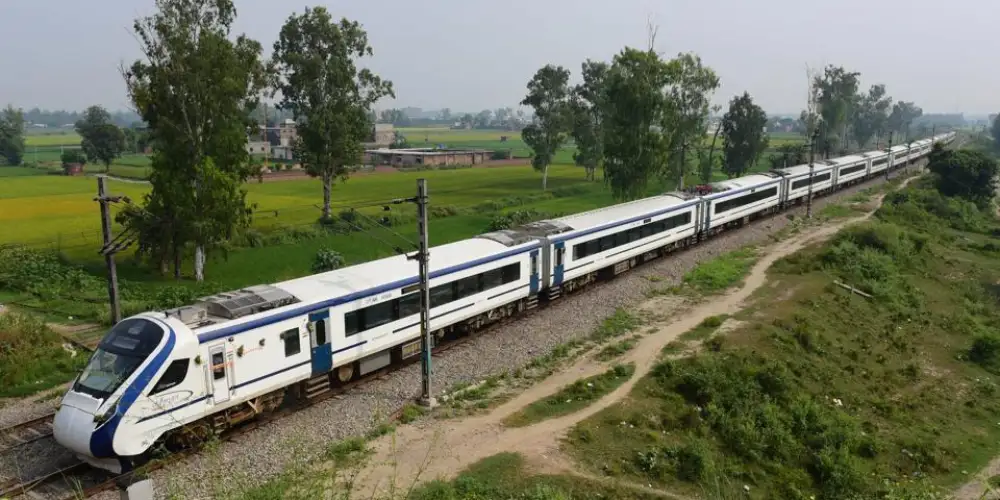
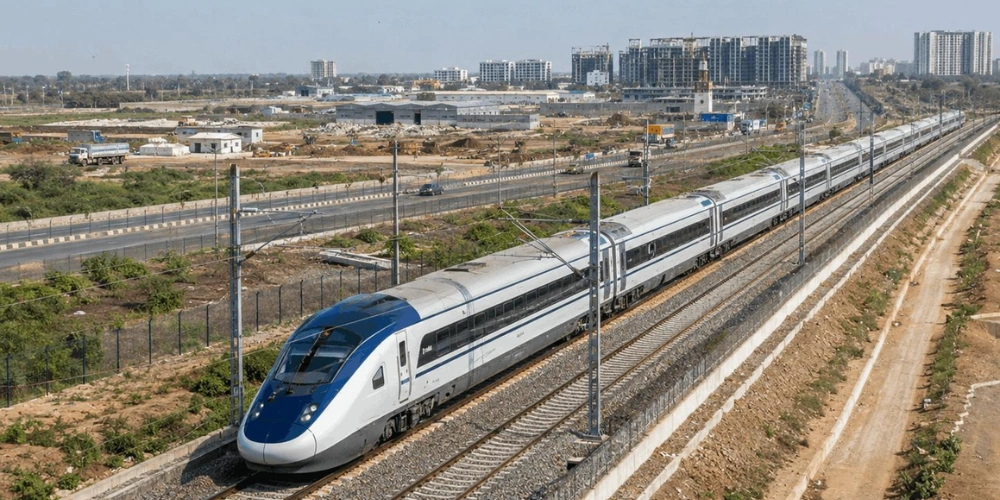
The project that will create a real Dholera railway station is the Ahmedabad (Sarkhej)–Dholera semi high speed double line. It was approved on 13 May 2026 by the Cabinet Committee on Economic Affairs, chaired by Prime Minister Narendra Modi, and the decision was widely reported on 13 and 14 May.
It is Indian Railways’ first semi high speed project built on indigenous technology.
Key facts at a glance
- Route: Sarkhej in Ahmedabad to Dholera
- Length: about 134 km, double line
- Cost: about ₹20,667 crore
- Speed: around 200 km/h operating speed, with officials citing a 220 km/h design on broad gauge
- Journey time: about 48 minutes from Sarkhej to Dholera, according to the Ministry of Railways
- Stations: 13 planned, several of them inside the SIR
- Elevated section: about 74 km of viaduct, including three major bridges
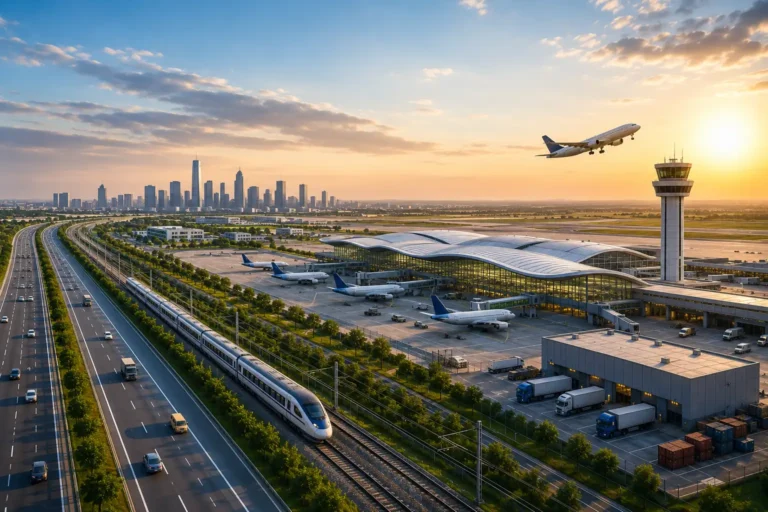
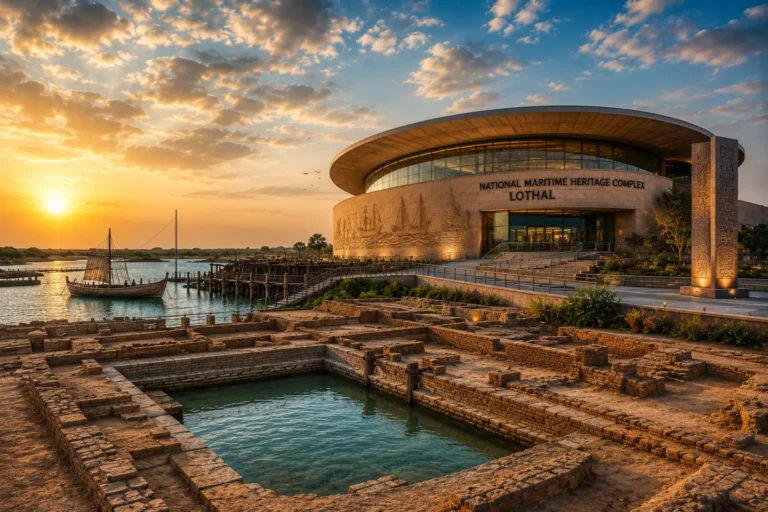
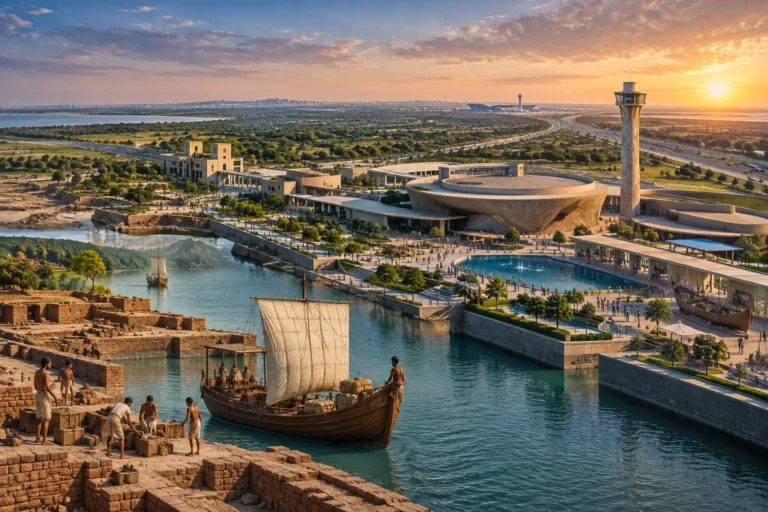
- Spur lines: to the Dholera Airport terminal and the Lothal National Maritime Heritage Complex
- Target completion: 2030–31
Where will the line run?
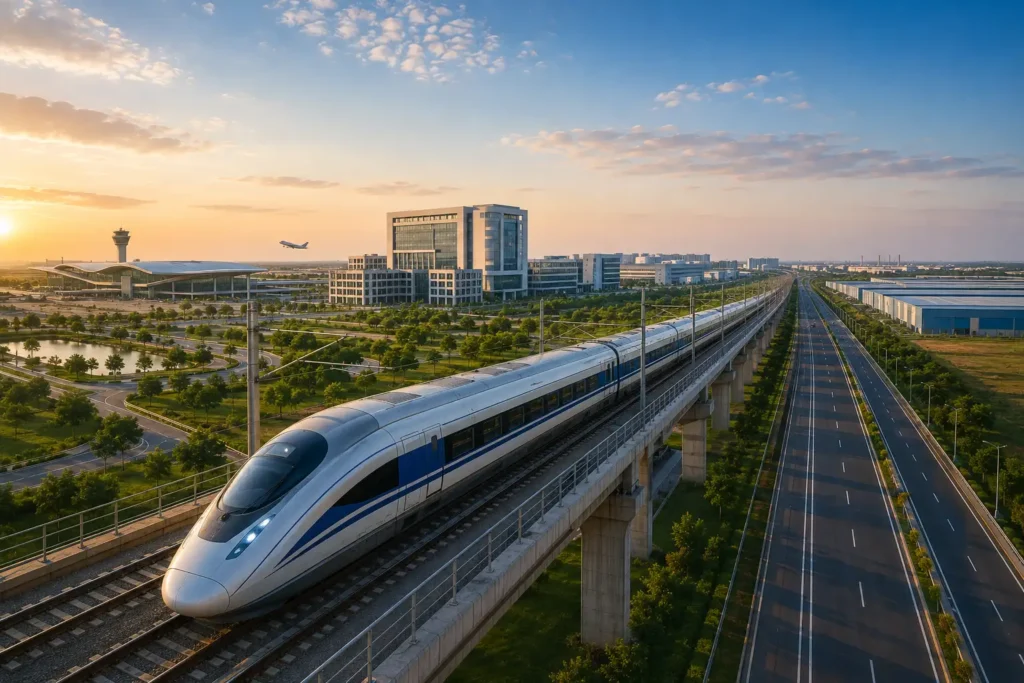
The alignment follows the Ahmedabad–Dholera Expressway in a 30 m strip reserved for rail years ago, which reduces land acquisition risk, the most common cause of rail delays in India.
The line also plans to link with the wider network: the bullet train at Sabarmati, Ahmedabad’s metro system, and the Dedicated Freight Corridor near Sanand. An extension further south towards Bhavnagar has been reported as under survey, though no approval for it has been announced.
Where is the project now?
After Cabinet approval, Western Railway floated an engineering, procurement and construction (EPC) tender worth about ₹18,901.68 crore, with a 42-month completion window from contract award. Pre-bid meetings were held in September 2026. The next milestone to watch is the award of the contract, which marks the real start of construction.
Station names along the Ahmedabad Dholera semi high speed rail have not been officially published yet.
Bhimnath Dholera Rail Line: The Freight Link
The second project is smaller but older. The Bhimnath Dholera rail line is a new broad-gauge line of about 23.33 km, running from Bhimnath on the Ahmedabad–Botad line to the logistics hub inside Dholera SIR.
A Dholera–Bhimnath line was surveyed back in 2014 but not taken up. In July 2024 the Centre sanctioned ₹466 crore for it, and Western Railway floated a civil works tender of about ₹252 crore later that year. The Dholera SIR authority now describes the line as under implementation.
Two points are worth knowing:
- It is mainly for freight. Its job is to connect Dholera’s industries to the national rail network and the Dedicated Freight Corridor, not to carry daily commuters.
- The length is about 23 km, not 109 km. The 109 km figure that circulates online is the length of the expressway, not this rail line.
No official completion date has been published for the Bhimnath line, so any specific year you see quoted should be treated with caution.
How Dholera’s Transport Links Fit Together
| Mode | Project | Stage in October 2026 | Main role |
| Road | Ahmedabad–Dholera Expressway | Open since 31 March 2026 | Fastest route in today |
| Air | Dholera International Airport | About 80% complete in July 2026, with operations targeted for September–October 2026 | Domestic flights and cargo |
| Passenger rail | Sarkhej–Dholera semi high speed line | Approved; EPC tender stage | Fast rail commute to Ahmedabad |
| Freight rail | Bhimnath–Dholera line | Sanctioned; under implementation | Cargo for industry |
| Metro | Ahmedabad Metro Phase 3 | Cleared by the Public Investment Board; tenders floated October 2026 | City network reaching Badrabad near the expressway |
For the latest on the airport, see the Dholera airport status update. For the city-side metro plan, the Ahmedabad Metro Phase 3 route explains how the Badrabad end could later be extended towards Dholera. That extension is a proposal, not an approved line.
Dholera Rail Project Timeline
- 2014: Dholera–Bhimnath new line survey reported in Parliament
- July 2024: ₹466 crore sanctioned for the Bhimnath–Dholera line
- 2024: Civil works tender floated for the Bhimnath line
- 31 March 2026: Ahmedabad–Dholera Expressway opens to traffic
- 13 May 2026: Cabinet approves the semi high speed rail project
- August–September 2026: ₹18,901.68 crore EPC tender floated and pre-bid meetings held
- 2030–31: Target completion of the semi high speed line
On this evidence, the dholera rail project with the clearest path is the semi high speed line: it has approval, a budget, a target year and an active tender.
What Rail Connectivity Means for Dholera
The likely upside
- Daily commuting becomes realistic. A journey of under an hour to Ahmedabad lets people work in Dholera and live in the city, or the other way round.
- Air and rail work together. The airport spur means travellers could move between Ahmedabad and Dholera Airport without relying only on the road.
- Industry gets better logistics. Freight access through Bhimnath supports manufacturers in Dholera SIR, including the semiconductor and electronics units now setting up there.
- A stronger cargo network. Together with the planned Bhavnagar port, rail adds another route for moving goods across the Gulf of Khambhat region.
Points to keep in mind
- Station locations are not final. Until the station list is published, claims about land being “next to the Dholera railway station” cannot be confirmed.
- Targets are not guarantees. 2030–31 is the official goal, but large rail projects often take longer than planned.
- The SIR boundary matters. The new stations are designed to serve the notified SIR. Areas outside it may see less direct benefit.
- Land use is set by zoning. Anyone researching plots in Dholera Smart City should check the Town Planning zone first, because rail proximity only adds value where the permitted use fits.
Frequently Asked Questions
Dhandhuka (DCK) is the closest, about 28 km by road. For long-distance trains, Ahmedabad is the more practical railhead.
No passenger Dholera railway station is operating inside the SIR yet. Stations are planned on the semi high speed line, with completion targeted for 2030–31.
The official target is 2030–31. The construction tender allows 42 months from the date the contract is awarded.
Take a train from Delhi to Ahmedabad, then travel by road along the Ahmedabad–Dholera Expressway. There is no direct train from Delhi to Dholera.
It runs about 134 km from Sarkhej in Ahmedabad to Dholera, mostly alongside the expressway, with branch lines to Dholera Airport and Lothal.