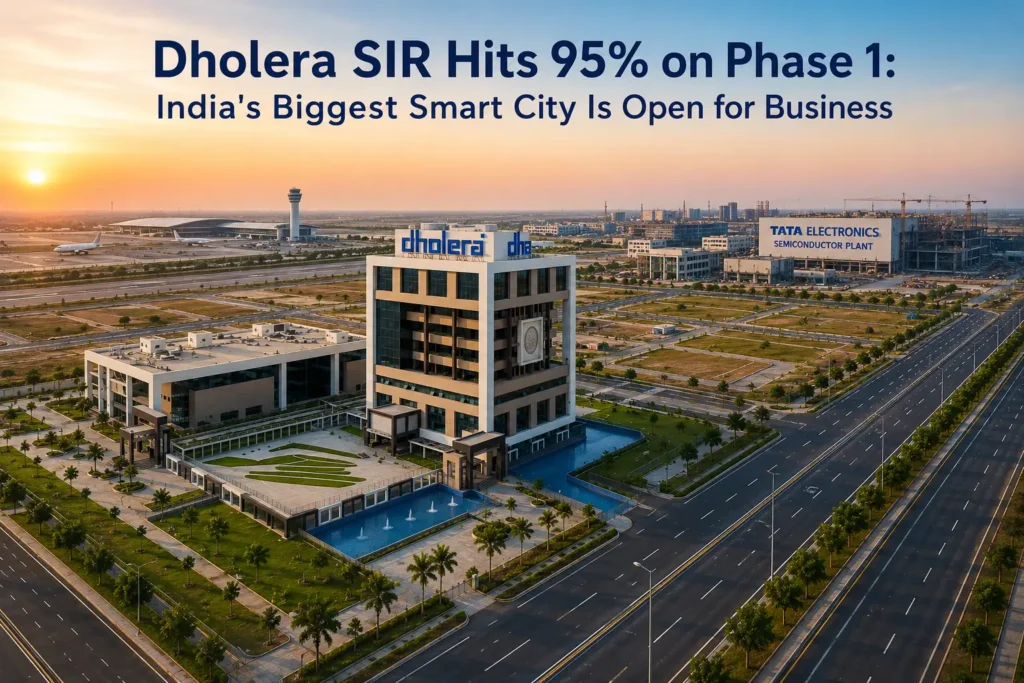
India’s Largest Greenfield Smart City, Explained
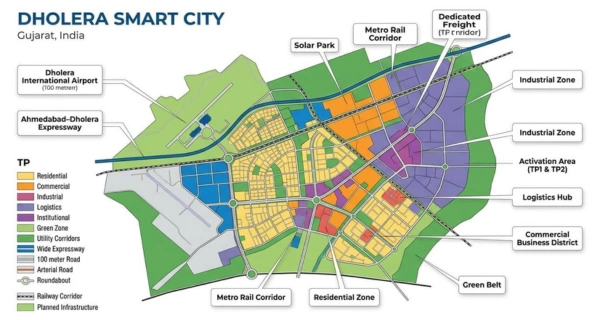
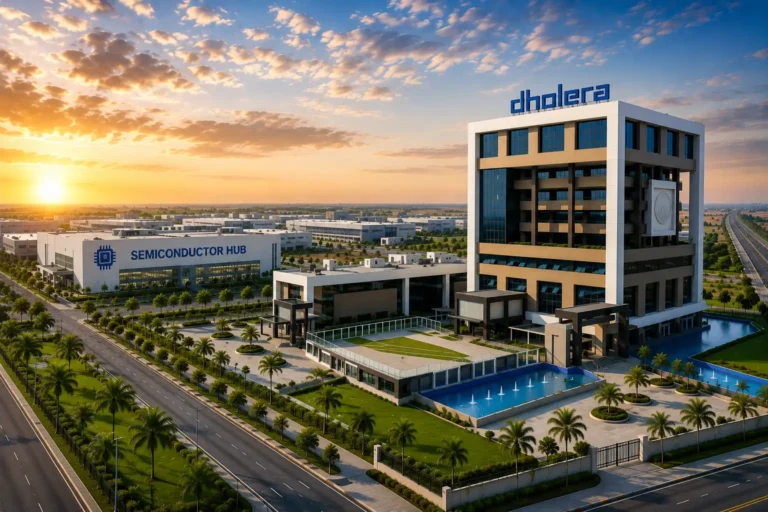
Dholera SIR (Special Investment Region) is India’s largest planned greenfield industrial smart city, spread across 920 sq km and 22 villages of Dholera taluka in Gujarat’s Ahmedabad district. Built under the Delhi–Mumbai Industrial Corridor, it is designed as a plug-and-play destination for global manufacturing.
Unlike cities that sprawl outward over decades, it was master-planned first — roads, water, power and ICT ducts laid before a single factory arrived. That sequencing is why the Phase 1 milestone carries weight.
The 95% Announcement: What Gujarat Actually Confirmed
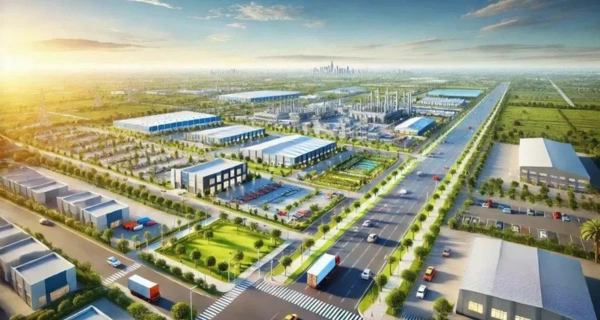
Chief Minister Bhupendra Patel inspected ongoing projects at the site, and the state government confirmed that 95% of Phase 1 work at Dholera SIR is complete, with the region ready for investments from the global ecosystem.
Phase 1 covers 22.54 sq km — the Activation Area. The CM also met state officials at the site to chalk out a time-bound programme for the remaining projects, with the region showcased as a prime project of the state government at the Vibrant Gujarat Global Summit.
Roads, Water and Ducts: What’s Already in the Ground
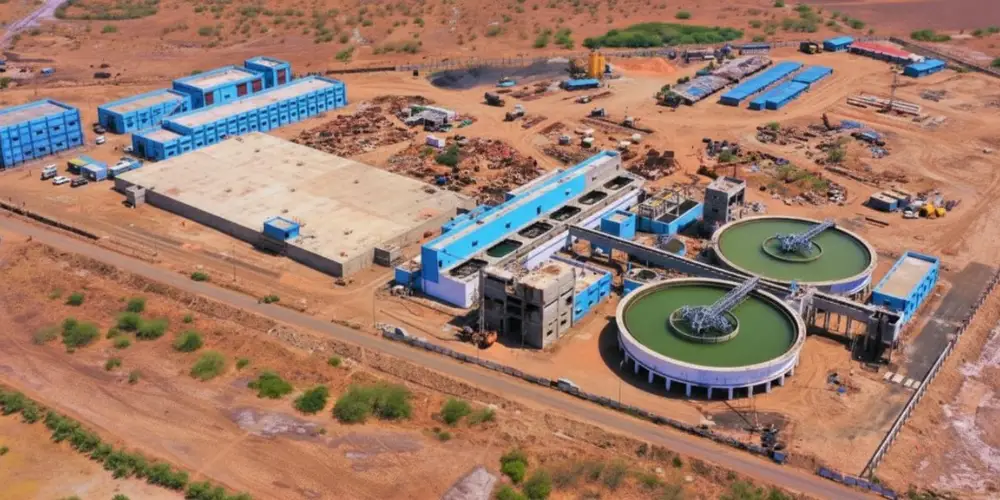
The infrastructure package is what separates Dholera SIR from a conventional industrial estate:
- A 72-km road network with underground utility ducts, so services never need road-cutting
- 150 MLD (million litres per day) water supply
- Integrated drainage, sewerage and treatment systems
- An ICT and smart-city backbone laid alongside the road grid
- Plug-and-play plots where allottees can start construction immediately
For a manufacturer, this removes the biggest hidden cost in Indian industrial projects: waiting for utilities that arrive after the factory does.
From Blueprint to Chip Fab: Dholera SIR in 2026
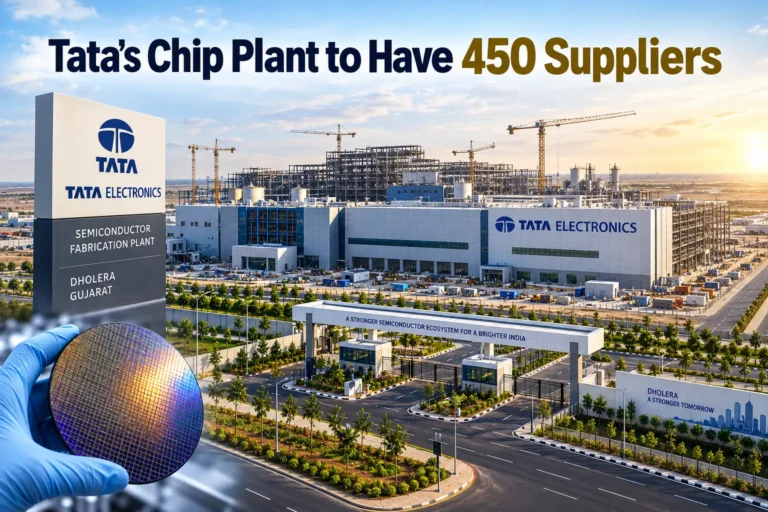
Since that announcement, the region has shifted from infrastructure story to industrial reality. The Tata Electronics–Powerchip (PSMC) fab — roughly ₹91,000 crore, 50,000 wafers a month at the 28 nm node — has crossed the halfway mark, with foundations complete and cleanroom work under way, targeting trial production by December 2026.
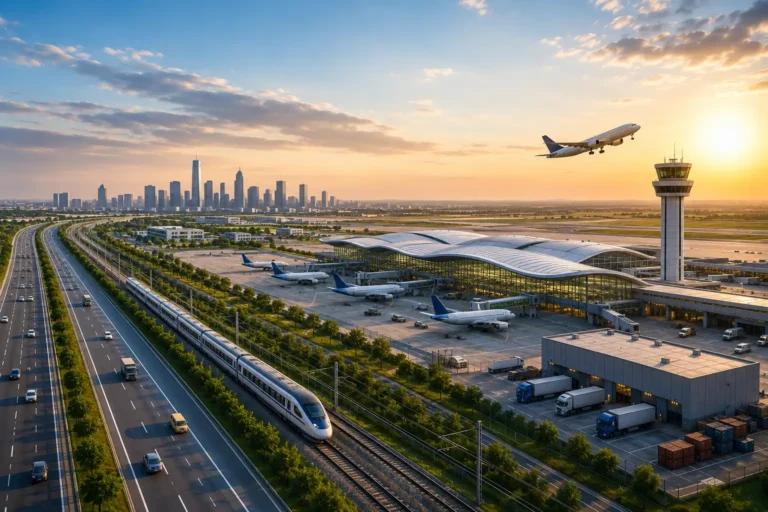
Dholera International Airport crossed 80% completion in July 2026, after a successful trial landing by an Airports Authority of India aircraft on 5 June. The Ahmedabad–Dholera Expressway cuts travel from Ahmedabad to roughly 45 minutes. Fab, airport and expressway together turn Dholera SIR from a map into a logistics-ready node.
Who’s Being Invited In

The plug-and-play facilities are positioned for defence and aerospace, engineering, auto and auto ancillaries, pharmaceuticals, agro and food processing, renewable energy, IT and electronics. The mix is deliberate: semiconductors anchor the cluster, while electronics, auto and renewables draw on the same supplier base, power availability and port-adjacent location.
Reading the Investment Signal Behind 95%
A 95% Phase 1 figure changes the risk profile. Early-stage industrial regions ask investors to underwrite execution risk — whether roads and water actually arrive. With the Activation Area built and anchor tenants constructing, that question is largely settled for the first 22.54 sq km.
What remains is timing. Land values have already responded to the semiconductor and airport news, so the deep-discount window has narrowed. The case today rests on Phase 2 expansion across the remaining 920 sq km, industrial absorption once the fab runs, and the housing demand that follows employment.
Before buying, verify title, zoning under the approved Town Planning scheme, and whether the plot sits inside the notified SIR boundary or merely near it — a distinction that materially affects value.
Dholera SIR: Quick Answers
Dholera SIR is a 920 sq km greenfield industrial smart city in Ahmedabad district, Gujarat, developed under the Delhi–Mumbai Industrial Corridor as India’s largest planned Special Investment Region.
The Gujarat government confirmed 95% of Phase 1 work — covering 22.54 sq km — is complete and the region is ready for investment.
A 72-km road network with underground utility ducts, 150 MLD water supply, integrated drainage, an ICT backbone and plug-and-play industrial plots.
Defence and aerospace, engineering, auto and auto ancillaries, pharmaceuticals, agro and food processing, renewable energy, IT and electronics.
Execution risk has fallen with Phase 1 near complete, the fab past halfway and the airport above 80%. But prices have already risen, so returns now depend on Phase 2 growth rather than early-entry discounts.