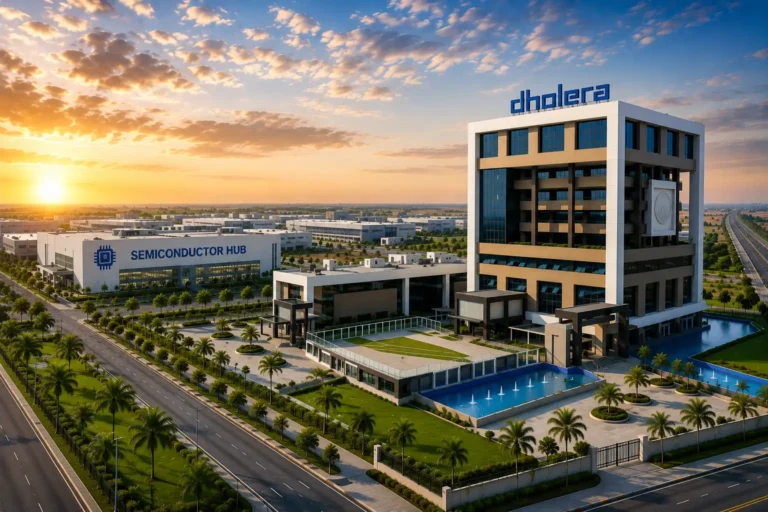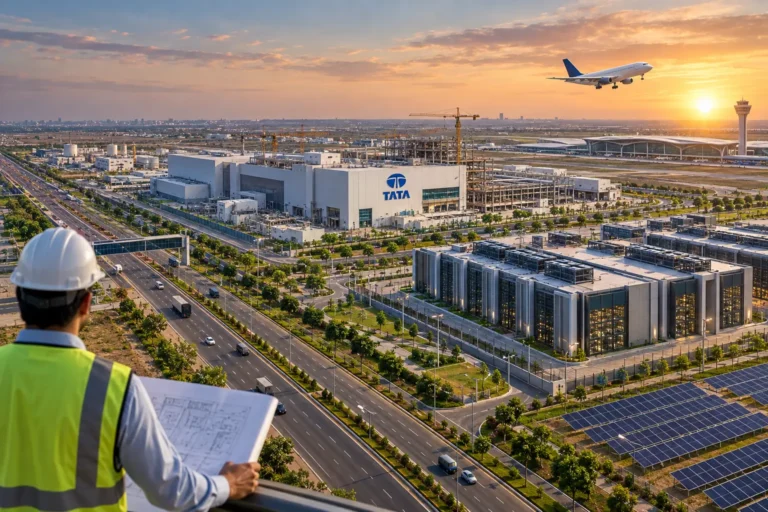

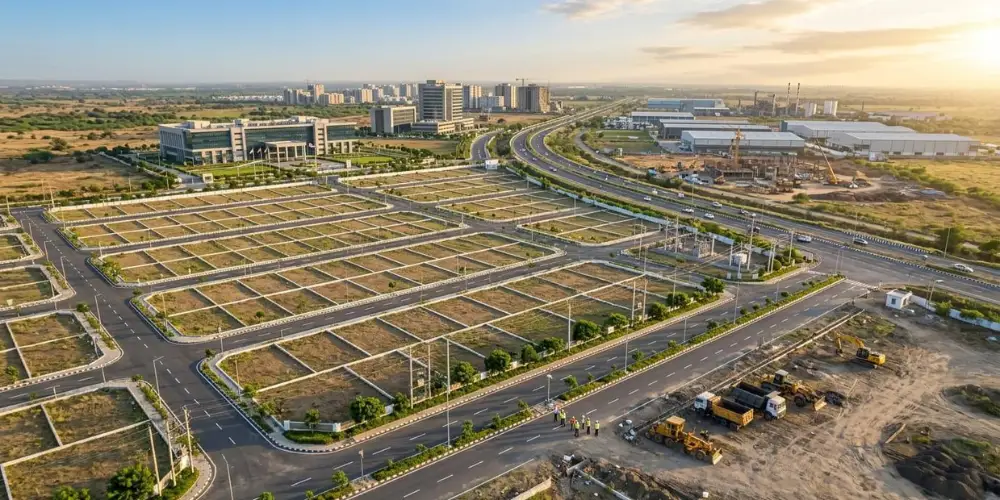
India’s smart city programme has shifted investor attention away from saturated metros toward planned greenfield regions, and bulk land in Dholera now sits at the centre of that conversation. Located in Gujarat’s Dholera Special Investment Region (SIR), the project is designed as a purpose-built city for manufacturing, logistics, renewable energy and urban development, backed jointly by the Government of India and the Government of Gujarat.
This guide explains what bulk land in Dholera actually means, what drives value there, and what to verify before committing capital.
What “Bulk Land” Means in Dholera SIR
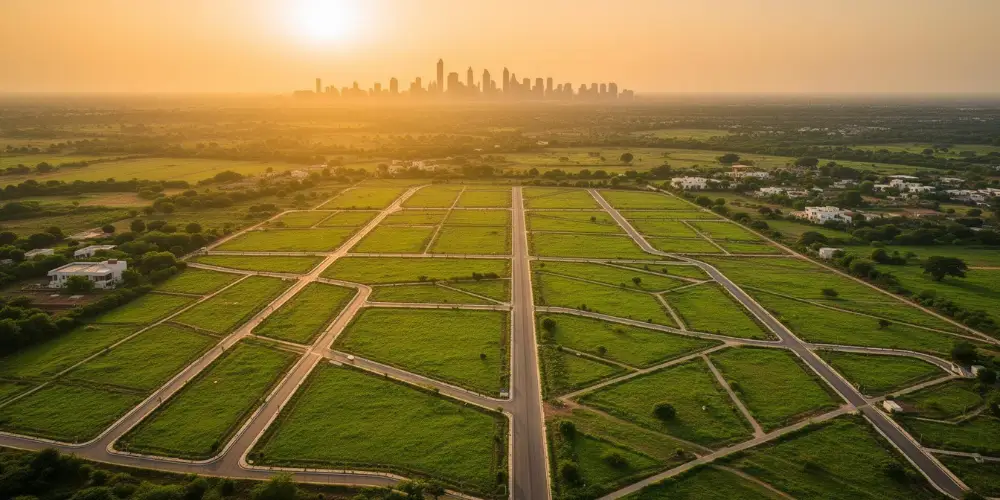
Bulk land refers to large, contiguous parcels — typically several acres and above — bought for development rather than resale of a single plot. In Dholera, these parcels fall under specific master plan zones, and the zone matters far more than the acreage.
Common zoning categories include:
- Industrial zones — manufacturing units, assembly plants, ancillary supply-chain facilities
- Logistics and warehousing zones — supported by expressway and freight corridor access
- Commercial and mixed-use zones — offices, retail, hospitality
- Residential zones — township and housing development
- Knowledge and institutional zones — education, healthcare, R&D
A parcel’s permitted use is fixed by the master plan. Buying industrial-zoned land for a residential township is not a matter of negotiation, so zoning verification comes first.
Why Bulk Land in Dholera Attracts Large Investors
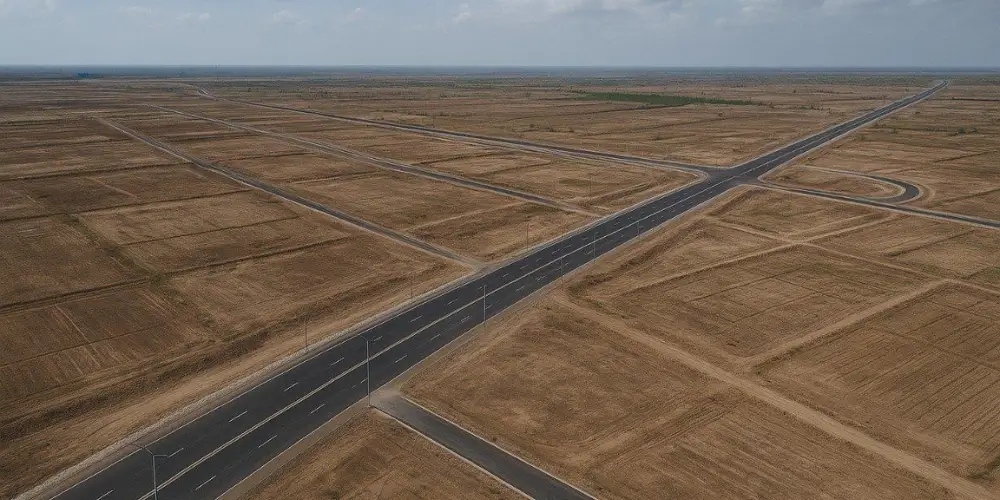
The appeal is structural rather than speculative. Dholera SIR spans roughly 920 sq km, with an activation area being developed first — meaning buyers enter a region with a published land-use plan instead of unplanned sprawl.
Key attractions include:
- Planned infrastructure — trunk roads, underground utilities, drainage and ICT ducting laid before construction
- Delhi–Mumbai Industrial Corridor positioning — the region is a designated DMIC node
- Scale availability — contiguous parcels of a size rarely available near established metros
- Policy support — a dedicated development authority (DSIRDA) governing approvals and execution
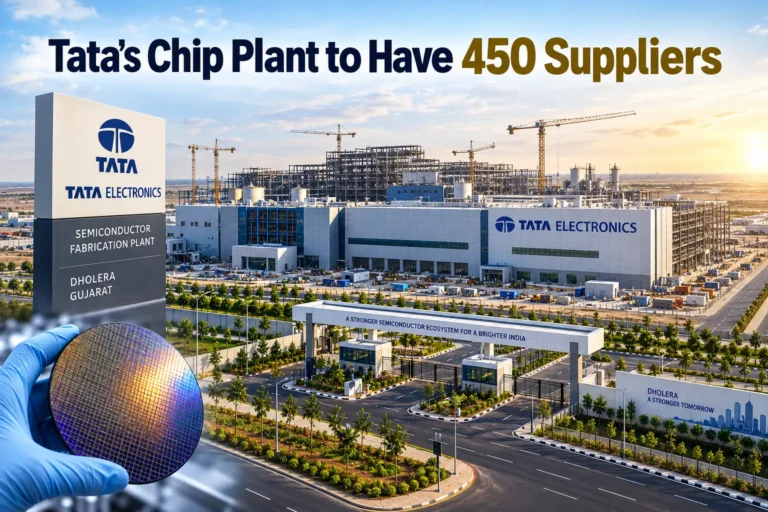
- Manufacturing momentum — large industrial commitments, including semiconductor investment, have raised the region’s profile
Infrastructure Projects Shaping the Region
Infrastructure delivery is the single biggest variable behind land values here. Several projects are at different stages:
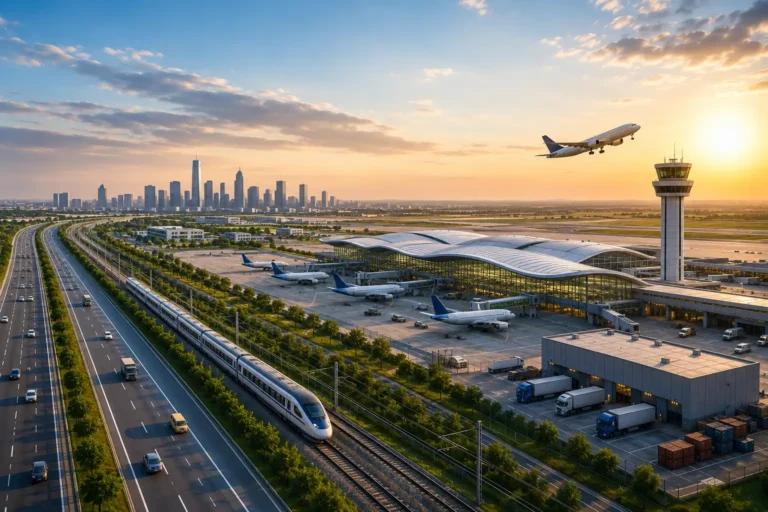
- Dholera International Airport — under construction, intended for cargo and passenger traffic
- Ahmedabad–Dholera Expressway — designed to cut travel time from Ahmedabad significantly
- Metro and rail proposals — planned links between Ahmedabad and Dholera
- Renewable energy capacity — a large solar park within the wider region
- Water and utility systems — treatment, desalination and reuse infrastructure for industrial demand
Timelines on projects of this scale routinely shift. Treat announced completion dates as indicative, and check current status with official sources rather than promotional material.
How to Buy Bulk Land in Dholera
The process for large parcels differs from an ordinary plot purchase:
- Define the end use — industrial, warehousing, residential or a long hold. This determines which zone is relevant.
- Shortlist by location — proximity to the activation area, expressway access and trunk infrastructure matters more than raw price per acre.
- Verify title and revenue records — 7/12 extracts, mutation entries, encumbrance history and full chain of title.
- Confirm zoning and Town Planning scheme status — check the final plot number and permitted use against DSIRDA records.
- Check land conversion status — non-agricultural (NA) permission, and any restrictions on who may buy agricultural land in Gujarat.
- Engage independent professionals — your own property lawyer and chartered accountant, not only the seller’s representatives.
- Structure the transaction — registration, stamp duty and, for corporate purchases, board and regulatory compliance.
What Influences Pricing
There is no single market rate. Price per acre varies with:
- Zone classification and permitted FSI
- Distance from the activation area and expressway interchanges
- Whether the parcel is pre- or post-Town Planning scheme
- Road frontage, shape and contiguity of the parcel
- Availability of trunk utilities at the boundary
Parcels near confirmed infrastructure typically command a premium over outlying land, and that gap tends to widen as delivery progresses.
Risks Investors Should Weigh Honestly

Land in a developing region is not a low-risk asset, and any pitch suggesting otherwise deserves scepticism.
- Liquidity — large parcels can take years to exit; there is no active secondary market in every zone
- Timeline risk — outcomes depend on infrastructure completing broadly on schedule
- Title disputes — agricultural land in India carries a higher incidence of ownership complications
- Holding costs — capital stays locked with no rental income in the interim
- Regulatory change — master plans and zoning can be revised
None of this makes Dholera a poor decision. It makes independent due diligence non-negotiable.
Conclusion
Bulk land in Dholera offers something increasingly scarce in India: large, contiguous, master-planned parcels in a government-backed industrial region with committed infrastructure. That is a genuine structural advantage.
It is also a patient-capital play with real execution and timeline risk. Verify zoning, verify title, verify infrastructure status independently — and size the commitment to what you can comfortably leave untouched for several years.
FAQs
That depends on your time horizon, liquidity needs and risk tolerance. It is a long-duration, illiquid asset. Discuss portfolio fit with a qualified financial adviser.
There is no fixed rule. “Bulk” generally starts around 5–10 acres and scales up depending on the seller and zone.
NRIs and OCIs face restrictions on agricultural land under FEMA rules, and foreign companies typically invest through approved structures. Get legal advice specific to your status first.
Dholera SIR is a multi-decade, phased project. The activation area is furthest along; full build-out is a long-term horizon.
If the land is classified agricultural and you intend non-agricultural use, yes. Confirm current status in writing before any payment.